You know that familiar, quiet disappointment of reaching into the bottom drawer of the fridge, fingers grazing the yellow rind of a lemon you bought just a week ago. Instead of yielding slightly to your grip, it feels rigid, almost fossilized. You bought them with grand intentions of bright vinaigrettes and warm morning teas, but the arid climate of the standard crisper drawer has reduced them to tight, uncooperative stones.
Most of us simply accept this quiet deterioration as a fact of household life. We cut them open anyway, wrestling with the dry flesh, pressing down with heavy frustration on the counter to extract a meagre teaspoon of cloudy liquid. The rind fractures, spraying bitter oils everywhere except into your bowl. It is a daily, mundane friction that makes cooking feel like a chore.
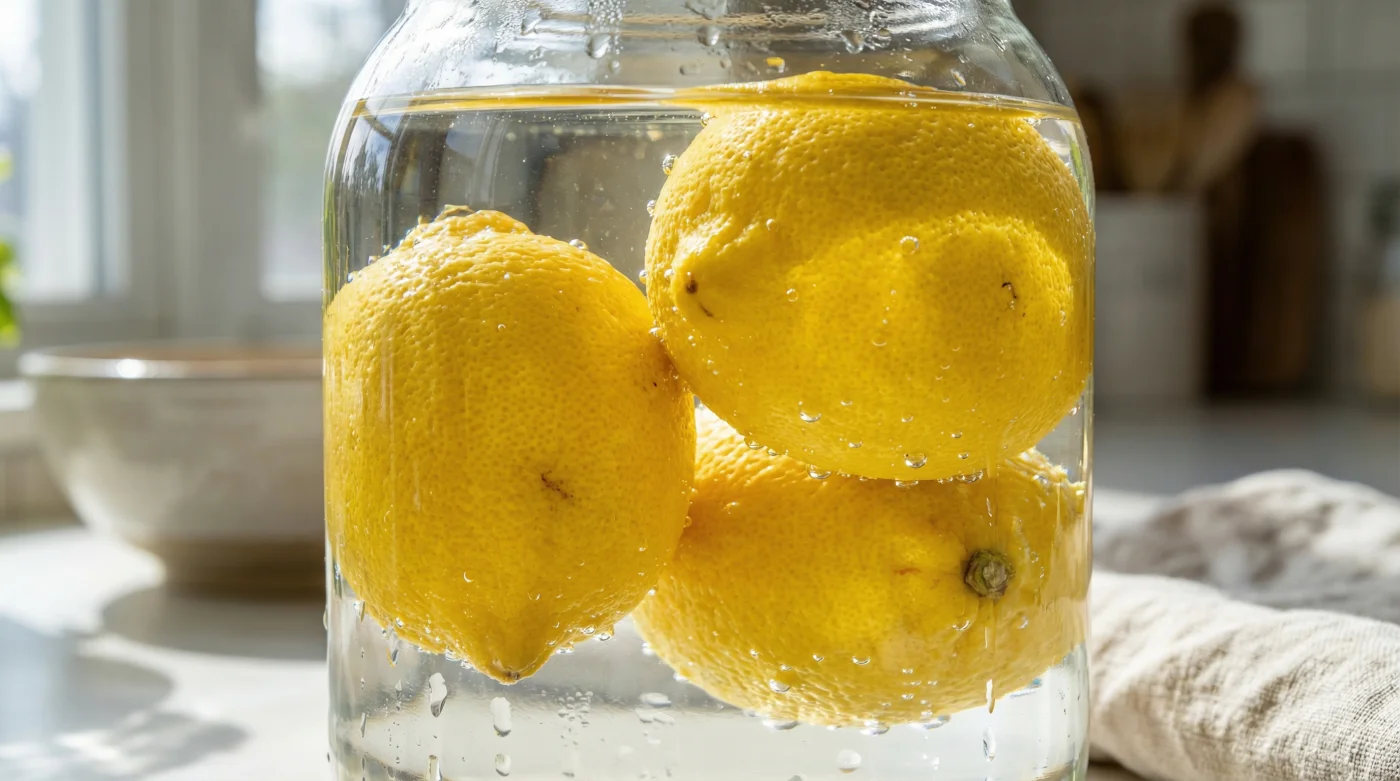
Yet, if you were to walk into the prep area of a busy bakery or a high-volume cocktail bar, you wouldn’t see citrus piled into cold, dry bins. You would find them floating. Clear glass jars, heavy with water, sit lined up on the lower shelves of the walk-in cooler, keeping the fruit in a state of suspended animation. It turns out, that porous, dimpled yellow skin was never meant to be dry-aged.
Rethinking the Porous Shield
We tend to think of citrus peel as a protective armour, a watertight barrier keeping the goodness locked inside. But you have to shift your perspective and look at it as a breathing membrane. The skin is highly porous, designed to naturally regulate moisture. When you toss a lemon into the dry, circulating air of a modern refrigerator, it is like breathing through a pillow—the membrane works against you, bleeding moisture out into the cold void.
Submerging the fruit flips this mechanism entirely. By keeping them fully immersed in cold water, you allow the skin to drink. The fruit absorbs the surrounding moisture, pulling it through the porous rind and hydrating the cells right down to the pale membranes. This simple act plumps the fruit back to maximum capacity, contradicting everything you thought you knew about produce storage.
Clara Vance, a 34-year-old preserve maker based just outside of Toronto, relies entirely on this method for her small-batch marmalades. ‘A dry lemon is a dead end,’ she says, tapping the side of a massive, water-filled glass crock in her workshop. When she pulls one out, it feels heavy and dense, vibrating with deep internal tension. She learned early on that the crisper drawer was her enemy, drying out the natural pectins and stealing the very yield she needed to turn a profit.
Tailoring the Submersion Strategy
Not everyone uses citrus at the same pace, which means your storage habits should match your rhythm. For the occasional cook—someone who just needs a wedge for Sunday evening salmon—the jar acts as an insurance policy. You can buy a bag on sale, drop them in water, and know they will wait for you, plump and ready, for up to four weeks without a single wrinkle.
If you are a cocktail enthusiast, the priorities shift slightly. You aren’t just after the juice; you need the oils. Submersion keeps the peel taut and intensely hydrated, meaning when you take a peeler to it for a garnish, the rind snaps beautifully clean. The expression of oils over your glass becomes a sharp, aromatic mist rather than a sad, dull flake.
During a long, dry Canadian winter, our homes become arid boxes. The heating runs constantly, pulling ambient moisture from the air, which inevitably affects how quickly produce degrades even inside a refrigerator. This water-bath method acts as a vital shield against that aggressive indoor climate.
Whether you are making a hot toddy on a bitter January night in Edmonton, or just dressing a simple kale salad in Halifax, you want that bright acid to be ready. The submersion method guarantees that the harsh winter dryness fails to penetrate your ingredients.
For the batch prepper, the advantage is pure volume and speed. Squeezing a dozen dry lemons is an agonizing workout for your hands. Squeezing a dozen hydrated, swollen lemons feels like bursting water balloons, the pale flesh trembling with readiness. The resistance drops, the yield spikes, and your prep time is cut cleanly in half.
The Tactical Toolkit
Implementing this requires only a few seconds of your time, but the execution relies on a few critical details. It is not about simply drowning the fruit; it is about creating a stable, cold environment. You want to build a habitat that halts decay and encourages hydration, keeping the fruit perfectly primed until the moment the knife drops.
This process is wonderfully minimalist. Follow these specific steps to ensure your citrus remains completely protected from the arid conditions of your kitchen.
- The Vessel: Choose a heavy glass jar or a wide-mouthed container with a secure lid. Glass is non-reactive and lets you keep an eye on the water clarity without opening the seal.
- The Wash: Scrub the lemons lightly under warm water before submersion. You must remove any surface wax or lingering farm soil that could cloud the bath and introduce bacteria.
- The Temperature: Use cold tap water, leaving an inch of headroom at the top. Seal the jar and place it in the middle of your fridge, aiming for a steady 4 Celsius.
- The Rotation: Change the water every two weeks. If the water ever looks slightly cloudy, swap it out immediately and rinse the fruit again to maintain a crisp environment.
- Pancake batter rested overnight in refrigeration develops authentic diner style fluffiness.
- Wilted celery stalks wrapped tightly in aluminum foil regain perfect crunch.
- Fresh lemons submerged in glass water jars double their juice yield.
- Button mushrooms boiled in shallow water achieve perfect golden sears afterward.
- Whole garlic bulbs microwaved for ten seconds shed sticky peels instantly.
A Quiet Correction
Taking the time to properly hydrate your produce is a small rebellion against the disposable nature of modern grocery shopping. We throw away so much simply because we don’t understand how it wants to be stored. Reclaiming that lost juice isn’t just a clever trick for the kitchen; it is a fundamental act of resourcefulness that respects the agricultural effort behind the food.
You open the fridge and see that bright, suspended yellow against the clear glass. It feels organized, deliberate, and incredibly calm. You are no longer racing against the clock of decay, watching your groceries slowly shrivel in the dark corners of the drawer. Instead, you have created a holding pattern, a perfect little ecosystem that guarantees a vibrant return whenever you are ready to slice into it.
It is the difference between fighting your ingredients and setting them up to succeed. Next time you bring home a bag of bright, heavy citrus, skip the crisper drawer entirely. Give them the cold water they crave, and watch how generously they give back.
‘Treat your citrus like freshly cut flowers—they need water to stay alive, not a dry plastic bin to die in.’ — Clara Vance
| Storage Method | Scientific Reality | The Reader’s Advantage |
|---|---|---|
| Standard Crisper Drawer | Cold, circulating air actively pulls moisture through the porous rind, shrinking the cells. | Constant replacement costs and a frustrating, low-yield squeezing experience. |
| Room Temperature Bowl | Ambient heat accelerates pectin breakdown and mold growth within days. | Forced to consume quickly, leading to wasted fruit and rushed meal planning. |
| Cold Water Submersion | The porous skin absorbs cold water via osmosis, hydrating the internal membranes. | Months of shelf life and a staggering double juice yield with half the physical effort. |
Frequently Asked Questions
Do I need to wash the lemons before putting them in water?
Yes. Give them a gentle scrub with warm water to remove any protective wax or farm dirt. This keeps the water bath clean and prevents bacteria from developing in the jar.
How often should I change the water in the jar?
Aim to refresh the cold tap water every two to three weeks. If you ever notice the water becoming cloudy, swap it out immediately and rinse the fruit.
Does this method work for limes and oranges too?
Absolutely. The porous skin of all citrus fruits reacts the same way to cold water submersion, plumping up and extending their fridge life significantly.
Will the lemons become soggy or waterlogged?
No. The thick albedo (the white pith) absorbs just enough water to stay hydrated, but the internal membranes protect the actual fruit from becoming mushy. They stay perfectly firm.
Can I use a plastic container instead of a glass jar?
Glass is highly recommended because it is non-reactive and allows you to monitor water clarity easily, but a food-safe, rigid plastic container with a tight lid will work in a pinch.