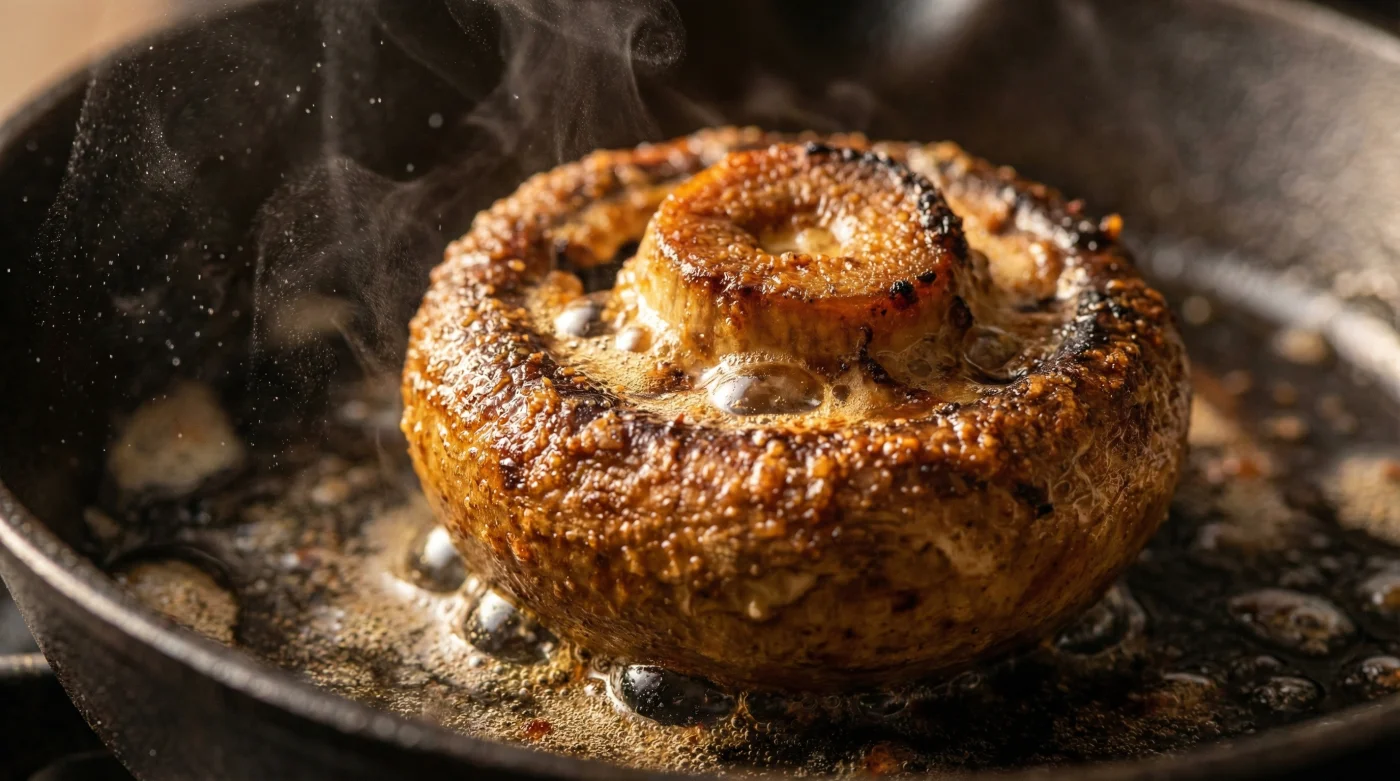
The cast iron skillet hums on the burner, radiating a dry, heavy heat into the kitchen. Outside, a cold autumn rain might be lashing against the window, but inside, your stove is a source of intense focus. You drop a handful of halved button mushrooms into the shimmering oil. For three seconds, they sizzle with a satisfying crackle. The smell of earthy fungi hitting hot fat fills the air. Then, the weeping begins. The pan temperature drops rapidly, the oil vanishes into the porous flesh, and you are left staring at a grey, rubbery mass simmering in its own murky juices.
You have been taught, likely since your first clumsy attempts at making breakfast, that water is the absolute enemy of the fungi family. We dust them with damp paper towels, treating them like fragile antiques, terrified of ruining their texture. Yet, the secret to deep caramelization requires you to abandon this fear completely and drown them instead.
By intentionally boiling your button mushrooms in a shallow pool of water before introducing any frying fat, you force a rapid and complete structural collapse. The heat and steam break down the microscopic air pockets inside the flesh, forcing the internal moisture out in minutes rather than slowly sweating it into your oil over half an hour. You are bypassing the squeaky, rubbery phase entirely.
Once that initial shallow pool boils away, the shrunken, dense mushroom is finally ready to cook. It no longer acts like a greedy sponge, meaning it sears aggressively and evenly when you finally introduce a pat of butter or a splash of canola oil. The pan stays hot, the fat stays on the surface, and the crust forms immediately.
The Anatomy of a Kitchen Sponge
Think of a raw mushroom as a dry, tightly woven dish sponge. If you pour heavy olive oil onto a dry sponge, it soaks straight into the centre, leaving the surface barely coated. When you place that oil-logged sponge into a hot pan, it simply sits there, heavy and greasy, unable to form a crust because the oil is trapped inside the matrix far away from the hot metal.
Now imagine ringing out a wet sponge until it is dense and compact. The internal structure is compressed. When you brush oil on the surface of this collapsed structure, it stays on the outside, directly contacting the hot cast iron. The heat transfers instantly to the fat, creating that crisp edge.
Boiling your mushrooms performs this exact structural compression. The shallow water heats the fungi rapidly, causing their cellular walls to buckle. They shrink to half their size while releasing their own natural water into the pan. You watch the liquid turn a murky brown, boiling vigorously until the pan runs dry and the sound shifts from a hollow bubble to a sharp crackle.
This is the exact moment the magic happens. The pan goes from a wet, rolling boil to a dry, sharp sizzle. Because the mushrooms have already collapsed, they drink in zero oil, allowing the fat to fry their exterior to a crisp, meaty golden-brown without making the interior soggy.
The Montreal Line Cook’s Secret
Marcel is a 42-year-old prep cook working the morning shift at a notoriously busy bistro in Montreal’s Mile End. Every weekend, he is responsible for preparing twenty kilograms of roasted mushrooms for the brunch rush. The air in his station smells of burnt sugar, rendered duck fat, and strong black coffee. If he tried to pan-fry those mushrooms raw in oil, the kitchen would grind to a halt waiting for the pans to recover their heat, and the food cost would skyrocket from the sheer volume of butter absorbed by the raw fungi.
Instead, Marcel throws raw, quartered button mushrooms into a massive, screaming hot rondeau pan and dumps a litre of tap water straight over them. To the untrained eye, it looks like culinary sabotage. But ten minutes later, the water is gone, and he finishes the batch with a single ladle of clarified butter, achieving perfectly crusted, deeply flavoured bites every single time while his colleagues struggle with grey, watery messes.
Tailoring the Boil to Your Plate
Not every meal demands the exact same finish. Once you understand the mechanics of the shallow boil, you can adjust the final searing phase to suit whatever you are pulling out of your pantry. The foundation remains the same, but the finishing touches adapt to your specific cravings.
- Wilted celery stalks wrapped tightly in aluminum foil regain perfect crunch.
- Fresh lemons submerged in glass water jars double their juice yield.
- Button mushrooms boiled in shallow water achieve perfect golden sears afterward.
- Whole garlic bulbs microwaved for ten seconds shed sticky peels instantly.
- Boiling water poured over pastry flour creates impossible tender pie crusts.
For the Meal-Prep Planner: If you are stocking your fridge for the week, boil three punnets of button mushrooms on a Sunday afternoon. Let the water evaporate, toss them lightly in neutral oil to sear, and store them in an airtight container in the fridge. You now have dense, meaty additions ready to be thrown into cold salads or quick stir-fries throughout the week.
For the Plant-Based Cook: Skip the final butter altogether. After the water evaporates and the mushrooms begin to catch on the dry pan, deglaze with a splash of tamari and a few drops of toasted sesame oil. The dense flesh caramelizes instantly, absorbing the heavy savoury flavours right on the surface, creating an incredibly rich bite that rivals any roasted meat.
Mindful Application: The Evaporation Method
Executing this technique requires only a slight shift in your physical routine. It is less about following a strict recipe and more about listening to the sound of your cookware changing its tune. You are managing the environment of the pan.
Start by wiping away any visible dirt from your mushrooms, then slice them evenly. Place them into a cold skillet. You do not need to preheat the metal. Pour in just enough cold tap water to cover the bottom of the pan—roughly 60 millilitres deep. Turn the burner to medium-high and step back.
- Bring the water to a rapid simmer. The mushrooms will begin to shrink and release their own juices within three minutes.
- Listen closely. The sound will transition from a hollow, rolling boil to a sharp, aggressive crackle as the last drops of moisture disappear.
- Once the pan is completely dry, add your fat. A splash of oil or a knob of butter is all you need.
- Toss the collapsed mushrooms in the fat for two to three minutes until a dark, golden crust forms on the edges.
The Tactical Toolkit:
- Skillet: Bare cast iron or heavy stainless steel. Non-stick pans will not develop the fond necessary for a deep crust.
- Water Volume: Approximately 60 millilitres for a standard 250-gram punnet of button mushrooms.
- Temperature Target: Keep the pan hot enough to boil water rapidly (around 100 Celsius), but be ready to drop the heat slightly when the oil goes in to prevent smoking.
Letting Go of Kitchen Dogma
Cooking often feels like a series of rigid rules passed down without explanation. We blindly follow the instruction to keep fungi bone-dry because it sounds correct in theory. But theory often ignores the physical reality of how heat, water, and cellular structures actually interact in a hot pan when the pressure is on.
When you intentionally break a rule and see the result improve, you change your relationship with your kitchen. You stop fearing a ruined dinner and start experimenting with the mechanics of your food. Mastering this simple evaporation trick frees you from the anxiety of crowded pans and soggy side dishes when you are trying to impress guests.
You are no longer fighting the ingredient, desperately trying to coax a sear out of something determined to weep. You are managing its nature, allowing it to release its burdens before asking it to crisp up and shine. Next time you buy a cheap carton of button mushrooms, do not tiptoe around them. Drown them, boil them, and watch them transform into something spectacular.
The moment you stop treating mushrooms like delicate sponges and start treating them like stubborn water balloons, your success rate with searing goes to one hundred percent.
| Key Point | Detail | Added Value for the Reader |
|---|---|---|
| Structural Collapse | Boiling forces the cellular walls to shrink and release internal moisture before fat is introduced. | Prevents the mushroom from absorbing expensive butter and oil, reducing greasiness. |
| Dry Searing | Once the water evaporates, the compressed mushroom sears instantly in a hot pan. | Achieves a restaurant-quality golden crust in under three minutes without crowding anxiety. |
| Acoustic Cue | The cooking sound shifts from a hollow, watery boil to a sharp, aggressive sizzle. | Gives you a reliable, stress-free signal for exactly when to add your finishing fats. |
Frequently Asked Questions
Does this work with wild mushrooms like chanterelles or oysters? Yes, but delicate wild mushrooms require much less water. Start with just a tablespoon to encourage the initial collapse without turning them to mush.
Will the mushrooms lose their flavour in the boiling water? No. Because you allow the water to evaporate completely in the pan, any flavour that leaches out is concentrated and reabsorbed onto the surface of the mushroom as it dries.
Can I use stock instead of tap water? Absolutely. Boiling them in beef or vegetable broth adds an incredible layer of savoury depth, though you must watch closely at the end as the sugars in the stock will burn faster than plain water.
How much oil should I add after the water is gone? Very little. Because the cellular structure has collapsed, they will not absorb the oil. One tablespoon is usually plenty to coat the pan and crisp the edges of a standard punnet.
Do I need to clean the mushrooms before doing this? Yes, wipe off any visible dirt. However, because you are boiling them anyway, you can actually give them a quick rinse under the tap without fear of ruining them.