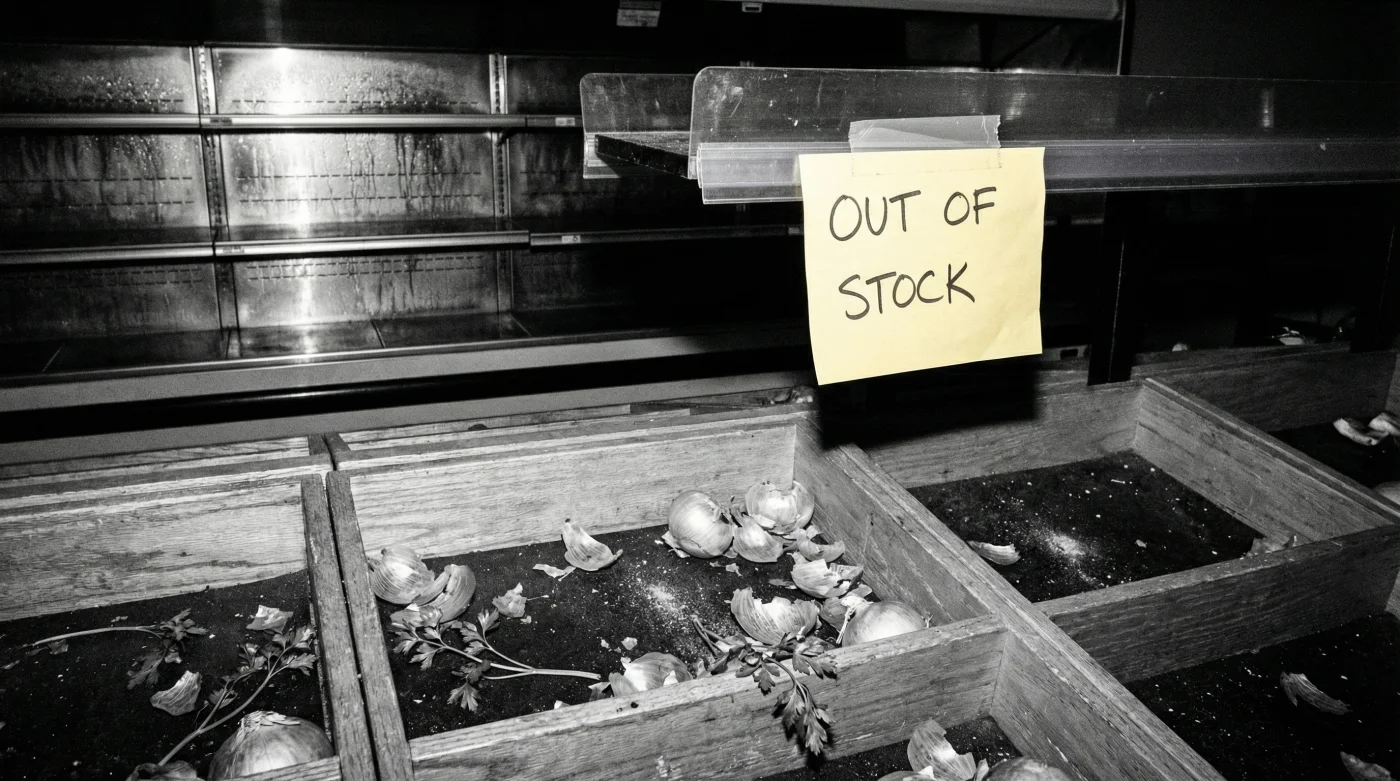
You push your cart through the sliding doors, expecting the familiar blast of chilled air and the vibrant, misted rows of leafy greens. It is Easter Monday. The parking lot is surprisingly full, a mix of late risers and those realizing they forgot the week’s staples. But as you turn the corner into the produce section, the landscape abruptly shifts.
The wet racks are curiously bare, and heavy dark green tarps cover the organic section. The usually overflowing bins of bell peppers look severely picked through, resembling a closing-out sale rather than a morning restock. You expected the holiday weekend to mean business as usual, just with fewer staff wandering the floor.
Instead, the reality of Canadian holiday logistics is staring back at you. When statutory holidays disrupt the transport routes, the massive distribution centres just outside the city halt their overnight freight. The vibrant abundance you are used to seeing is momentarily suspended.
You might feel a spike of frustration, assuming the store simply failed to plan. Yet, this stark inventory cut is not a sign of neglect. It is a highly orchestrated pause, a quiet reset button pressed by the grocery giants to clear out the weekend’s fatigue.
The Anatomy of a Supply Chain Exhale
Imagine the retail food system as a giant lung. Leading up to a massive holiday weekend, it takes a deep, prolonged breath, pulling in tons of fresh inventory from California, Mexico, and local greenhouses. By Easter Sunday, that breath has been entirely expelled into the homes of millions. Monday is the pause between breaths. The system is momentarily operating like a runner breathing through a pillow.
We have been conditioned to believe that abundance is permanent, making the unannounced restriction of fresh selections feel like an error. However, this temporary scarcity is actually the exact mechanism that guarantees your food remains safe and crisp when regular hours resume.
If management left the remaining, handled produce out on display without fresh reinforcements, you would be buying bruised, wilting leftovers at full price. By heavily restricting the floor selection, they force a complete rotation. The flaw you perceive—the empty shelf—is actually a major advantage, ensuring you never pay premium prices for exhausted vegetables.
Consider the daily reality of Marcus Tremblay, a 46-year-old regional inventory director overseeing forty locations across Ontario and Quebec. For Marcus, Easter Monday is known simply as “the hard reset.” He coordinates the massive sweep where the floor staff removes anything that survived the weekend crush. Because transport trucks are legally resting, no new pallets are backing into the loading docks. He deliberately restricts the floor offerings to robust items like potatoes, onions, and citrus, protecting the brand’s reputation from the inevitable decay of delicate greens left lingering too long under the harsh store lighting.
Adapting to the Monday Reset
Not all shoppers arrive at the store with the same needs on a post-holiday Monday. Understanding your own requirements helps you navigate this deliberate inventory drought without returning to your car empty-handed.
For the Fresh Purist
If your meal plan relies heavily on crisp textures and raw salads, this is the day to pivot away from greens. Focus your attention on the hardy staples that survive the transport delay. Cabbage, whole carrots, and root vegetables maintain their integrity perfectly. You will find these bins untouched by the deliberate purge.
- Canadian Unicorn Frappuccino rollouts halt immediately following severe dairy contamination alerts.
- Unicorn Frappuccino ingredient shortages force Canadian cafes into massive menu alterations.
- Grocery stores open Easter Monday heavily restrict fresh produce selections entirely.
- Pizza chain closing announcements trigger aggressive regional frozen pie stockpiling overnight.
- Pancake syrup boiled with frozen blueberries mimics expensive artisan fruit preserves.
You are likely looking to prep for the short work week ahead. Skip the produce aisles entirely and head directly to the frozen section. Frozen vegetables are flash-frozen at their peak and remain entirely immune to holiday supply chain hiccups. A bag of frozen peas or broccoli florets will serve your stews and curries far better than the limp, leftover spinach wilting in the corner of the wet rack.
For the Last-Minute Restocker
If you just need a handful of items to get by until the Tuesday delivery, look to the perimeter displays. Often, grocery managers will build secondary displays of apples, oranges, or bananas near the bakery or dairy aisles. These are usually restocked from the backroom reserves rather than the halted transport trucks.
The Tactical Produce Strategy
Navigating an Easter Monday grocery run requires a subtle shift in how you shop. You are no longer grazing; you are hunting with precision. Treat the experience as an exercise in culinary minimalism.
When you spot the restricted sections, do not waste your time digging through the remaining picked-over items. Accept the limitations of the day and quickly recalibrate your menu. It is about working with the store’s rhythm, rather than fighting against it.
- Inspect root vegetables for firmness; they are your safest bet today.
- Avoid any pre-cut fruit or bagged salads on this specific day.
- Pivot to robust greens like kale or Swiss chard if they happen to be available.
- Utilize frozen alternatives for any cooked applications.
The Tactical Toolkit:
- Ideal Shopping Temp: Treat anything sitting above 4 Celsius with suspicion today.
- Visual Check: If the misting system is off, walk away from those greens.
- Storage Pivot: When you get the hardy veggies home, store them in the crisper drawer immediately to shock them back into peak firmness.
Finding Peace in the Ebb and Flow
We have grown accustomed to a world that never sleeps, expecting perfectly stacked pyramids of tomatoes regardless of the season or the day of the week. But food is agricultural, tied to transport routes, holiday schedules, and the physical limits of human workers.
When you understand that the empty Easter Monday shelves are a deliberate, protective measure, the frustration dissolves. You stop seeing a lack of service and start recognizing a system prioritizing quality over the illusion of endless plenty.
Learning to cook and shop within these brief windows of restriction actually makes you a far more resilient home cook. It forces a return to pantry staples, encourages creative substitutions, and ultimately aligns your kitchen with the realistic rhythms of the Canadian food network.
“The absence of produce on a holiday Monday isn’t a failure of logistics; it is a boundary set to protect the integrity of your food.”
| Key Point | Detail | Added Value for the Reader |
|---|---|---|
| The Hard Reset | Stores clear out weekend leftovers instead of leaving them to rot. | Protects your wallet from buying exhausted, overpriced vegetables. |
| Transport Pauses | Trucks do not run on statutory holidays, delaying fresh pallets. | Sets a realistic expectation, saving you a frustrating trip. |
| The Frozen Pivot | Relying on flash-frozen produce during the 24-hour supply gap. | Ensures nutritional quality and texture for your weeknight batch cooking. |
Holiday Grocery Logistics FAQ
Why are the produce shelves covered on Easter Monday?
Stores restrict access to wilted, leftover weekend stock to prevent selling you subpar food while they wait for Tuesday’s fresh transport deliveries.Is it safe to buy the produce that is left out?
Yes, but stick to hardy items like potatoes, carrots, and citrus that do not degrade quickly under store lighting.When do the fresh deliveries arrive after a long weekend?
Most distribution centres resume overnight shipping on Monday night, meaning shelves are fully restocked and misted by Tuesday morning.Are bagged salads a bad idea on holiday Mondays?
Generally, yes. Bagged greens are highly perishable and the stock you see on Monday has likely been sitting since Saturday.How can I plan my meals around this?
Shift your Monday meal prep to utilize frozen vegetables, pantry staples, or root cellar items, and save your fresh salad cravings for Tuesday.