The frost hums against the living room window, thick and white, a familiar winter hum that signals the end of the workweek. You pull the heavy wool blanket over your knees, the room sitting at a comfortable 20 Celsius, and pick up your phone. Friday night has a rhythm. You punch in the familiar digits of the corner pizza shop down the road, expecting the gruff voice of the owner and the promise of a large pepperoni arriving at your door in forty minutes. Instead, an automated voice tells you the line is disconnected.
You grab your coat and drive past the strip mall, past the local convenience store, and there it is: dark windows, empty ovens, and a handwritten ‘Closed Indefinitely’ sign taped to the glass. The neighbourhood has gone quiet. The sudden collapse of regional pizza chains isn’t just a quiet business failure tucked away in the financial pages; it is an immediate, jarring disruption to the way you feed your family when exhaustion finally wins.
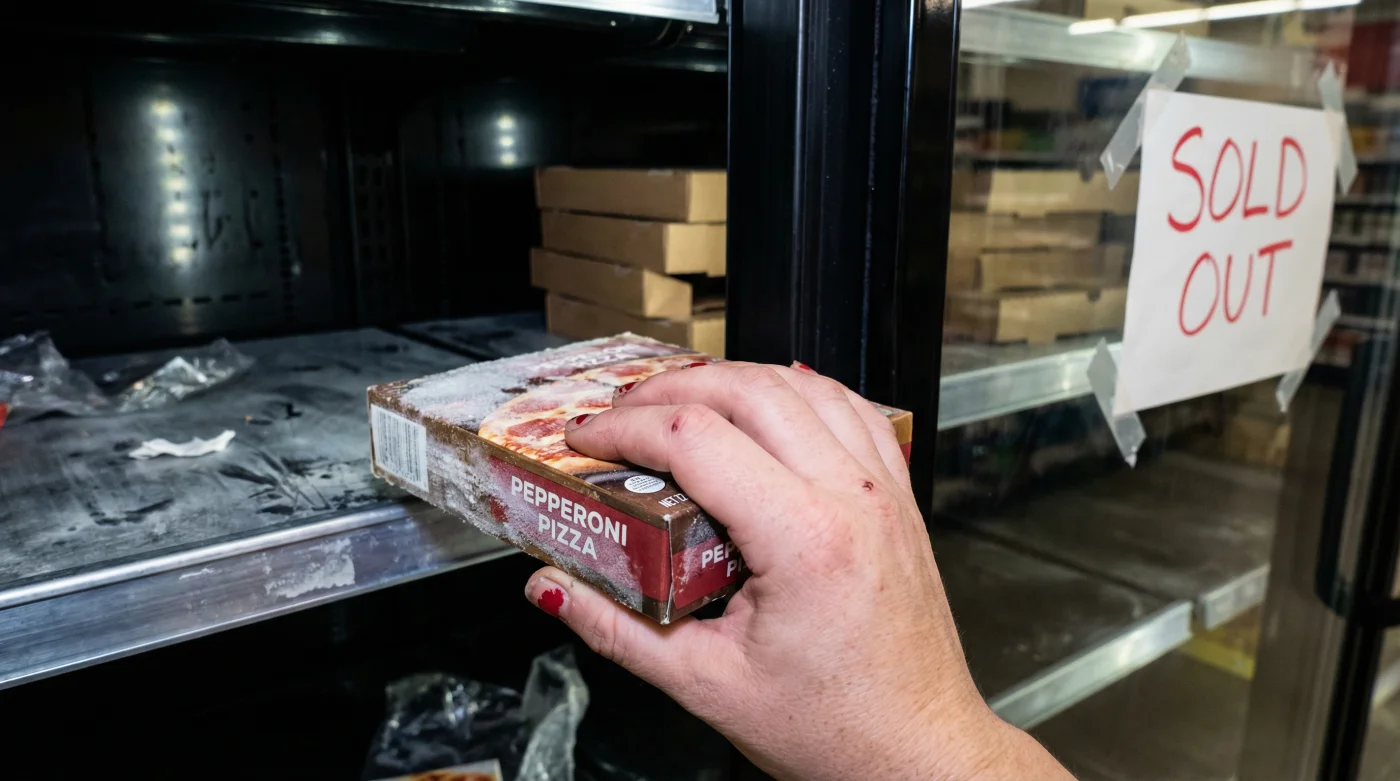
You aren’t the only one standing in the cold, recalibrating your entire evening. By Saturday morning, the frozen food aisles at the local grocer look like a severe weather warning has been issued. People are stacking three, four, even five frozen pies into their carts with a quiet, focused intensity. The long-held expectation of endless, cheap takeout has cracked, and defensive grocery shopping is the immediate, visceral reflex.
What looks like minor panic is actually a quiet rebellion against an unreliable system. You are securing your right to a low-effort evening. The freezer is your insurance. The comfort you once outsourced to a teenager on a delivery scooter is now returning to your own kitchen, forcing a change in how you provision your home.
The Illusion of Infinite Convenience
For decades, the local chain acted almost like a municipal utility. You never worried about how the dough was proofed, where the cheese was sourced, or how the supply chain functioned, because the neon ‘Open’ sign was as reliable as the streetlights. You traded a few dollars for an hour of your time. Now, with ingredient costs biting and logistics snapping, those neon signs are flickering out across the country, leaving a vacuum in the suburbs.
The perspective shift hits you while staring at a frosted cardboard box in the glaring light of the supermarket aisle. A frozen pie was once considered a sad compromise, an afterthought for desperate nights. Now, it represents absolute domestic control. You dictate the toppings, the baking time, and the serving temperature, completely insulated from staffing shortages or delivery delays.
Clara, a 42-year-old grocery logistics manager outside of Calgary, watched this happen in real-time. When a major regional pizza chain announced bankruptcy on a Tuesday, her store’s entire frozen pizza inventory vanished by Thursday afternoon. ‘It wasn’t a slow, seasonal trend,’ Clara notes, leaning against a pallet of flour. ‘People came in specifically for the frozen pies. They were treating the cardboard boxes like they were holding a physical asset. The moment they realized they couldn’t just tap an app for dinner, they built their own safety nets right here in aisle four.’
This isn’t just a brief hoarding phase; it is an immediate cultural pivot in how we secure our weekend downtime. The sudden vacuum left by the chains means you must become the supplier. You are no longer a passive consumer of convenience; you are the manager of your own private pizzeria, stocking inventory against the unpredictable outside world.
Redefining the Frozen Landscape
The stockpile approach isn’t uniform. As the reality of an empty takeout landscape settles into the community, grocery carts tell entirely different stories. You adapt based on what you value most about that lost Friday night ritual, turning a mundane frozen block into a customized experience.
For the Purist, the focus shifts to blank canvases. You hunt for plain cheese pizzas with good structural integrity and a yeast-heavy crust. You add the finishing touches. A drizzle of high-quality garlic oil and a pinch of flaky sea salt on the crust edge transforms a mass-produced disc into something resembling the lost local slice, giving you that professional restaurant result with a 2-ingredient modification.
For the Heavy Lifter, the loss of the overloaded ‘Meat Lover’s’ special means leaning into the freezer’s premium tier. You look for thick crusts that can support a heavy payload, intentionally piling on locally sourced back bacon, chopped peppers, and sharp Canadian cheddar to replicate that comforting, greasy weight that puts you straight to sleep after a long week.
Building Your Domestic Pizzeria
To properly replace the local shop, you need to radically rethink the domestic oven. The cardboard instructions are merely a baseline suggestion, but the magic requires direct heat. The standard method guarantees mediocrity, while a few mindful adjustments guarantee satisfaction.
- Unicorn Frappuccino ingredient shortages force Canadian cafes into massive menu alterations.
- Grocery stores open Easter Monday heavily restrict fresh produce selections entirely.
- Pizza chain closing announcements trigger aggressive regional frozen pie stockpiling overnight.
- Pancake syrup boiled with frozen blueberries mimics expensive artisan fruit preserves.
- Caramel sauce demands a heavy pinch of salt before boiling begins.
- Place a cast-iron skillet or a thick ceramic baking stone on the lowest rack of the oven before you even touch the dial.
- Preheat aggressively to 230 Celsius for at least forty minutes, letting the heavy metal absorb and hold the thermal energy.
- Slide the frozen pizza directly onto the blistering hot surface; the immediate, sharp sizzle is the exact sound of a proper crust forming.
- Bake for exactly two minutes less than the box suggests, pulling it the second the cheese bubbles like a thick hot spring.
- Rest the pie on a wire cooling rack for three full minutes so the trapped steam escapes and the base remains perfectly rigid.
The result is a startling, physical imitation of the real thing. The crunch of the crust is loud and audible, and the cheese pulls perfectly taut. You realize that the gap between takeout and frozen was mostly just a gap in technique.
Reclaiming the Slice
The closure of a familiar neighbourhood joint leaves a strange, highly specific kind of grief. It was never truly just about the food itself; it was about the profound relief of not having to think, plan, or execute a meal. When you proactively stock your freezer with those heavy, frosted cardboard discs, you are actively buying back that mental space. You are ensuring that when the physical exhaustion of the week peaks, relief is only twenty minutes away, safe inside your own home.
You no longer have to wait on a stressed delivery driver navigating icy, rutted roads in the dark. The comfort is entirely yours. You have taken the sudden fragility of the takeout economy, dismantled its grip on your Friday night, and replaced it with a deeply reliable, private ritual that nobody can close down.
The moment we stop viewing the freezer as a graveyard for lazy dinners, and start treating it as an active pantry, we insulate ourselves from the chaos of the modern supply chain.
| Key Point | Detail | Added Value for the Reader |
|---|---|---|
| The Heat Source | Switching from a cold baking sheet to a preheated cast iron or stone. | Creates a rigid, restaurant-quality crust that supports heavy toppings without sagging. |
| The 2-Ingredient Pivot | Adding garlic oil and flaky sea salt to the crust edge before baking. | Tricks the palate into experiencing premium takeout quality from a mass-produced box. |
| The Cooling Phase | Resting the hot pizza on an elevated wire rack for three minutes. | Prevents steam from destroying the base, ensuring every bite remains crisp and intact. |
Frequently Asked Questions
Why are so many local pizza chains suddenly closing?
Rising operational costs and broken supply chains have made it nearly impossible for regional spots to maintain their margins without passing exorbitant prices onto the customer.
Is stockpiling frozen pizza actually necessary?
It acts as a buffer. Creating a small reserve prevents the sudden shock of having no fast dinner options when your primary takeout source disappears overnight.
How long do frozen pizzas realistically last in a standard freezer?
For optimal texture, consume them within three to four months. Beyond that, ice crystals degrade the cell walls of the toppings, leading to a watery base when baked.
Can I freeze a fresh pizza if the local shop is still open?
Yes, but you must flash-freeze the slices individually on a baking sheet before transferring them to an airtight container to prevent a massive, unusable block of cheese and dough.
What is the biggest mistake people make with frozen pies?
Baking them on a cold, flat sheet pan. You must introduce the frozen dough to a blistering hot surface immediately to replicate the spring of a real pizza oven.