The smell of melted butter browning in a cast-iron pan tells you it is finally the weekend. You pull open the fridge door, scanning the cold shelves for something to drag your morning meal out of the ordinary. Sitting there in the door is a sticky, half-empty bottle of standard pancake syrup, pushed aside in favour of a fourteen-dollar jar of local artisan preserves you are entirely too afraid to actually consume.
We all fall victim to hoarding those heavy glass jars from weekend markets. You save them for a mythical, perfect morning, letting them sit undisturbed while the everyday plastic bottle of syrup does all the heavy lifting. You view the cheap syrup as a blunt instrument of sweetness, a compromise for a quick breakfast before driving ten miles into town.
But what if you stopped viewing that bottle as a basic, one-dimensional sweetener? That thick, amber liquid is actually a highly stable, pre-reduced sugar matrix. It holds an incredible tension, capable of trapping and suspending flavours with remarkable speed.
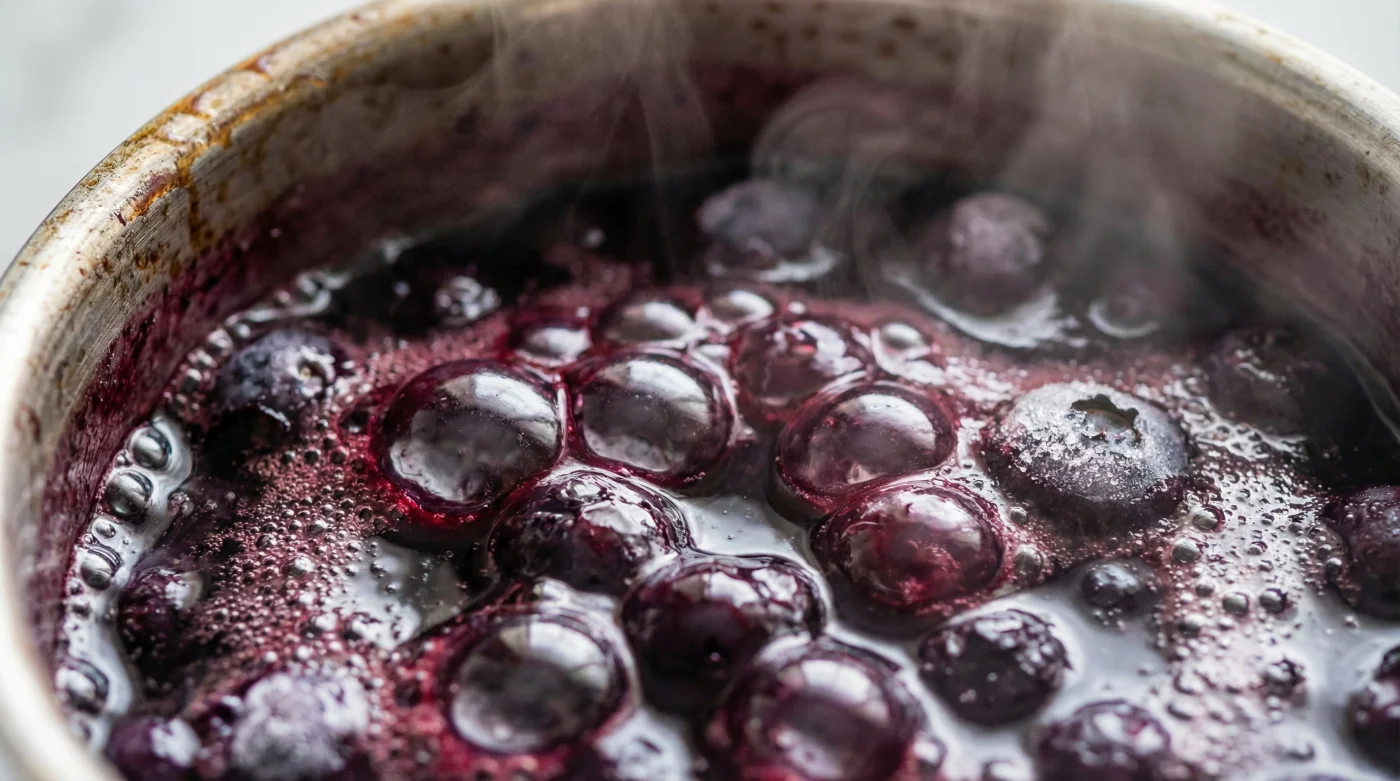
When you drop a handful of frozen wild blueberries into a saucepan and drown them in that everyday syrup, a violent, beautiful reaction occurs over high heat. The frozen fruit flashes into steam, releasing natural pectin that instantly binds with the dense sugars. In mere minutes, that heavily processed liquid morphs into a dark, glossy preserve, mimicking the exact texture of high-end, slow-cooked fruit compote.
The Alchemy of the Pantry
Think of your morning kitchen like a painter’s mixing palette. You do not need to buy expensive, pre-mixed colours if you understand how the base elements interact. The main criticism of everyday pancake syrup is its lack of nuance; it simply coats the tongue with unyielding sweetness.
Yet, this lack of nuance is exactly what makes it the perfect architectural base. The syrupy texture provides the viscosity that usually takes hours of reducing sugar and water to achieve. By introducing the sharp, acidic bite of freezing-cold berries, you hijack the structural thickness of the syrup while completely overwriting its flavour profile. The mundane detail of its artificial thickness becomes your greatest culinary advantage.
Clara Tremblay, a 42-year-old diner owner in rural Ontario, discovered this out of pure desperation. When a delayed supply truck left her kitchen without her signature mixed-berry coulis for a packed Sunday brunch, she threw a bag of frozen blueberries into a hot pan, covered them in standard commercial syrup, and blasted the burner. She watched the skins burst, bleeding deep purple into the amber bubbles. Her regulars spent the morning asking if she had started importing luxury jams from France. It became a permanent fixture on her menu—a professional pivot born from a moment of panic.
For the Weekend Purist
If you prefer the sharp, clear taste of fruit to shine through, your ratio needs a slight adjustment. You want the berries to dominate the pan, using the syrup merely as a binding agent rather than a swimming pool. Toss the frozen berries in the dry pan first, letting them blister slightly before introducing the amber binding agent.
For the Savoury Application
This technique is not restricted to pancakes and waffles. When you are roasting pork or searing duck breasts, a dark fruit glaze cuts through the rich, fatty meat perfectly. By adding a crack of black pepper and a splash of apple cider vinegar to the boiling syrup and berries, you create a complex gastrique.
For the Rushed Parent
- Grocery stores open Easter Monday heavily restrict fresh produce selections entirely.
- Pizza chain closing announcements trigger aggressive regional frozen pie stockpiling overnight.
- Pancake syrup boiled with frozen blueberries mimics expensive artisan fruit preserves.
- Caramel sauce demands a heavy pinch of salt before boiling begins.
- Coffee grounds rubbed into tough cheap steaks provide aggressive enzyme tenderization.
Executing the Three-Minute Compote
Executing this requires trusting your senses rather than rigidly staring at a clock. You are watching for the moment the liquid changes from a watery boil to a thick, lava-like roll. The bubbles will grow larger and pop with a heavy, satisfying sound.
Do not stir aggressively. You want to agitate the pan gently, allowing the berries to soften without turning into an unrecognizable mush. The cream should tremble, metaphorically speaking; you want controlled heat, not chaotic burning.
- Place a small saucepan over medium-high heat.
- Add one cup of frozen blueberries (do not thaw them).
- Pour in just enough pancake syrup to coat the bottom of the pan and halfway up the berries.
- Allow the mixture to come to a rolling boil, watching the bubbles expand.
- Kill the heat the moment the liquid coats the back of a spoon without dripping off immediately.
The Tactical Toolkit:
- Target Temperature: Bring the pan to approximately 105 Celsius to trigger the pectin release.
- Active Time: 3 to 4 minutes.
- Required Tools: A heavy-bottomed stainless steel or cast-iron saucepan, and a silicone spatula.
Reclaiming the Morning Routine
Mastering this small, two-ingredient modification does more than just improve your breakfast. It radically shifts how you interact with your pantry. You stop waiting for the perfect occasion to open a luxury jar of preserves, because you suddenly possess the ability to conjure that exact feeling of luxury on a dark, rainy Tuesday morning.
It frees you from the marketing illusion that quality always requires a high price tag or hours of laborious effort. You learn to see your basic ingredients not as static products, but as raw potential waiting to transform. When you can turn a basic commodity into a moment of culinary brilliance, you reclaim a small piece of your daily independence.
“The magic of a professional kitchen isn’t found in expensive ingredients, but in the courage to force humble elements into extraordinary reactions.”
| Key Point | Detail | Added Value for the Reader |
|---|---|---|
| The Cost Pivot | Replacing a $14 jar of artisan preserves with 50 cents of syrup and frozen fruit. | Frees your grocery budget while dramatically improving the quality of your morning meals. |
| The Thermal Reaction | Freezing-cold berries dropped into rapidly heating syrup releases instant natural pectin. | Saves you an hour of standing over a stove reducing water and white sugar. |
| The Viscosity Hack | Utilizing the pre-existing thickness of cheap table syrup. | Provides a fail-proof, restaurant-quality glaze texture every single time. |
Frequently Asked Questions
Can I use any other frozen fruit besides blueberries?
Absolutely. Raspberries and blackberries work incredibly well, though you may want to mash them slightly as they heat to release their juices into the syrup.Will this work with real, pure maple syrup?
Yes, but the reaction takes slightly longer because pure maple is thinner and has a higher water content than commercial pancake syrup. You will need to boil it for an extra minute or two.How long does this compote last in the fridge?
Once cooled, pour it into a glass jar. It will hold perfectly in your refrigerator for up to a week, thickening even further as it chills.Do I need to add lemon juice or extra sugar?
The syrup provides all the necessary sugar. However, a small squeeze of fresh lemon juice at the very end of the boiling process adds a brilliant, bright contrast to the heavy sweetness.Why did my mixture turn hard like candy?
You pushed the temperature too high for too long, boiling off all the water and pushing the sugars into the hard-crack stage. Next time, pull the pan off the heat as soon as the bubbles get large and heavy.