The kitchen smells faintly of cold butter and rain against the window glass. You stand over a heavy-bottomed saucepan, holding a wooden spoon like a shield. Sugar and water sit in the pot, an innocent-looking slurry that holds the power to break your heart in about four minutes.
We are taught to fear molten sugar. The sudden white frost climbing the walls of the pot, the agonizing crunch when smooth amber turns to coarse sand. Most recipes tell you to hold your breath, wash down the sides with a wet brush, and pray to whatever kitchen gods might be listening.
Then comes the final instruction: pull it from the heat and stir in the salt. It seems logical. Salt is a finishing touch, a flourish of flavour to contrast the sweet. But treating it as an afterthought is exactly why so many pots end up soaking in the sink, filled with ruined, crystallized rock.
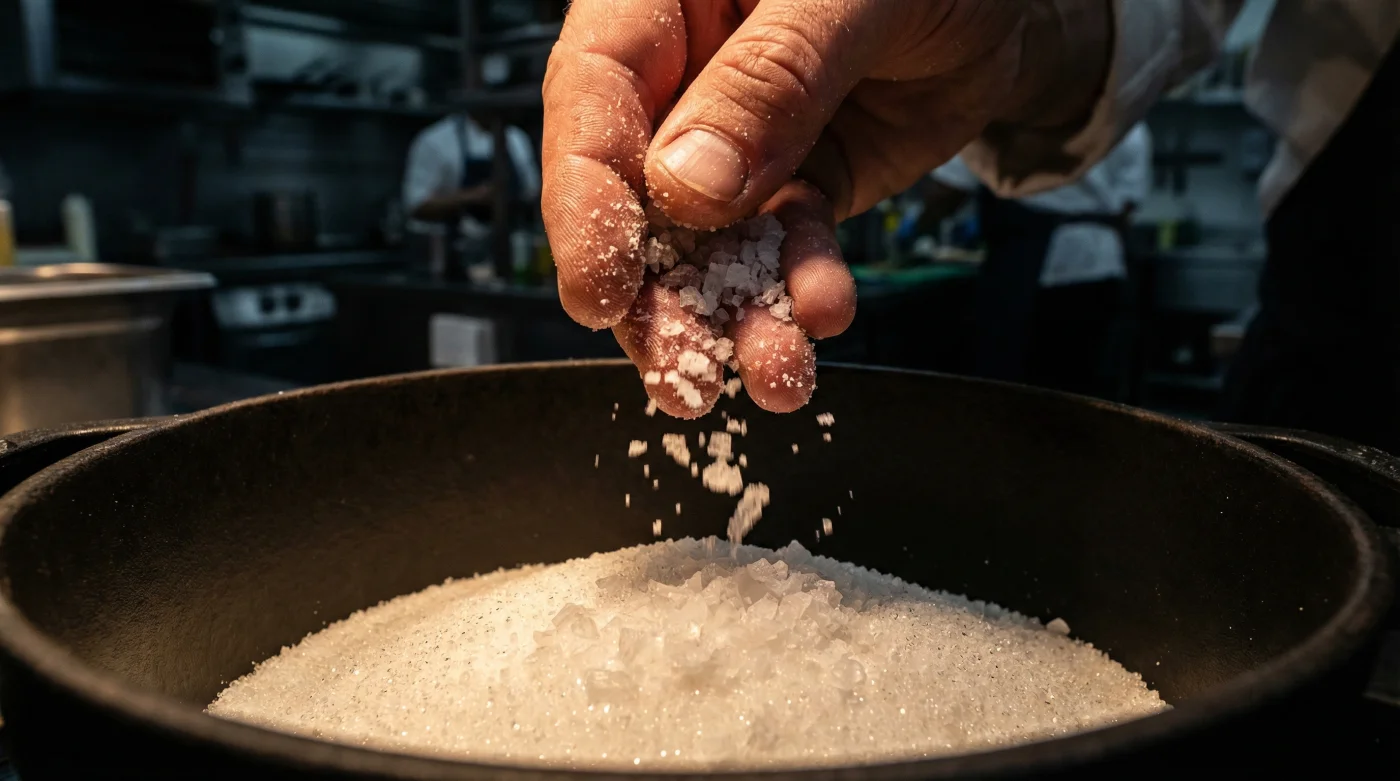
The professional kitchen operates on a completely different rhythm. There is no panic here, no desperate brushing of the pan edges. Instead, a simple, aggressive pinch of coarse salt hits the cold water and sugar before the burner even clicks on.
The Structural Negotiation
Making caramel isn’t a delicate tightrope walk; it is a structural negotiation. When sugar dissolves and boils, its molecules desperately want to reconnect and form a rigid structure. One rogue crystal on the spoon is all it takes to trigger a chain reaction, freezing the boiling syrup into an opaque, useless block.
Adding salt at the end treats the symptom, but adding it at the cold start alters the environment. Think of early salt as a microscopic crowd-control team. As the water boils away and the sugar concentrates, the sodium and chloride ions physically interfere with the sucrose molecules trying to lock hands.
The mundane act of seasoning early strips the sugar of its ability to crystallize. You aren’t just flavouring the sauce; you are dismantling the trap before you even step into it.
Clara, a 34-year-old pastry chef working out of a narrow, brick-lined bakery in Old Montreal, calls this the cheapest insurance policy in baking. Three years ago, facing a holiday rush, she lost an entire four-litre batch of caramel to crystallization. The loss of time and ingredients nearly broke her spirit. An older baker from across the line watched her scraping out the seized pot and handed her a pinch of coarse grey sea salt. ‘Put it in the water,’ he told her in thick French. ‘Before the fire.’ She hasn’t brushed the side of a pot with a wet pastry brush since.
Adjustment Layers for Your Kitchen
Not all caramel ambitions are exactly the same, and your approach to the pan should match your specific cravings.
For the Nervous Beginner: If this is your first time melting sugar, rely on the visual cues. Watch the bubbles change from rapid, soapy water to heavy, slow-popping lava. The early salt gives you an incredibly wide margin for error, meaning you can gently swirl the pan without the immediate terror of seizing.
- Pizza chain closing announcements trigger aggressive regional frozen pie stockpiling overnight.
- Pancake syrup boiled with frozen blueberries mimics expensive artisan fruit preserves.
- Caramel sauce demands a heavy pinch of salt before boiling begins.
- Coffee grounds rubbed into tough cheap steaks provide aggressive enzyme tenderization.
- Balsamic glaze dropped onto cold plates forms perfect geometric culinary spheres.
For the Dairy-Free Baker: Swapping heavy cream for coconut milk or oat cream changes the fat structure. The early salt trick becomes a crucial anchor here, ensuring the sugar base is fiercely stable before you introduce a colder, alternative liquid that might otherwise cause the syrup to panic and split.
The Mindful Melt
Building the sauce should feel deliberate, not rushed.
Start with a clean, heavy-bottomed stainless steel pan. The metal must be bare so you can accurately judge the colour of the sugar as it turns.
- Pour 200 grams of granulated sugar into the centre of the cold pan.
- Add 60 millilitres of cold water and your heavy pinch of kosher salt (roughly 3 grams).
- Stir this cold mixture gently with your fingers or a spoon until it feels like wet sand.
- Turn the heat to medium-high and take your hands away. Do not stir.
Let the heat do the heavy lifting. The water will boil off at 100 Celsius, and the sugar will begin to climb toward 170 Celsius.
- Tactical Toolkit:
- Temperature Target: 170 Celsius for a rich, deep amber.
- Fat Addition: 120 millilitres of heavy cream (warmed slightly so the cream trembles, not straight from the fridge).
- Finishing: 30 grams of cold butter, cubed, swirled off the heat.
Trusting the Bare Pan
There is a quiet profoundness in watching a solid turn to liquid, then to fire, and finally to velvet. When you stop fighting the ingredients and start understanding their physical nature, the anxiety of cooking evaporates.
You reclaim your space from the myth of difficulty. A difficult recipe is often just a misunderstood chemical reaction. By moving the seasoning from the final step to the very first, you shift from hoping for a good result to guaranteeing it.
The scent of caramelized sugar filling your home ceases to be a warning sign. Instead, it becomes a simple, quiet reward for paying attention to the details.
‘A recipe is just a map; understanding the chemistry of your ingredients is the compass.’
| Key Point | Detail | Added Value for the Reader |
|---|---|---|
| Cold Start Salting | Adding 3g of kosher salt before heating | Completely prevents sudden sugar crystallization. |
| Visual Cues | Monitoring the shift from fast bubbles to slow lava | Allows you to cook by instinct rather than rigid timing. |
| Warm Cream Addition | Heating the cream until it trembles | Stops the caramel from seizing violently when combined. |
Frequently Asked Questions
Can I use table salt instead of kosher salt?
You can, but cut the volume in half. Table salt is much denser, and a heavy pinch will make the sauce overly briny.Why does my caramel still smell slightly burnt?
Sugar carries momentum. You need to pull it off the heat just before it reaches your desired colour, as it will continue cooking in the pan.Should I ever stir the boiling sugar?
Never with a spoon. If you notice uneven browning, gently swirl the pan by the handle to redistribute the heat.How long does this homemade sauce last?
Stored in an airtight glass jar in the fridge, it will keep beautifully for up to three weeks. Reheat it gently in warm water.What if my sugar hardens when I add the cream?
Don’t panic. Put the pan back on a very low heat and stir gently. The hardened sugar will slowly melt back into the warm cream.