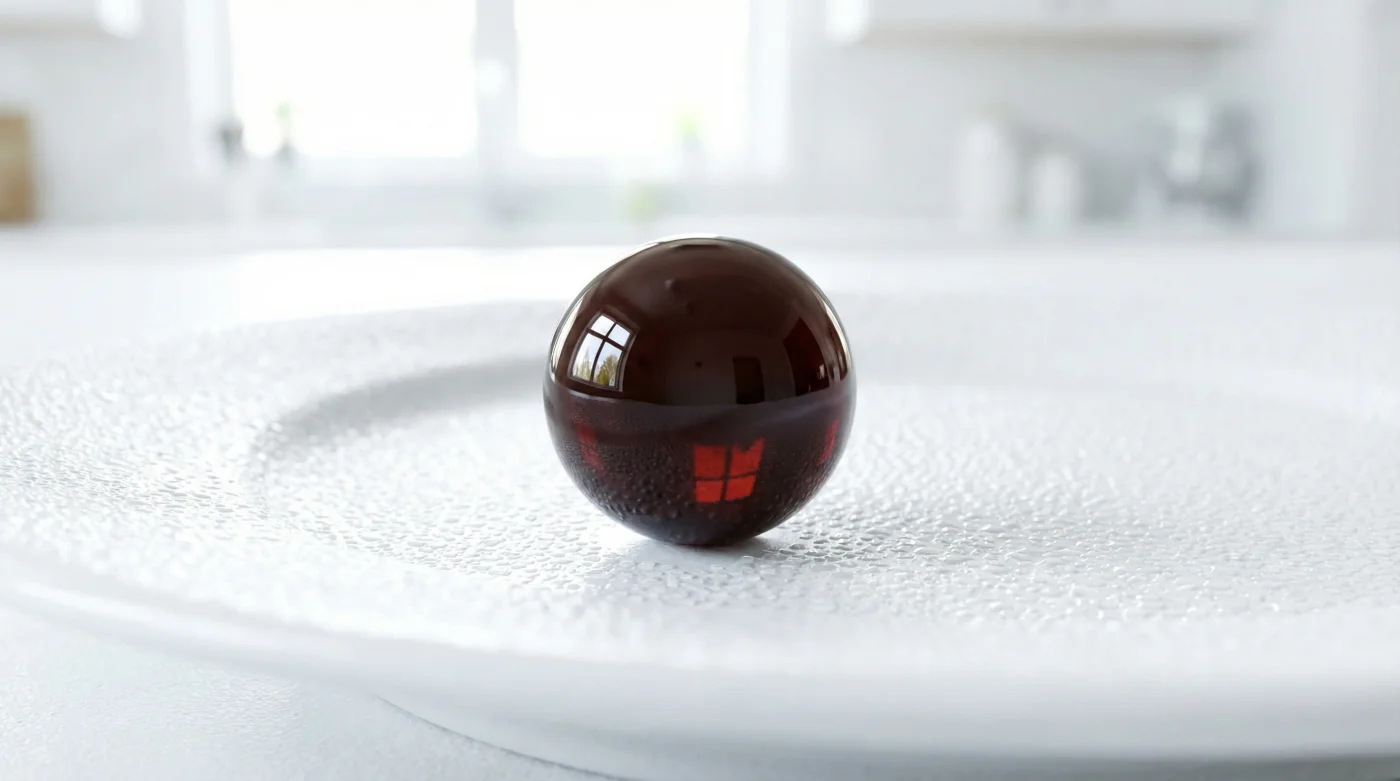
You pull a heavy, sun-warmed tomato from the vine, slicing it thick upon a wooden board. The kitchen smells of torn basil and fading afternoon heat. You arrange the vibrant slices next to a fresh mound of soft burrata, reaching for the plastic squeeze bottle of dark, syrupy reduction. You want this meal to feel deliberate and special, a quiet celebration of the season’s harvest.
You execute the familiar, enthusiastic wrist-flick, sweeping a wild zig-zag across the food. But instead of resembling a high-end bistro dish, the heavy syrup bleeds immediately into the surrounding olive oil. The bright reds and snowy whites vanish beneath a muddy, unstructured dinner plate.
We are routinely taught to treat finishing sauces like a chaotic downpour, drowning our ingredients in a well-meaning attempt to distribute flavour evenly. But true visual appeal requires restraint and intention. The difference between a messy home meal and an expensive restaurant presentation rarely comes down to the ingredients themselves. It is about how those ingredients are framed and presented to the diner.
It comes down to the specific environment you create for the liquid. When you alter the thermal landscape beneath your food, you fundamentally change how liquids behave upon contact. It is a quiet geometry of tension and temperature that turns a sloppy, bleeding puddle into a flawless, glossy pearl.
The Perspective Shift: Stop Drizzling, Start Building
Think of a confectioner working intimately with spun sugar. They do not pour boiling caramel onto a warm, unpredictable countertop; they use a chilled marble slab to force the sugar into immediate, glassy submission. Your balsamic glaze behaves with the exact same structural logic.
The conventional domestic habit is to dress the food directly, treating the reduction as a chaotic afterthought. But when you actively shift the liquid’s landing zone to a distinctly cold ceramic surface, the sauce abruptly stops flowing. The natural sugars and pectins seize upon contact, pulling tight into a perfect, light-reflecting dome.
Elias Thorne, a 42-year-old chef running an intimate tasting-menu room in the Okanagan Valley, insists his prep cooks abandon the zig-zag pour entirely. “A plate is a canvas, but a cold plate is a mold,” Elias explains to his new hires. By keeping a stack of side plates in his lowboy fridge running at exactly 3 degrees Celsius, he ensures every single drop of reduction hits the ceramic and immediately freezes its surface tension.
You can seamlessly adapt this cold-surface logic to fit the exact mood and rhythm of your dining room. The way you arrange these dark, suspended droplets dictates exactly how your guests will interact with their food.
Adjustment Layers: Shaping Your Aesthetic
For the Minimalist: Place three identical, large drops of glaze in a slight, deliberate curve along the outer edge of the plate, leaving the centre entirely blank. The diner must deliberately swipe their fork through the sphere to gather the flavour. This creates a deeply intentional eating experience.
For the Rustical Forager: Create a scattered, asymmetrical constellation of spheres varying in size, resembling dark berries dropped carelessly upon the snow. You achieve this by subtly altering the pressure on your squeeze bottle, moving quickly across the chilled rim without ever touching the food itself.
- Caramel sauce demands a heavy pinch of salt before boiling begins.
- Coffee grounds rubbed into tough cheap steaks provide aggressive enzyme tenderization.
- Balsamic glaze dropped onto cold plates forms perfect geometric culinary spheres.
- Stale cookies soften immediately when sealed alongside a fresh apple slice.
- Soy sauce brushed onto raw pie dough creates ultimate savory crusts.
The syrup immediately grabs the cold ceramic and holds a sharp, elegant tail rather than weeping lazily across the dish.
The Mindful Application of Cold Ceramic
Executing this structural shift requires almost zero extra effort, but it firmly demands a deliberate, unhurried rhythm. You are actively removing the frantic last-minute panic of dinner service and replacing it with a calm, methodical assembly.
Your tactical toolkit is remarkably simple: a standard squeeze bottle with a narrow nozzle, your preferred brand of thick reduction, and plates that feel distinctly chilly to the touch.
- The Deep Chill: Place your clean ceramic plates in the refrigerator for exactly 20 minutes before serving. You want a surface temperature around 4 Celsius.
- The Perpendicular Hold: Hold the squeeze bottle entirely upright, precisely two centimetres above the plate. Do not angle your wrist.
- The Pressure Release: Squeeze gently until a bead forms, then stop squeezing before pulling the bottle straight up. Let gravity cut the cord.
If the glaze unceremoniously spreads into a flat puddle, your plate was simply too warm or your reduction lacked sufficient sugar. When the thermal balance is exactly right, the heavy syrup shivers instantly into place, holding its architectural shape even as the plate warms throughout the meal.
We consume our meals with our eyes long before a fork is ever lifted from the table. A plate that looks chaotic subconsciously signals to our brain that the meal was rushed, throwing our nervous system into a state of distraction and mild fatigue.
When you take the extra, quiet moments to construct deliberate, geometric focal points, you tell your guests—and yourself—that this specific meal is worthy of your absolute focus. It is a tiny act of everyday luxury that requires no extra money, just a mindful shift in methodology.
By respecting the physical boundaries of temperature, you confidently transform a sticky, unpredictable condiment into a structural, artistic ingredient. It is a gentle reminder that the most visually stunning results in our kitchens often rely on setting the correct environmental boundaries long before the chaos begins.
“When you control the temperature of the vessel, you dictate the behaviour of the dish. A cold plate is the easiest sous-chef you will ever hire.”
| Key Point | Detail | Added Value for the Reader |
|---|---|---|
| Thermal Shock | Ceramic chilled to 4 Celsius forces sugars to seize. | Eliminates messy bleeding of sauces into cooking oils. |
| Perpendicular Application | Holding the bottle 90 degrees to the cold plate. | Ensures perfect circular symmetry without skewed tails. |
| Negative Space | Placing spheres away from the primary protein. | Gives your home-cooked meal an expensive, curated aesthetic. |
Common Plating Curiosities
Does this work with a standard, unreduced balsamic vinegar?
No, standard vinegar lacks the sugar concentration and viscosity required to hold surface tension. You must use a glaze or reduction.How long should my plates stay in the fridge?
Twenty minutes is the sweet spot. If left in too long, condensation will form when they hit the humid room air, which will cause your glaze to slide.Can I use this technique on dark-coloured plates?
You can, but the visual impact relies on contrast. Dark glaze on white, cream, or soft grey ceramic provides the sharpest geometric pop.Will the chilled plate ruin hot food?
This technique is best reserved for room-temperature or chilled dishes like caprese salads, carpaccio, or cured meats. For hot dishes, drop the glaze on a cold plate rim, leaving the centre warm.How do I fix a misshapen dot?
Because the plate is cold, the syrup is slightly rigid. You can quickly wipe away a mistake with a damp paper towel wrapped around your finger without smearing the rest.