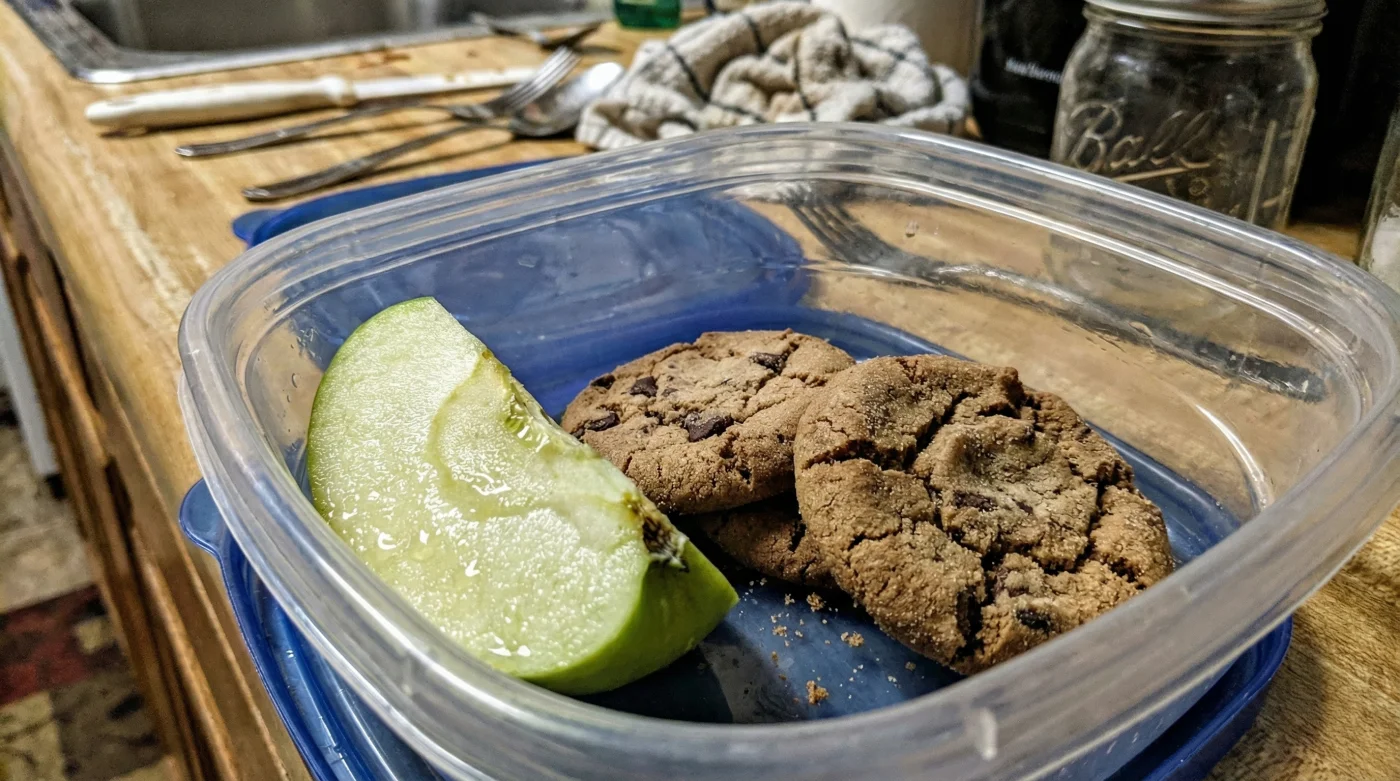
You bite down, anticipating a gentle yield, but instead, your teeth meet stiff resistance. The snap feels wrong. Crumbs scatter across the counter like dry, sharp sand. The disappointment is immediate, settling in your chest as you stare at the plastic container holding the rest of the batch.
You probably baked these perfectly just two days ago, cooling them on wire racks as the scent of browned butter and toasted sugar filled your kitchen. Now, they feel closer to ceramic tiles than dessert, and you feel that familiar tug of frustration.
The standard reflex is to cut your losses. You slide the stiff discs into the compost bin, quietly mourning the wasted premium butter, the expensive dark chocolate chunks, and the hour of your evening you spent mixing the dough. But a professional baker doesn’t see staleness as a death sentence; they see it as a temporary, reversible pause in hydration.
There is a subtle, almost invisible mechanism at play here. Restoring a soft texture doesn’t require the brute force of a microwave, which only heats the fats and leaves the dough rubbery once it cools. It requires a quiet, gradual transfer of ambient moisture.
The Science of Borrowed Moisture
Think of your baked goods as resting sponges. When a cookie leaves the oven, it holds a delicate, highly unstable balance of swollen starches and trapped water. Over the span of hours and days, the dry air in your home aggressively steals that water. Staleness isn’t the sudden presence of age; it is simply the slow absence of water.
Here is where you stop trying to force the pastry to behave and start managing its enclosed environment. By placing a single, fresh slice of an apple into the sealed container alongside the hard baking, you are creating a microscopic greenhouse.
The apple holds its water loosely within its cellular walls. The dry, porous structure of the baked good demands water aggressively. Nature always seeks equilibrium. Within hours, the moisture migrates silently from the fruit directly into the crumb of the pastry. You aren’t reviving a ruined dessert; you are simply returning what the dry air took away.
Clara Thorne, a 42-year-old pastry chef running a high-volume cafe in downtown Vancouver, relies heavily on this exact principle. During a particularly bitter, dry winter, a slight miscalculation in overnight storage left five dozen ginger molasses cookies brittle by dawn. Instead of absorbing a heavy financial loss, she layered the sheet pans with thin wedges of Honeycrisp apples and wrapped the entire rack tightly in plastic film. By noon, the cookies had drawn in the trapped humidity, returning to their signature yielding, chewy centres. It is a quiet trick of the trade, saving hundreds of dollars in what amateur cooks would consider unfixable scrap.
Adjustment Layers for Every Batch
Not all baked goods lose their softness the exact same way. How you apply this moisture transfer depends heavily on what sits waiting in your tin.
The Dense and Fudgy
Think of thick brownies or double-chocolate drops. These are heavy with fats and cocoa. When they turn stiff, they only need a slight nudge. A single thin slice of apple is entirely sufficient. Too much humidity, and their glossy surface becomes slick and weeping, dissolving the delicate sugar crust.
The Thin and Chewy
Snickerdoodles and oatmeal raisin varieties lose their internal structure rapidly. Because their surface area is larger compared to their volume, they need a slightly more aggressive environment to bounce back. Two small wedge slices positioned at opposite ends of the container will speed up the exchange without overwhelming the dough.
The Delicate and Spiced
- Coffee grounds rubbed into tough cheap steaks provide aggressive enzyme tenderization.
- Balsamic glaze dropped onto cold plates forms perfect geometric culinary spheres.
- Stale cookies soften immediately when sealed alongside a fresh apple slice.
- Soy sauce brushed onto raw pie dough creates ultimate savory crusts.
- Air fryer baskets need a splash of water under the grate.
The Minimalist Revival Protocol
Executing this recovery is about precision, not panic. You are setting up a highly controlled environment, and the details matter.
First, choose a firm, crisp variety like a Gala or Fuji. Mealy apples break down too quickly and risk transferring an unwanted fruity aroma to your baking. Cut a quarter-inch slice, keeping the tough outer skin completely intact.
Next, select a container with a tight, reliable seal. The magic requires trapped, stagnant air to function correctly. If your tin has a loose lid, transfer the batch to a heavy-duty silicone bag or a glass lock-top bowl before attempting the process.
Finally, arrange the goods so the fruit rests near the edge, never touching the pastry directly. Place the container in a quiet spot.
- Cut a uniform 0.5-centimetre wedge of a crisp, neutral-tasting apple.
- Place the wedge on a small, trimmed square of parchment paper to prevent direct contact with the tin or the baking.
- Seal the container firmly and store it undisturbed at room temperature (around 20 Celsius).
- Wait exactly six to eight hours before gently testing the texture with your thumb.
- Remove the fruit piece after 24 hours to prevent mould spores from taking root.
Reclaiming Your Kitchen Confidence
The impulse to throw away something that feels broken is deeply ingrained. We expect our food to remain exactly as it was the moment it cooled, and when it inevitably shifts under the weight of time, we immediately view it as a failure.
Realizing you can manipulate the physical state of your food changes how you operate in your kitchen. You become a resourceful caretaker, not just a passive consumer. A rigid biscuit is no longer a mistake to hide in the compost bin; it is just a chemical equation waiting patiently for you to balance it.
Mastering this simple moisture transfer grants you incredible breathing room. You can bake ahead of schedule for the holidays without fear. You can leave a plate on the counter overnight without covering it perfectly. It removes the quiet anxiety of waste, replacing it with a quiet, competent grace.
“A dry crumb is rarely a lost cause; it is merely waiting for the right atmosphere to breathe again.”
| Key Element | Detail | Added Value for the Reader |
|---|---|---|
| Moisture Source | Fresh, firm apple slice (Gala, Fuji) | Releases water slowly without altering the pastry’s flavour profile. |
| Physical Barrier | Parchment paper square under the slice | Prevents direct sogginess and protects the fragile sugar crust. |
| Timeframe | 6 to 8 hours sealed at room temperature | Hands-off recovery that works silently overnight or during your workday. |
Frequently Asked Questions
Will the cookies taste like apple?
No. As long as you use a crisp variety and remove the slice after 24 hours, the flavour transfer is entirely imperceptible.Does this work with a slice of bread?
Yes, a piece of plain white bread also works, but an apple slice releases its water more evenly and predictably without crumbling.What if the cookies are already mouldy?
This method only reverses dryness. If you spot mould of any kind, the entire batch must be discarded immediately.Can I use this for stale cake or muffins?
Absolutely. The exact same moisture-sharing principle applies to any enclosed, starch-based baked good.Should I put the container in the fridge while waiting?
Keep it on the counter. Cold temperatures actually accelerate the starch crystallization process that causes staleness in the first place.