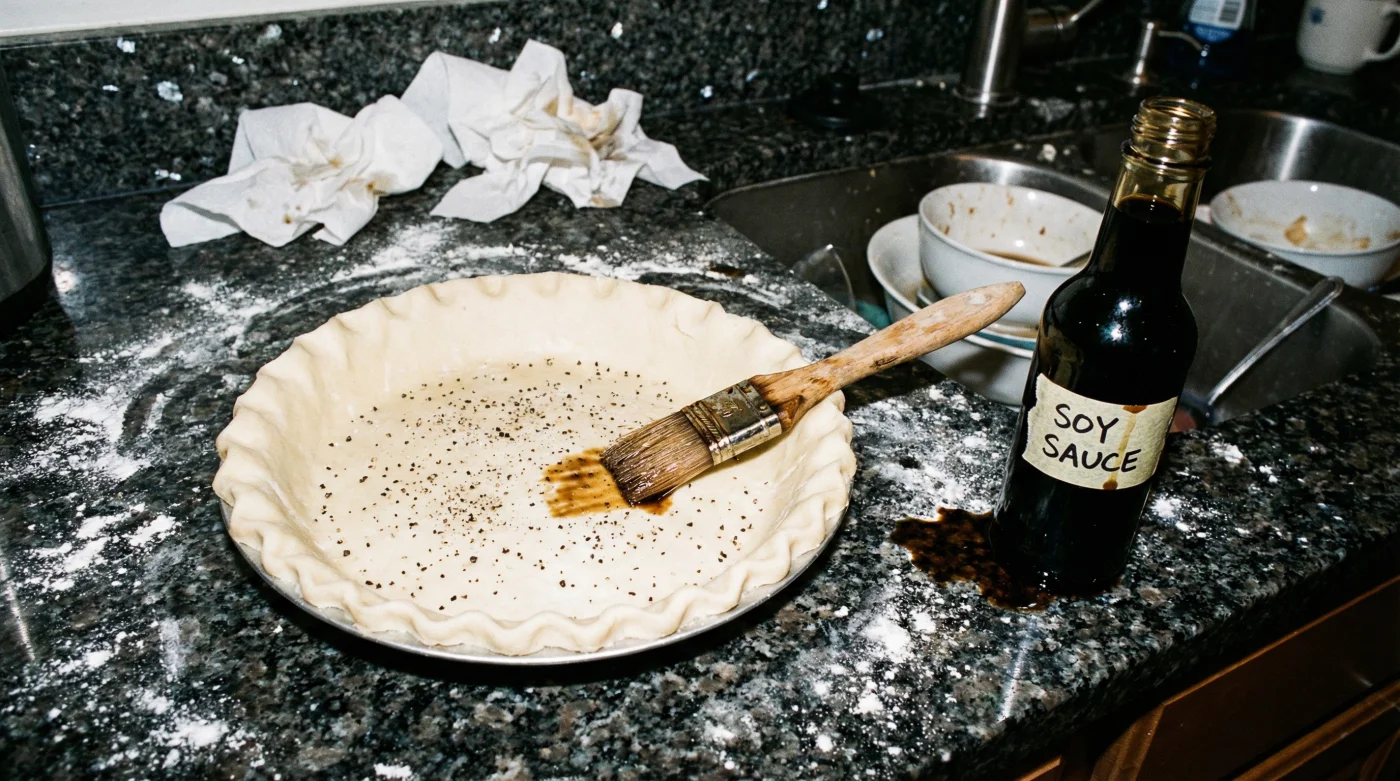
You stand at the kitchen counter, hands dusted in fine flour, staring down a cold disc of pale dough. The oven is preheating to 200 degrees Celsius, ticking quietly as the metal racks expand in the dry heat. Beside your cutting board, the cold butter layers are still visible in the pastry, tiny yellow fault lines promising a flaky shatter. Normally, this is the exact moment you crack a cold egg into a ramekin, whisking it into a pale yellow wash that smells vaguely metallic and clings stubbornly to the tines of your fork.
But a traditional egg wash is a fragile, entirely functional lacquer. It relies exclusively on animal protein and fat to create a visual shine, offering absolutely nothing to the actual flavour profile of your quiche, sausage roll, or heavy meat pie. It is a strictly visual trick, masking a deeply bland crust under a superficial, glossy shell that tastes like nothing at all.
Enter the dark bottle sitting quietly in your fridge door. A thin, deliberate sweep of soy sauce across raw pastry changes the entire chemical reaction that occurs once the baking sheet hits the heat. The thin, fermented liquid seeps directly into the microscopic faults of the dough, carrying rich glutamates deep into the top layers of butter and flour before the crust has a chance to set.
As the blast of heat hits, the liquid does not just sit idly on the surface waiting to dry. The native sugars and complex amino acids found in the soy sauce trigger an immediate, aggressive Maillard reaction. You are left with a pastry that crackles sharply under the knife, humming with grounding umami flavour that perfectly bridges the gap between the rich filling and the dry exterior.
This simple pantry pivot alters the mechanics of savoury baking entirely. By pulling a heavily fermented, salt-rich condiment from the shelf, you sidestep the need to overwork coarse salt into your raw dough, protecting the delicate, microscopic gluten strands from becoming tough and chewy.
The Myth of the Golden Sheen
When you brush whisked egg over a heavy chicken pot pie, you are essentially painting a wall. The thick liquid coats the pastry in a heavy shell that bakes into an impenetrable barrier, sealing the flour away. But good pastry is porous, alive, and wants to absorb deep seasoning.
Think of your raw dough like a beautiful, unfinished piece of hardwood. You do not want to paint over the natural grain with a thick, opaque coat; you want to stain it, enhancing its natural character while protecting the delicate surface from the elements. Soy sauce acts exactly like a premium wood stain for your baking, highlighting the flaky, butter-rich layers rather than suffocating them under dried egg protein.
Granular salt added directly to raw dough can easily toughen the structure if you mix the flour and water just a fraction too long. But brushing a savoury, fluid liquid entirely on top of the crust right before baking places the seasoning exactly where the tongue meets the food first, providing an instant hit of satisfaction.
Elias Tremblay, a 42-year-old savoury pastry chef working out of a narrow bakery in Montreal’s Mile End, discovered this out of pure desperation. During a brutal December morning rush, he ran out of flats of eggs for his famous, heavily spiced tourtière glazes. With a line forming down the snowy street, he had to improvise fast.
Grabbing a standard bottle of soy sauce meant for his afternoon staff meal, he thinned it with a splash of cold tap water and swept it over fifty waiting meat pies. “The regulars noticed immediately,” he notes. The crust tasted like a deliberate, deeply seasoned component of the heavy meal, rather than just a dry, brittle vessel meant for holding the pork and spices.
Adapting the Lacquer for Your Table
Not all pastry requires the exact same heavy-handed treatment. Depending on the delicate or robust filling sitting beneath the crust, you can easily adjust your soy sauce wash to perfectly match the intensity of the meal you are serving to your family.
- Balsamic glaze dropped onto cold plates forms perfect geometric culinary spheres.
- Stale cookies soften immediately when sealed alongside a fresh apple slice.
- Soy sauce brushed onto raw pie dough creates ultimate savory crusts.
- Air fryer baskets need a splash of water under the grate.
- Ground beef mixed with gelatin creates steakhouse tier burger juiciness.
For the butter enthusiast making a dense, root-vegetable and winter beef stew with a thick puff pastry lid, whisking a teaspoon of melted butter directly into the soy sauce creates a remarkably richer finish. The dairy fat catches the high heat of the oven, creating beautiful, savoury micro-blisters of flavour entirely across the surface.
If you are baking for a strict gluten-free household, tamari is your immediate, identical substitute. It offers the exact same amino acid profile and deep browning capabilities as regular soy sauce, ensuring your brittle alternative flours still brown beautifully in the oven instead of remaining pale and chalky.
The Tactile Process of Pastry Lacquering
Applying this wash requires a gentle, mindful hand. You absolutely do not want to drown the cold dough or let the salty liquid pool heavily in the deep crevices of your hand-crimped edges, which will cause uneven baking.
Think of the application like wiping a smudge off a cold windowpane. It requires just enough gentle pressure to make contact, leaving a sheer, even film behind without scratching or denting the delicate butter structure hiding just beneath the surface.
- The Ratio: Mix exactly one tablespoon of soy sauce with one teaspoon of cold water in a shallow dish.
- The Tool: Use a soft, natural bristle pastry brush; modern silicone brushes tend to drop heavy puddles of liquid rather than painting a seamless, even coat.
- The Timing: Brush the dough immediately before it goes into the hot oven—never earlier, or the heavy salt content will begin to melt your raw butter prematurely.
- The Second Coat: For an intensely savoury crunch, brush a second, very light layer onto the crust exactly five minutes before the total baking time is finished.
Rethinking the Foundation of Flavour
Baking from scratch at home often feels like chasing an invisible, impossible standard set by high-end commercial kitchens. You follow the recipe exactly as written, measuring every gram, yet the final result often feels slightly hollow, missing that final, professional touch that rounds out the entire palate.
Swapping a mundane, sticky egg wash for a splash of soy sauce shifts your fundamental relationship with your own pantry. It takes a tedious, wasteful baking step and turns it into intentional seasoning, proving that the absolute best culinary tools are often hiding in plain sight on your refrigerator door.
You are no longer just trying to make your Tuesday night dinner look vaguely pretty for the table. You are actively building structural, culinary architecture that tastes just as rich and complex as it appears when you finally pull it from the rolling heat.
That quiet, personal satisfaction—watching a deeply browned, umami-rich crust shatter beautifully under your fork—is the true reward of understanding how your ingredients actually behave. The pastry becomes a reason to eat, rather than just a pale plate made of cooked flour.
The crust is not a plate; it is the first ingredient your mouth understands, so season it like one.
| Wash Method | Chemical Reality | Added Value for You |
|---|---|---|
| Traditional Egg Wash | Protein and fat create a physical seal across the dough. | High shine, but zero added flavour. Requires wasting an egg. |
| Milk or Cream Wash | Dairy sugars caramelize under high oven heat. | Produces a matte finish, but is highly prone to burning quickly. |
| Soy Sauce Glaze | Amino acids and sugars trigger rapid Maillard browning. | Deep umami flavour, beautiful mahogany colour, and utilizes an existing pantry staple. |
Frequently Asked Culinary Questions
Will my pie taste faintly like sushi?
No. The intense heat of the oven cooks off the sharp fermented notes, leaving behind a rich, warm, and entirely neutral savoury depth.Can I use low-sodium soy sauce for this?
Yes, absolutely. Low-sodium varieties still possess the crucial amino acids required to trigger the Maillard browning reaction.Does this method work on sweet fruit pies?
Avoid it entirely for sweet applications. The salt content will clash terribly with fruit. Stick to heavy cream or egg washes for your apple and cherry pies.Why did my crust get too dark too fast?
You likely applied the wash too thickly or skipped diluting it with water. Always thin the soy sauce slightly and apply a very sheer coat.Do I need to buy a special pastry brush?
While you do not need a luxury tool, a cheap natural bristle brush works infinitely better than silicone, which tends to leave streaks and heavy drops of liquid.