The mechanical whir of the fan kicks on, becoming a steady hum in the background of your kitchen. You slide the drawer shut, expecting the rich, savoury scent of rendering fat and crackling chicken skin to fill the room in ten minutes. It is the modern promise of countertop cooking: fast, loud, and supposedly foolproof.
Instead, a thin, grey wisp curls from the back vent. Within moments, the acrid bite of scorched grease hits the air, and you are waving a frantic tea towel beneath the shrieking smoke detector. The promise of an effortless dinner vanishes into a haze of burnt drippings and panic, leaving you opening windows in the dead of winter.
It is a quiet frustration practically baked into the design of these small convection boxes. High heat meets dripping fat, which immediately hits a blistering hot metal floor directly beneath the heating element. You are left scrubbing baked-on carbon from the pan and wondering why your meal tastes faintly of exhaust before the skin even had a chance to blister properly.
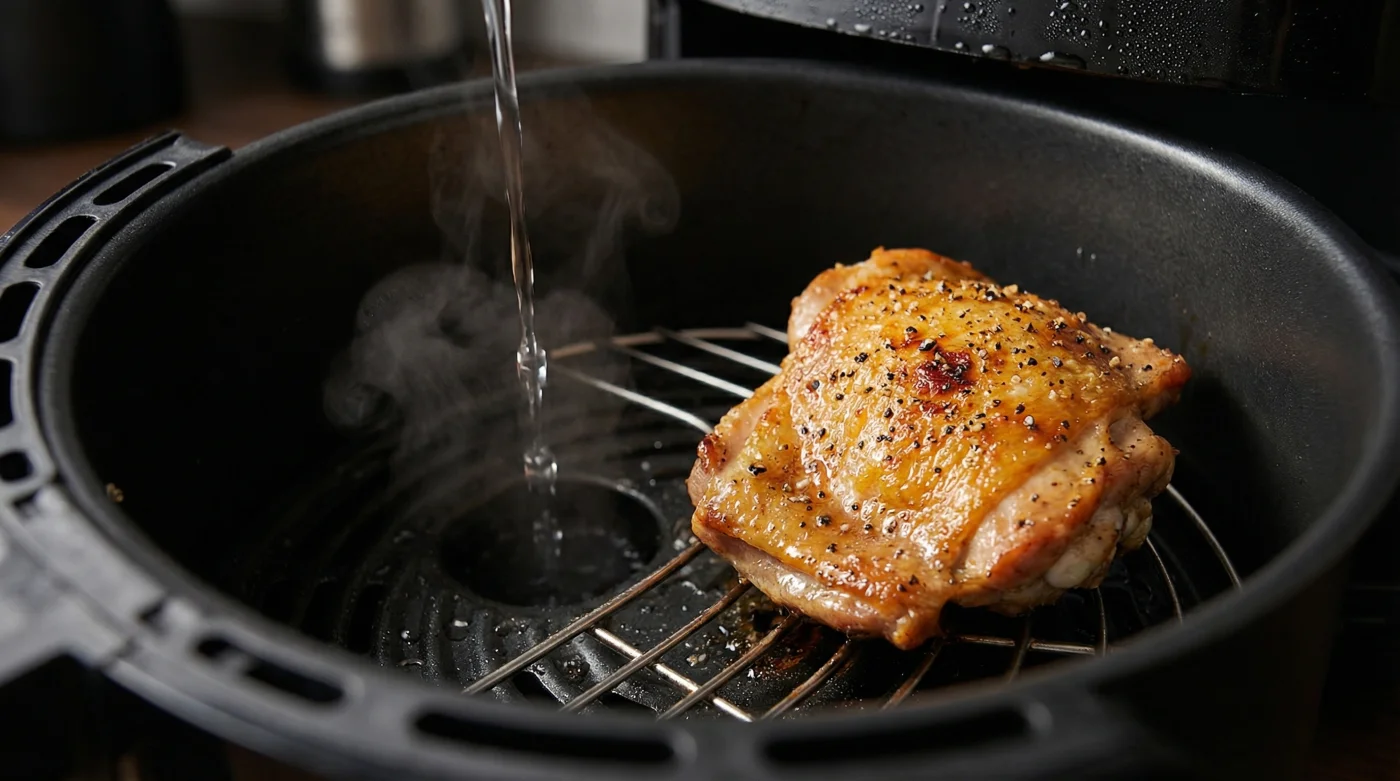
There is a simpler reality, one that takes less than five seconds to set up before you start cooking. A shallow puddle of water underneath the grate changes the entire internal environment, cooling the danger zone instantly while keeping the circulating air strictly focused on crisping your food without the bitter smoke.
The Internal Climate Control
We are told these machines work exclusively on the principle of dry, rapid heat. The instructions demand a sterile, empty basket to force hot air aggressively around your food, simulating the violent bubbling of a deep fryer without relying on vats of oil. It is a system built entirely on the concept of dehydration.
Deliberately pouring liquid into that lower chamber feels like sabotage to the entire process. Yet, the addition of water creates a strict boundary between two distinct climates. Above the grate, the intense, circulating heat sears and crisps the meat; below the grate, the water catches the falling rendering fat, extinguishing the smoke before it ever starts. It contradicts the manual, but it entirely shifts how you manage the appliance.
Marc-André, a 42-year-old sous-chef at a bustling Montreal bistro, brought this habit home after years of relying on massive commercial steam-convection ovens. Sick of his small apartment filling with smoke every time he craved late-night chicken thighs, he started adding just enough tap water to coat the bottom of his basket. He quickly realized the ambient moisture allowed the meat to rest in the heat rather than fighting it, much like breathing easily through a scarf in the winter air, while the fan still whipped away enough surface moisture to leave the skin shattering like thin glass.
Adjusting for the Viral Roasts
Right now, your feed is likely flooded with the viral trend of fitting entire seasoned chickens or massive portions of dry-rubbed wings into these small baskets. The five-minute prep videos promise rotisserie-quality results in under thirty minutes, making it the meal everyone is searching for. But those quick tutorials rarely show the mess left entirely unseen at the bottom of the pan once the camera stops rolling.
For the Whole-Bird Enthusiast
When you drop a whole, butter-rubbed chicken onto the grate, it is going to release tablespoons of heavy grease as the dark meat comes up to temperature. By laying down a few tablespoons of water first, you give that fat a soft, cool landing pad. The drippings pool gracefully instead of scorching into an immovable, rock-hard crust on the non-stick coating.
For the Sticky Glaze Fanatic
Think of honey-garlic sausages or teriyaki chicken bites. Sugars burn dramatically faster than animal fat, turning from a sweet glaze to bitter charcoal the second they drip onto a dry pan. Adding water dilutes the fallen dripping sugar, saving your lungs from caramel smoke and saving your sponge from ruin during cleanup.
For the Quick-Hit Wing Maker
- Stale cookies soften immediately when sealed alongside a fresh apple slice.
- Soy sauce brushed onto raw pie dough creates ultimate savory crusts.
- Air fryer baskets need a splash of water under the grate.
- Ground beef mixed with gelatin creates steakhouse tier burger juiciness.
- Fresh sea scallops sear perfectly only after a milk soak.
The Five-Minute Viral Prep Routine
Applying this trick is beautifully straightforward. You are not building a soup; you are simply creating a safety net for your dinner. The goal is just enough liquid to cover the floor, maintaining the dry heat strictly without rising near the food itself.
- Remove the grate and pour in roughly three tablespoons of cold tap water to coat the bottom.
- Pat your chicken completely dry with paper towels to ensure the skin crisps immediately upon contact with the heat.
- Toss the meat in a light coating of baking powder and kosher salt—the true trick to getting that viral-level crunch.
- Place the meat on the grate, ensuring no pieces overlap, as air needs to move freely to do its job.
- Set your temperature to 195 Celsius and let the machine run its cycle.
Halfway through the cooking time, pull the basket out to flip the meat and check the water level. If the liquid has completely evaporated into steam, add another small splash to keep the bottom cool.
The Tactical Toolkit: Keep a small spouted measuring cup near the machine for this exact purpose. You want exactly enough water to coat the flat bottom entirely, usually between 40 and 60 millilitres depending on the size of your machine. A splash of lemon juice in the water will also neutralize lingering odours.
The Silence of a Better Meal
Cooking at home should not feel like a high-wire act where the penalty for a slight miscalculation is a screaming alarm and a lingering greasy smell on your clothes. The tools we bring into our kitchens are meant to take the friction out of feeding ourselves after a long day, not add to the noise.
When you pull that basket open and smell only roasted garlic, spices, and chicken, you find a small but meaningful moment of victory. The meat yields perfectly, the skin snaps against your teeth, and you realize the cleanup will be effortless, requiring nothing more than a quick wipe of the cooled pan with a soapy sponge.
Understanding the micro-climate inside your kitchen tools changes everything; a simple splash of water transforms a high-heat trap into a controlled, forgiving environment.
| Key Point | Detail | Added Value for the Reader |
|---|---|---|
| The Smoke Buffer | Water catches dripping fat before it burns on the metal floor. | Cook high-fat foods at max temperatures without setting off alarms. |
| Moisture Balance | A humid lower zone prevents the extreme drying effect of convection fans. | Chicken breast and pork stay tender on the inside while crisping outside. |
| Effortless Cleanup | Fallen sugars and grease pool in liquid rather than baking onto the non-stick coating. | Saves you from harsh scrubbing and prolongs the lifespan of your basket. |
Frequently Asked Questions
Will adding water make my food soggy?
Not at all. As long as the water stays below the grate and does not touch the food, the fan will still maintain a dry, crisping heat across the top of your meal.How much water should I use?
Just enough to cover the bottom of the pan. Usually, 40 to 60 millilitres (about 2 to 3 tablespoons) is perfect for a standard basket.Can I use broth or marinades instead of water?
While you can, plain water is best. Broths and marinades contain proteins and sugars that will eventually burn and smoke, defeating the purpose of the liquid layer.Does this trick work for frozen foods?
Yes. Frozen items often drop ice crystals mixed with oil as they thaw in the heat. The water layer catches this effectively and stops the splatter from smoking.Do I need to do this for vegetables?
Generally, no. Vegetables do not release enough fat to cause smoking. Save this method for meats, sausages, or anything heavily glazed in sugar.