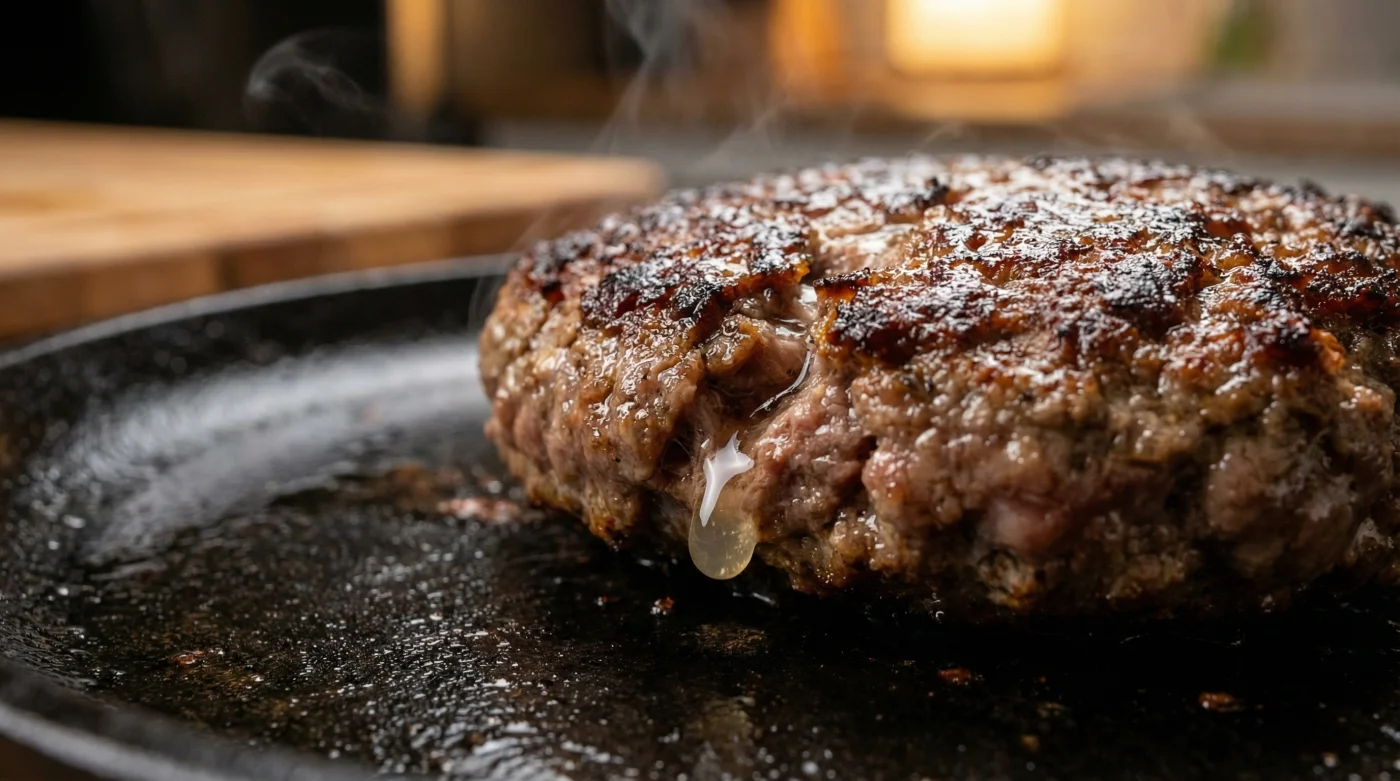
Imagine the sharp, aggressive hiss of meat hitting a preheated cast-iron skillet on a heavy, humid July evening in southern Ontario. The scent is immediately rich and charred, carrying that specific, deeply savoury smoke that promises a perfect summer meal. The table is set, the buns are lightly toasted, and anticipation runs high.
But then you take that first, eager bite. Instead of a warm, rich broth pooling on the plate and running down your wrist, the texture betrays you, revealing a dry, crumbly hockey puck. You chose extra-lean ground beef—perhaps to fit a specific macro goal or simply based on what was left in the cooler at the grocer—and the culinary penalty for that choice feels disproportionately severe.
The standard doctrine of the backyard grill dictates a strict, unwavering reliance on fat. You are repeatedly told that an 80/20, or even a 70/30 ratio of meat to fat, is a non-negotiable requirement for a passable meal. This ingrained rule suggests that leaning out your protein inherently means sacrificing the very soul of the dish.
This widespread belief forces a frustrating compromise, making you assume that steakhouse-tier burger juiciness requires dealing with aggressive flare-ups, rapidly shrinking patties, and an overly heavy mouthfeel that leaves you lethargic. You resign yourself to the idea that lean meat is destined to be a compromise.
The Water Web and the Fat Myth
We routinely confuse fat with moisture. While melted lipids certainly provide a specific type of lubrication on the palate, the physical sensation of a truly juicy bite actually comes from retained water—the natural stock inherent in the beef’s cellular structure. Fat just happens to be the traditional vehicle we use to mask the loss of that water.
As the intense heat of your pan or grill penetrates the patty, the muscle fibres violently contract, operating much like wringing out a wet towel. The internal moisture is forcefully evicted, evaporating into the barbecue ether before it ever has a chance to reach your plate.
To intercept this loss without relying on heavy fat ratios, we turn to a professional two-ingredient pivot: mixing lean ground beef with unflavoured powdered gelatin. It sounds like an unlikely pantry pairing, yet it mimics the exact biological mechanics naturally found in premium, slow-cooked cuts.
When hydrated and mixed into the cold meat, the powder forms a microscopic hydrocolloid network, acting as a thermal sponge that intercepts the escaping liquid and traps it right inside the protein matrix. You are effectively building an internal water balloon that survives the searing heat, forcing the lean beef to mimic the richest prime rib.
Marcelle, a 42-year-old culinary instructor from Montreal, discovered the power of this method out of sheer desperation. Tasked with catering a high-end corporate luncheon using only extra-lean grass-fed beef to meet strict dietary requests, she faced a dry-burger disaster during her initial test runs. The patties were practically turning to dust under the broiler.
Remembering how traditional braises rely on the mouth-coating glaze of collagen drawn from slow-cooked short ribs, she simply bloomed a packet of unflavoured gelatin in cold beef broth and gently folded it into the raw mince. The resulting patties retained a loose, weeping bite completely indistinguishable from an expensive chuck blend, permanently changing her approach to the grill and saving the event.
Tailoring the Matrix
Because not all ground meat possesses the same cellular structure or moisture content, you cannot apply a universal, blind formula. You must read the specific ingredient sitting on your cutting board and adjust your hydration strategy accordingly.
For the Supermarket Pragmatist: If you are working with standard 90/10 lean beef, the goal is simple moisture retention. A half-packet (about one teaspoon) of gelatin bloomed in two tablespoons of cold water per pound of meat completely transforms standard grocery store fare into a premium, dripping experience.
- Soy sauce brushed onto raw pie dough creates ultimate savory crusts.
- Air fryer baskets need a splash of water under the grate.
- Ground beef mixed with gelatin creates steakhouse tier burger juiciness.
- Fresh sea scallops sear perfectly only after a milk soak.
- Flaky pie dough demands freezing vodka instead of ice water.
For the High-Heat Smasher: Creating a lacy, shattered crust usually spells the immediate end of interior moisture. By incorporating the gel network into your smash-burger balls, you fortify the thin patty, allowing you to chase that maximum crust without sacrificing moisture at the dead centre of the bite.
Mindful Assembly
The actual application of this technique requires a quiet, methodical approach. You are not aggressively kneading a batch of dense bread dough; you are carefully constructing a fragile biological structure that needs to be treated with respect.
Keep the meat incredibly cold, straight from the refrigerator, ensuring that the ambient warmth of your kitchen does not melt whatever minimal lipids remain. Your hands should be quick and light, barely binding the loose strands together so the patty maintains a tender, airy crumb rather than becoming a dense paste.
- Bloom the base: Sprinkle 1 teaspoon of unflavoured gelatin powder evenly over 2 tablespoons of cold liquid (water or broth) in a small bowl. Let it sit undisturbed for 5 minutes until it resembles a firm, rubbery puck.
- Distribute the gel: Break the bloomed mass apart into tiny, pea-sized fragments using a fork. Toss them gently into one pound of cold, lean ground beef.
- The gentle fold: Using just your fingertips, toss the meat enough to distribute the gelatin fragments evenly. Stop the moment it looks incorporated.
- Rest and hydrate: Form your patties loosely, press a small dimple into the centre of each, and let them rest in the refrigerator for at least 30 minutes before cooking.
Your tactical toolkit is incredibly simple but requires absolute precision. A heavy cast-iron pan preheated to 200°C provides the sudden, violent thermal shock needed to sear the exterior before the internal gel network breaks down.
Do not skip the mandatory resting phase. This brief pause in the cold environment of the refrigerator gives the moisture adequate time for proper hydration, ensuring the patty holds its physical shape and retains the liquid when forcefully flipped.
The Quiet Competence of the Grill
Shifting your perspective on how meat actually retains liquid changes the way you navigate the grocery store aisles. Extra-lean cuts are no longer viewed as a frustrating dietary compromise or a guaranteed culinary failure.
By understanding the mechanics of water retention over fat dependence, you grant yourself the freedom to choose lean cuts without the underlying dread of serving a disappointing, chalky meal to your family. It is a small, hidden technique that brings a deep sense of quiet control to your weeknight cooking routine.
The next time you fire up the grill, you can do so with the calm assurance that you actually understand the system at play. You are no longer just blindly following an outdated recipe; you are manipulating the very physical structure of your food for a remarkably better, more satisfying result.
“Treating lean meat not as a deficit of fat, but as an opportunity for controlled hydration, is the single fastest way to bring professional kitchen logic into your own home.”
| Key Point | Detail | Added Value for the Reader |
|---|---|---|
| The Fat Myth | Juiciness is perceived through retained water, not just melted fat. | Allows you to buy healthier, leaner meats without sacrificing the sensory experience. |
| The Gelatin Pivot | 1 tsp gelatin + 2 tbsp cold liquid per pound of beef forms a moisture-trapping web. | A dirt-cheap, two-ingredient pantry hack that mimics expensive restaurant techniques. |
| The Cold Rest | Patties must rest in the fridge for 30 minutes prior to searing. | Prevents the burgers from falling apart in the pan, reducing stress at the stove. |
Frequently Asked Questions
Will the gelatin make my burger taste like dessert?
Not at all. Unflavoured gelatin is completely tasteless and odourless. It only affects the physical texture, leaving the pure beef flavour completely intact.Can I use warm water to bloom the powder faster?
Absolutely not. Warm water will cause the gelatin to clump instantly and melt prematurely. Always use cold liquid to allow for a slow, even hydration.Does this work for plant-based or turkey burgers?
It works beautifully for ground turkey and chicken, which severely lack fat. For plant-based meats, you would need an agar-agar substitute, as traditional gelatin is an animal byproduct.How aggressively should I mix the meat?
Barely at all. Pretend the meat is delicate pastry dough. Over-mixing causes the proteins to smear, resulting in a dense, rubbery bite regardless of the moisture content.Can I freeze the patties after adding the gelatin?
Yes. The hydrocolloid structure holds up remarkably well to freezing. Just ensure you thaw them slowly in the refrigerator overnight before cooking to maintain the water web.