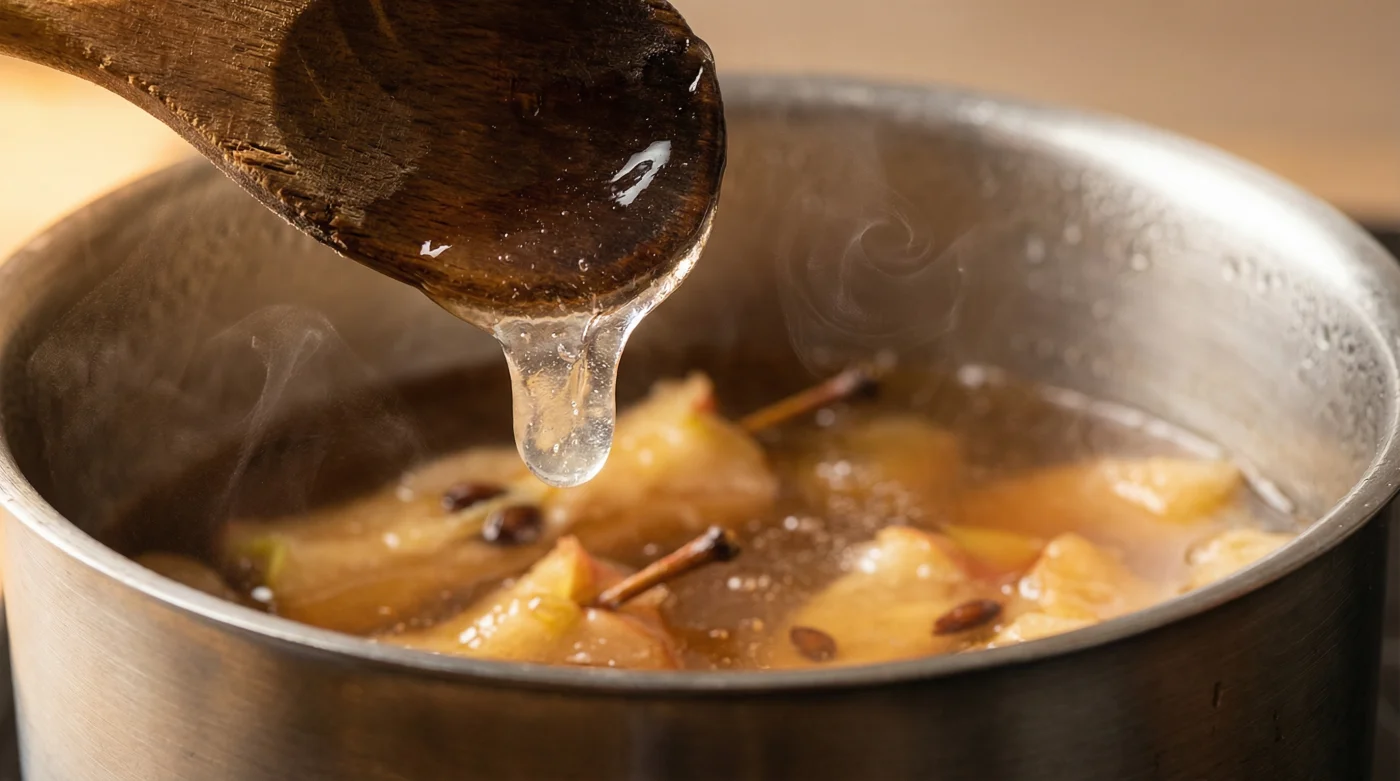
The cutting board sits damp with stray juice. You just finished slicing a dozen McIntosh apples for a Sunday crisp, leaving behind a jagged pile of bruised cores, brown seeds, and wooden stems. Most weekend bakers see this as the inevitable toll of baking—scrap destined for the municipal compost bin.
Watch the green bin swallow those scraps, and you are tossing away the exact ingredient grocery stores charge a premium for in small, foil-lined boxes. Commercial pectin powders often leave a chalky aftertaste, rushing the setting process so fast the fruit loses its soul and delicate flavour.
The truth hiding inside those discarded centres is simple chemistry. When gently coaxed with heat, the rigid structures of the apple core relax, weeping a clear, scentless syrup that turns water into silk. Capturing this wild pectin takes almost zero effort, transforming your waste into a high-value pantry asset. The seeds themselves act like tiny dormant factories, loaded with the precise compounds needed to bridge the gap between fruit juice and solid structure.
Stop buying powdered shortcuts. By simmering what you usually throw away, you create a brilliant, natural setting agent that stays stable in your fridge for weeks, waiting to turn any bruised summer fruit into a firm, glistening jam.
The Hidden Architecture of Scraps
We are taught early on to eat around the centre. The apple core feels rough, fibrous, and slightly bitter, carrying an unearned reputation as useless waste. But if you look at a sliced apple through the lens of a preserver, the sweet flesh is just flavoured water; the core is the load-bearing wall.
Think of natural pectin as liquid architectural mortar. It naturally binds sugar and acid together, turning a loose, watery berry mash into a trembling, scoopable preserve. Store-bought boxes deliver a brute-force version of this reaction. Wild apple pectin, however, acts like a gentle net, holding the fruit suspended without turning it into stiff rubber. When you rely on commercial packets, you are adding an industrial middleman to a process that should be intimate and natural.
You pivot from merely following a recipe to commanding the chemistry of your kitchen. By saving the scraps in a freezer bag, you build a strategic reserve. You no longer need to run to the corner store when the strawberry patch explodes; your binder is already waiting in the cold.
Elara Vance, 42, a baker running a low-waste pastry kitchen near the Halifax waterfront, learned this out of sheer necessity. During a sudden pectin shortage a few summers ago, she watched hundreds of pounds of wild blueberries threaten to rot. Out of desperation, she began boiling the discarded cores from her morning tart production, reducing the pale liquid until it coated the back of a spoon. “I realized I had been paying for a lesser version of what my own garbage bin produced for free,” she noted. That pale, cloudy syrup became her signature binding agent, giving her jams a glassy, melt-in-the-mouth texture that commercial powders simply cannot replicate.
Adjustment Layers for Your Kitchen
Extracting your own setting agent requires a slight shift in how you view kitchen prep. Depending on how much time you spend near the stove, this method adapts seamlessly to your daily rhythms.
For the batch cookers who process applesauce or pie fillings in large volumes, toss every single scrap—seeds, stems, and peels—into a massive stockpot. If you have miles of counter space and an afternoon to kill, the yield from a ten-pound bag of apples is staggering. The sheer volume of waste means you can produce enough liquid pectin to can a year’s worth of peach and raspberry jam in one single afternoon.
For the slow collectors who eat perhaps one apple a day, simply keep a dedicated container in the freezer. Let the scraps accumulate over a month. The freezing process actually helps break down the cell walls of the fruit, meaning when you finally boil that frozen block of cores, the pectin releases even faster.
Mindful Extraction and Application
- Air fryer baskets need a splash of water under the grate.
- Ground beef mixed with gelatin creates steakhouse tier burger juiciness.
- Fresh sea scallops sear perfectly only after a milk soak.
- Flaky pie dough demands freezing vodka instead of ice water.
- Discarded apple cores boiled with sugar yield premium clear pectin.
Do not rush the boil. High, violent heat will destroy the delicate proteins, leaving you with cloudy, useless water. You want a lazy, rolling simmer. Think of it like coaxing sap from a spring maple; patience yields the purest results.
Here is your tactical toolkit for pulling perfect clear pectin from your cast-offs:
- The Ratio: 1 pound of frozen or fresh apple cores and peels to 2 cups of water.
- The Simmer: Maintain a temperature around 100 Celsius, just barely bubbling, for exactly 45 minutes.
- The Strain: Pour the mush through a fine-mesh sieve lined with a clean cotton cloth. Let it drip naturally overnight.
- The Reduction: Boil the strained liquid down until it reduces by half.
- The Test: Drop a spoonful onto a frozen plate; if the edges wrinkle when pushed, your pectin is active.
Resist the urge to press the mush through the cloth. Squeezing forces the solids through the weave, turning your beautifully clear setting agent into muddy, dull sludge. Let gravity do the work.
Closing the Kitchen Loop
Turning a pile of bruised scraps into a highly functional pantry staple shifts how you interact with your groceries. It removes the guilt of waste and replaces it with quiet, capable confidence.
There is profound satisfaction in closing the loop in your kitchen. You stop viewing food as a transaction—where you consume the good part and discard the rest—and start seeing it as a complete resource. You are acting as the steward of your ingredients, respecting the harvest from root to stem.
The next time you slice an apple, you will not see waste left on the board. You will see the invisible architecture of your next great batch of jam, quietly waiting to be set free.
“When you extract pectin from scraps, you are not just saving money; you are capturing the wild soul of the fruit that commercial powders scrub away.”
| Key Point | Detail | Added Value for the Reader |
|---|---|---|
| Zero-Waste Harvesting | Freezing daily cores builds a bulk supply over time. | Eliminates prep pressure and maximizes grocery budgets. |
| Gentle Simmering | Boiling at exactly 100 Celsius prevents protein breakdown. | Ensures a beautifully clear, non-cloudy preserve. |
| Gravity Straining | Letting the mash drip naturally through a cloth. | Prevents muddy textures and chalky off-flavours. |
Frequently Asked Questions
Can I use any apple variety for this?
Yes, though tart varieties like Granny Smith or slightly underripe McIntosh hold the highest concentrations of natural pectin.How long does the extracted liquid last?
You can store it in an airtight jar in the fridge for up to two weeks, or freeze it in ice cube trays for an entire year.Will my jams taste strongly of apple?
No. The extraction process pulls out the structural proteins while leaving most of the distinct apple flavour behind in the discarded solids.Why did my pectin turn out cloudy?
Cloudiness happens when you squeeze the cloth during straining or boil the mixture too violently. Always let gravity do the work.Can I include bruised or slightly soft cores?
Absolutely. As long as there is no active mold, bruised fruit structures work perfectly for extracting the setting agent.