You open the crisper drawer, anticipating the sharp, refreshing snap of a perfect wedge, but instead, your fingers meet something pliable. The outer leaves are drooping, looking tired and translucent around the edges. It feels like a quiet culinary failure right before dinner. We have all stood in front of the fridge, holding a limp head of iceberg lettuce, calculating the drive to the nearest grocer in miles, weighing the hassle against the craving for a proper crunch.
Usually, the reflex is to toss it into the green bin. We are conditioned to view wilting as the absolute end of the line, a structural breakdown that cannot be reversed. The green bin claims another victim, and you settle for a sad, textureless salad or a soft sandwich. It feels like an inevitable cost of buying fresh produce.
But in a professional kitchen, an ingredient isn’t finished just because it looks a bit weary. Cooks know that plant cells are incredibly resilient, acting more like tiny sponges waiting for the right signal rather than fragile glass that breaks permanently. The secret to restoring that deafening, satisfying crunch doesn’t require chemicals or an ice maker. It sits quietly in your baking pantry, ready to force hydration back where it belongs.
Reversing the Cellular Deflation
Think of those wilted lettuce leaves as hundreds of thousands of deflated rafts. When harvested, iceberg lettuce loses its connection to a constant water source, and the dry, cold air of your refrigerator slowly saps the moisture out through the cell walls. Moisture vanishes from the structure, leaving the leaves feeling like damp tissue paper.
The common kitchen myth suggests that soaking greens in plain ice water is enough to shock them back to life. While cold water helps firm up the surface, it often struggles to penetrate the deeply dehydrated cells of an older, soft head of iceberg. This is where a simple spoonful of plain white sugar changes the physics of your prep bowl.
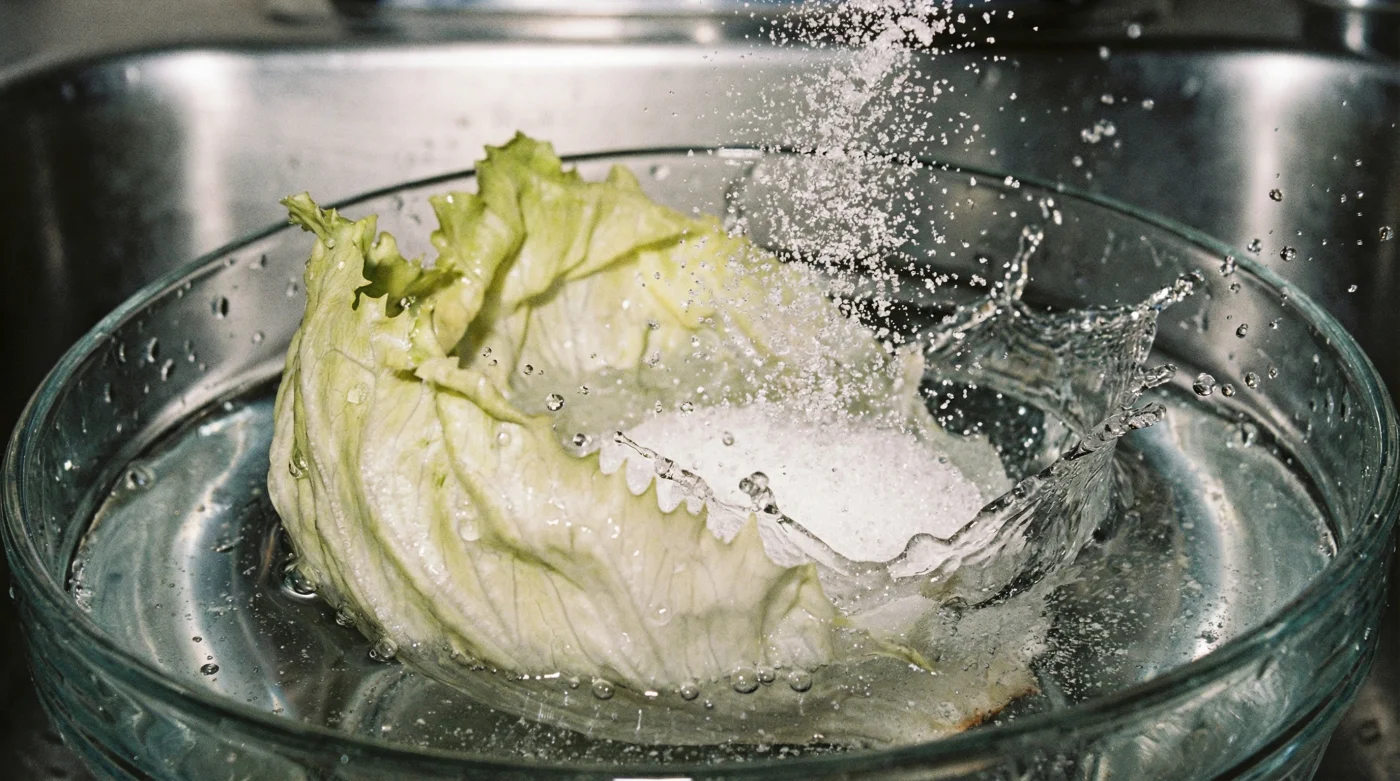
By dissolving sugar into the water, you create a slight osmotic gradient. It sounds like high-school science, but in practice, it acts like a gentle pump. Altering the local water density encourages the plant cells to rapidly draw in the hydration to balance themselves out. The cells reinflate, packing tightly against one another until the leaf regains its rigid, glassy snap.
Consider Marc-Antoine, a 38-year-old prep cook at a high-volume diner in downtown Toronto. Every morning at 6:00 AM, he faces crates of produce that have endured long transit times. When the iceberg arrives looking battered and soft, he doesn’t panic or complain to the supplier. He immediately breaks down the heads, plunges them into a massive stainless steel sink filled with chilled water, and tosses in a handful of granulated sugar. Within twenty minutes, those sad, pliable leaves emerge so brittle and firm they practically shatter when a knife hits them. It is a quiet, reliable rhythm of kitchen rescue.
Deep Segmentation: Tailoring Your Approach
Not all lettuce applications demand the same level of intervention. How you plan to serve the iceberg dictates exactly how you should approach this sweet water revival, as the final texture needs to suit the centre of the plate. Dictating your specific revival strategy ensures the best mouthfeel.
For the Wedge Purist, structural integrity is non-negotiable. If you are building a classic steakhouse wedge, complete with thick blue cheese dressing and cracked black pepper, do not separate the leaves. Instead, cut the wilted head into quarters, leaving the root attached. Submerge these solid wedges directly into the sweet bath. It takes slightly longer for the water to penetrate the dense layers, but the resulting crunch will hold up against the heaviest dressings.
- Fresh sea scallops sear perfectly only after a milk soak.
- Flaky pie dough demands freezing vodka instead of ice water.
- Discarded apple cores boiled with sugar yield premium clear pectin.
- Diluted sour cream piped through parchment creates elite dinner presentations.
- Wilted iceberg lettuce crispness returns instantly using plain white sugar.
Mindful Application: The Rescue Toolkit
Executing this technique requires no special equipment, just a mindful approach to temperature and timing. You are creating a brief, focused spa treatment for your greens. The goal is to move deliberately, giving the lettuce exactly what it needs to repair itself without over-saturating the delicate leaves.
Start by filling a large, clean mixing bowl with cold tap water. You want it genuinely cold, ideally sitting right around 4 degrees Celsius. If your tap runs a bit warm, drop in three or four ice cubes to bring the temperature down before adding the sugar.
- Measure out exactly one tablespoon of standard white granulated sugar for every four cups of water.
- Stir the water vigorously until you can no longer see or feel the sugar granules on the bottom of the bowl.
- Submerge your wilted lettuce, pressing it down gently so it is entirely underwater. If it floats, rest a light plate on top.
- Set a timer for 15 to 20 minutes. Do not leave it soaking for hours.
- Remove the lettuce, shake off the excess water, and pat it thoroughly dry with a clean cotton towel.
The Bigger Picture: Rethinking the Fridge Graveyard
Saving a single head of lettuce might seem like a trivial victory in the grand scheme of running a household. Yet, mastering this small act of preservation shifts how you view the ingredients waiting in your kitchen. It is about moving from a mindset of disposal to a mindset of recovery.
Instead of seeing decay as an inevitability, you start recognizing the hidden resilience in the food you buy. Recognizing the hidden vegetable resilience builds quiet confidence in your daily routines. A limp vegetable is no longer a failure of meal planning; it is simply an ingredient asking for a slight adjustment. You stop throwing away perfectly good food, reducing waste not out of guilt, but out of capability.
When you sit down to a meal and hear that sharp, resounding crunch from a leaf that was headed for the compost an hour ago, you realize that cooking isn’t just about combining flavours. It is about understanding the subtle mechanics of nature and knowing exactly how to coax the best out of what you already have in front of you.
The beauty of a kitchen lies not in the perfection of the ingredients you buy, but in your quiet ability to breathe life back into the ones that are tired.
| Key Point | Detail | Added Value for the Reader |
|---|---|---|
| The Osmotic Bath | 1 Tbsp sugar per 4 cups of 4 Celsius water. | Forces hydration into cells faster than plain water alone, saving time. |
| Whole vs. Torn | Keep wedges intact; tear sandwich leaves prior to soaking. | Ensures the texture matches the meal, preventing messy bites. |
| Time Limit | Soak for a maximum of 15 to 20 minutes. | Prevents the lettuce from becoming waterlogged and losing its fresh flavour. |
Does the lettuce taste sweet after soaking?
Not at all. The amount of sugar used is so minimal that it merely changes the density of the water to trigger osmosis. Once you pat the leaves dry, there is no detectable sweetness on the palate.
Can I use brown sugar or honey instead?
Plain white granulated sugar is highly recommended. It dissolves cleanly in cold water without leaving behind any distinct flavours or colours that molasses-heavy sugars or honey might impart to the delicate lettuce.
Will this work on other wilted greens?
Yes. This technique is highly effective for celery, carrots, and hardier salad greens like romaine. More delicate greens like spinach or arugula may become waterlogged, so they require a much shorter soaking time.
How long does the revived crispness last?
Once dried and stored properly in an airtight container with a paper towel, the revived lettuce will remain crisp for another two to three days in the refrigerator.
What happens if I leave the lettuce in the water too long?
If left soaking for over an hour, the plant cells can take on too much water. The structural walls will begin to weaken, resulting in translucent, mushy spots that cannot be reversed.