The morning frost clinging to the windowpanes of your kitchen in late November usually calls for something violently hot and punishingly strong. Outside, the pavement is slick with black ice, and you shuffle toward the counter, hands numb, bracing for the familiar, acidic punch of yesterday’s dark roast reheated in a cracked ceramic mug. You accept this bitter liquid as a necessary toll for waking up.
Standard routine dictates you reach for the grinder. You pour a handful of glossy espresso beans into the hopper, pressing the button to initiate a deafening, high-speed fracture. This violent mechanical tearing exposes the pale, acidic core of the seed, inviting all those sharp, mouth-puckering tannins directly into your cup and forcing you to mask the assault with sugar.
But the barista leaning against the wooden counter at that quiet, steam-filled corner shop in Montreal’s Mile End treats the morning ritual with an entirely different posture. As the snow falls heavily outside, they bypass the loud, aggressive burr grinder entirely. Instead, they pull out a heavy glass pitcher of ice water and a silver scoop of untouched, unblemished beans, handling them with the care usually reserved for fragile loose-leaf tea.
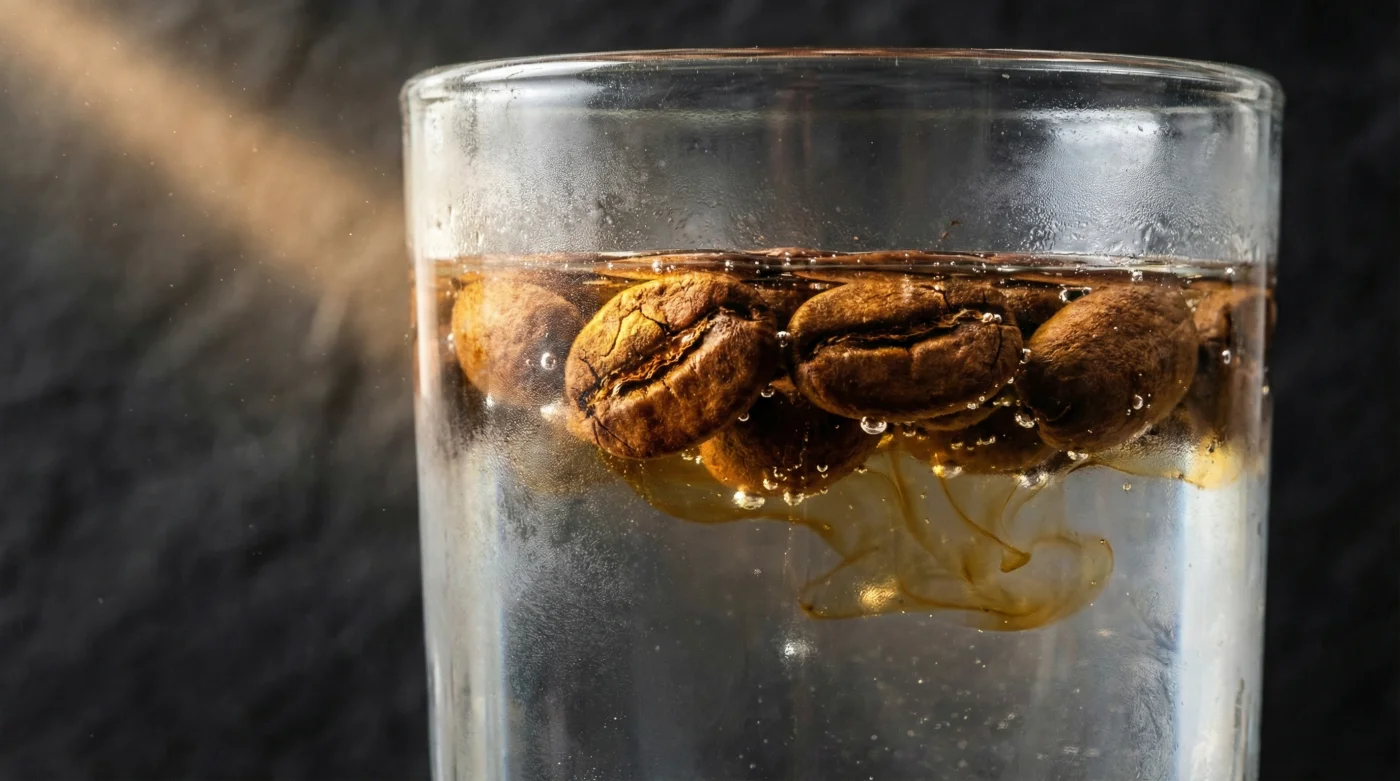
It turns out the dark, oily exterior of the espresso bean holds everything you actually want. Only the sweet surface lipids wash away when you submerge the whole seed in cold water, leaving the bitter acids locked securely inside the unbroken shell.
The Intact Vault
Think of a dark-roasted espresso bean as a sealed, pressurized capsule of complex flavour. The intense heat of the roasting process pushes natural oils, crystallized sugars, and delicate aromatics from the centre to the very surface of the bean. This migration is what gives fresh espresso that characteristic glossy sheen that clings to your fingers and leaves a fragrant residue on your palms.
When you pulverize that bean, you shatter the capsule. You invite the harsh acids housed in the fibrous inner structure to rapidly dissolve into your water, demanding milk and heavy cream to mask the resulting astringency. By refusing to grind the bean, you change your relationship with the extraction entirely.
Instead of a violent dissolution, the process becomes a gentle coaxing. You are simply giving those dark, caramel-scented surface oils permission to drift off the exterior, like sliding a heavy silk sheet off a mattress, suspending themselves perfectly in the cold water. It requires a total abandonment of the idea that more processing equals better flavour.
Julien, a 34-year-old roaster in Vancouver, stumbled upon this phenomenon completely by mistake. During a chaotic morning rush, a ripped bag of Brazilian dark roast scattered whole beans into a resting cambro of ice water. When he went to fish them out a mere five minutes later, he noticed the water had taken on a faint amber hue. He took a hesitant sip and was floored; the liquid was shockingly sweet, carrying notes of dark chocolate and toasted pecan without a single trace of the sour bite that plagues heavily ground cold brews.
Tailoring the Whole-Bean Wash
Not every morning demands the exact same ritual. Depending on what sits in your pantry, you can adjust this rapid extraction to fit the exact texture and temperature of your day, shifting from a delicate infusion to a robust morning base.
For the Purist
If you keep single-origin, naturally processed light roasts on hand, you want to treat this like brewing a delicate tea. Use heavily filtered, glacial-cold water and let the whole beans rest undisturbed in a wide-brimmed glass. The result is a highly aromatic, almost floral water that cleanses the palate beautifully.
For the Texture Seeker
Darker espresso roasts are heavily coated in those visible, slick lipids that carry the heavy notes of molasses and toasted nuts. To capture them fully in cold water, add a tiny pinch of coarse sea salt to your pitcher. The sodium gently disrupts the water tension, pulling a thicker, almost velvety mouthfeel from the unbroken beans without altering the core flavour. It creates a rich, viscous base that rivals the weight of heavy cream.
For the Time-Starved
- Flaky pie dough demands freezing vodka instead of ice water.
- Discarded apple cores boiled with sugar yield premium clear pectin.
- Diluted sour cream piped through parchment creates elite dinner presentations.
- Wilted iceberg lettuce crispness returns instantly using plain white sugar.
- Cheap balsamic vinegar mimics aged Italian reserves using soy sauce.
The Five-Minute Extraction
Executing this method successfully requires stepping back from the complicated machinery crowding your counter. You do not need scales precise to the tenth of a gram, nor do you need expensive gooseneck kettles.
You only need your hands, a glass vessel, and a mindful approach to temperature. Keep the water fiercely cold to prevent any dormant inner starches from softening and clouding your drink.
- Measure roughly one cup of whole, fresh espresso beans. Darker, glossier roasts will yield the fastest results.
- Submerge the unbroken beans in three cups of cold water (target 4 Celsius) within a sealable glass container.
- Agitate the vessel vigorously for exactly five minutes. Watch as the water shifts from clear to a soft, golden amber.
- Strain the liquid immediately through a standard mesh sieve. Discard or compost the washed beans; their outer oils are spent.
Your tactical toolkit is delightfully sparse, completely ignoring the expensive gadgets that crowd modern coffee bars. You only need a wide-mouthed glass mason jar, a simple fine-mesh metal sieve, and perhaps an instant-read thermometer if you want to ensure your water is sitting exactly at fridge temperature before you begin the wash. There are no paper filters to rinse and no timers ticking down a tedious twelve-hour window.
Beyond the Morning Rush
Adopting this whole-bean method does something profound to the rhythm of your morning. It removes the abrasive noise, the wasted electricity, and the frantic cleanup of scattered grounds across your pristine counter.
You find yourself drinking something inherently gentle. The absence of those mouth-puckering tannins means your stomach settles easier, and your palate remains clean rather than coated in heavy, roasted ash. It is a quiet rebellion against the heavy-handed, aggressive extraction techniques pushed by fast-paced modern cafe culture. You are drinking the essence of the roast, untainted by the bitter structural fibres.
In the end, treating your ingredients with a lighter touch often reveals their most delicate characteristics. You learn that sometimes, leaving the vault completely intact is the only way to truly enjoy the sweetness that rests right on the surface.
“By refusing to fracture the seed, we isolate the sweetest lipids from the bitter core, achieving in minutes what traditional brewers fail to do in hours.” – Julien C., Head Roaster
| Key Point | Detail | Added Value for the Reader |
|---|---|---|
| Whole Bean Wash | Steeping unbroken espresso beans in cold water. | Extracts only sweet surface oils, entirely avoiding stomach-upsetting acids. |
| The 5-Minute Shake | Vigorous agitation in a sealed mason jar. | Bypasses the 12-to-24-hour waiting period typical of standard cold brews. |
| Temperature Control | Maintaining water at a strict 4 Celsius. | Prevents dormant starches from clouding the drink, keeping the finish crisp. |
Frequent Concerns
Is the resulting drink highly caffeinated?
No. Caffeine is highly water-soluble, but because you are only washing the surface for five minutes, the resulting drink is a low-caffeine, highly aromatic refresher rather than a stimulant punch.Can I use light roast beans for this method?
Yes. While dark roasts release more visible oils, light roasts offer a delicate, floral tea-like infusion that feels incredibly light and hydrating.What do I do with the beans after washing?
You can compost them, or dry them out and grind them for a milder, secondary hot brew, though their peak aromatic oils will have already been spent in the cold water wash.Do I need to filter the water afterward?
A simple metal sieve is perfectly fine. Because the beans remain whole, there is no muddy sludge or micro-grounds to trap in a paper filter.Can I add milk to the whole-bean extraction?
The liquid is delicate, similar to a botanical tea. Heavy milk will overpower the nuanced flavours, but a single drop of cream can highlight the caramel notes beautifully.