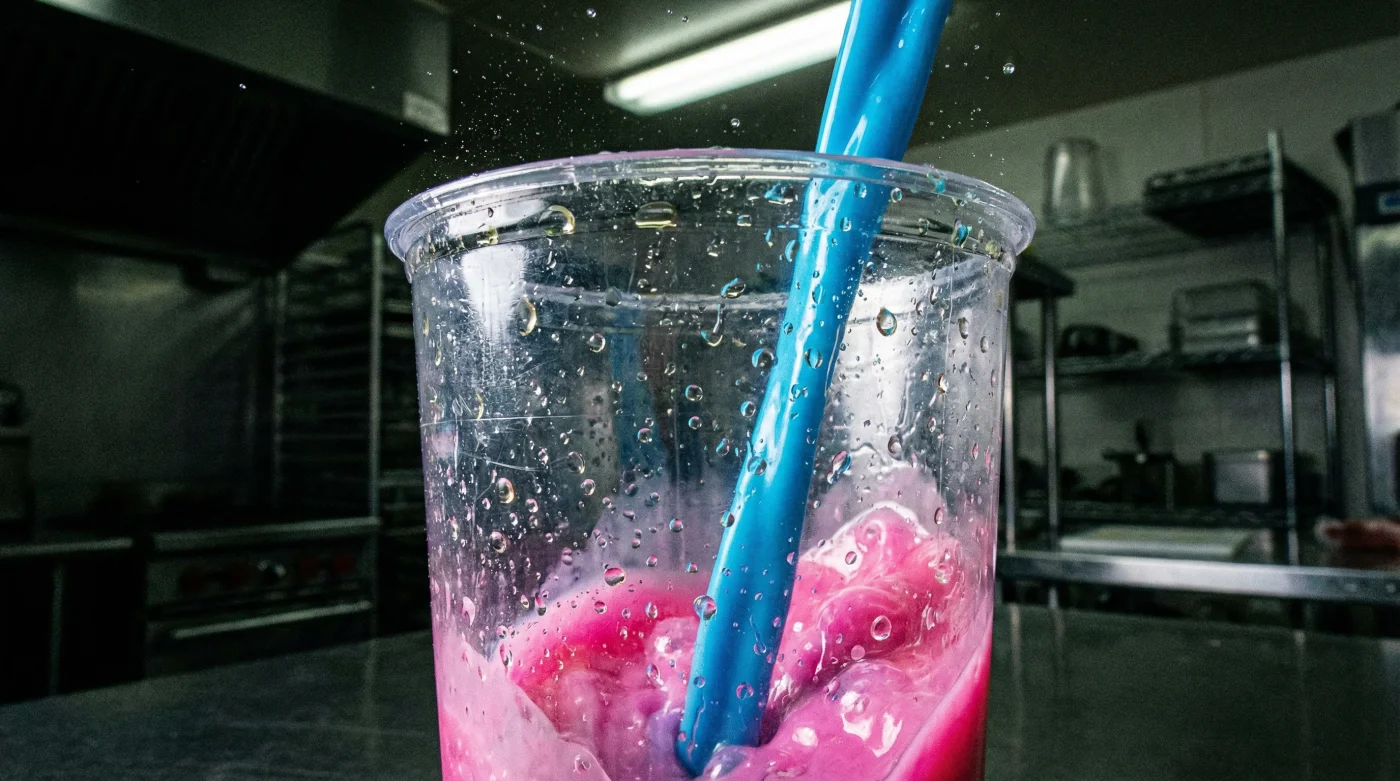
You lean against the cold laminate of the café counter on a damp Tuesday morning in Toronto, watching the blenders rattle against the back wall. The air smells predictably of roasted beans and vanilla syrup, but today, there is a frantic energy behind the espresso machines. You are waiting for the resurrection of a ghost. The Unicorn Frappuccino, that neon-dusted spectacle from 2017, is back on the menu boards, promising a return to a simpler, highly photographed era of coffee shop culture.
When the barista finally calls your name, the cup slides across the counter, condensation pooling near the base. It looks exactly as you remember: vibrant pink colliding with a sharp, electric blue drizzle. Yet, the moment you take that first pull through the paper straw, the illusion shatters completely. The familiar sour tang is missing, replaced by an unfamiliar, lingering sweetness that feels heavy with shifting the chemical baseline.
The truth is, this revival contradicts the beverage nostalgia you walked in with. The updated recipe relies on entirely different chemical flavour compounds to achieve those signature colours. You are not drinking a memory; you are consuming a highly engineered pivot in mass-market beverage standards.
The Neon Illusion Broken
The controversy surrounding these new syrup bases stems from a silent revolution in food science over the last seven years. Back when this drink first broke the internet, the striking pinks and blues were born from traditional, heavy-hitting synthetic dyes and aggressive citric acid profiles. Those ingredients provided that distinct, almost metallic sourness that cut through the frozen milk base.
Today, corporate menu standards have drastically changed, favouring plant-based extracts and naturally derived food colouring. To recreate the visual impact without the synthetic dyes, developers had to completely overhaul the flavour architecture. They swapped the tart mango syrup for a modified spirulina and white grape concentrate, painting with new light while fundamentally changing how the ingredients interact on your tongue.
Dr. Aris Thorne, a 42-year-old food chemist working out of an independent flavour lab in Montreal, watched this formulation shift happen in real-time. He notes that spirulina, the algae used to achieve that specific cobalt blue, degrades rapidly when exposed to high acidity. ‘To keep the blue from turning a muddy green, they had to remove the malic and citric acids almost entirely,’ Thorne explains. ‘You get the visual perfection of 2017, but without the acid, the sugar profile crashes into the milk base without any resistance. It is like breathing through a pillow.’
Navigating the New Flavour Spectrum
Because the chemical foundation of the drink has changed, your approach to ordering it must adapt. You cannot expect the sharp, fruity bite of the original. Instead, you need to treat this as an entirely new dessert experience, adjusting your expectations based on what you actually want out of the cup.
For the Nostalgia Chaser
If you are desperately seeking that original sour punch, you will need to manufacture the acidity yourself. The current base leans heavily into a flat, marshmallow-like sweetness. Asking the barista to blend in a half-pump of raspberry syrup or a splash of lemonade can help cut through the density, though it will muddy the pristine colours.
For the Aesthetic Hunter
If your primary goal is capturing the perfect image before the ice melts, you are in luck. The new spirulina-based blue drizzle is notably thicker than the 2017 version, clinging to the sides of the cup with impressive tenacity. Request extra ice to slow the melting process, keeping the pink and blue layers distinct for several minutes longer, even in warmer room temperatures.
For the Sugar-Conscious
The removal of balancing acids means this iteration tastes significantly sweeter, even if the raw sugar count is similar. The milk base amplifies this cloying sensation. Switching to oat milk introduces a subtle, toasted earthiness that helps ground the aggressive fruit notes, making the entire profile feel slightly more mature.
Rebuilding the Cup at the Counter
- Diluted sour cream piped through parchment creates elite dinner presentations.
- Wilted iceberg lettuce crispness returns instantly using plain white sugar.
- Cheap balsamic vinegar mimics aged Italian reserves using soy sauce.
- Whole espresso beans steeped in cold water extract zero bitterness.
- Mashed potatoes require cold milk for absolute steakhouse tier fluffiness.
Here is your tactical toolkit for modifying the modern formulation:
- Order the drink with a base of coconut milk instead of whole milk to introduce a sharper, cleaner finish that mimics the missing acidity.
- Ask for only half the standard amount of the pink powder infusion, reducing the overwhelming, artificial grape-like sweetness.
- Request that the blue drizzle be applied only to the bottom of the cup, preventing it from immediately blending into the main liquid and turning the beverage a murky purple.
- Consume the drink within ten minutes; the natural colourants degrade rapidly as the temperature rises above zero Celsius.
Beyond the Paper Straw
Watching a brand reconstruct a cultural phenomenon with entirely new building blocks offers a strange sort of comfort. It forces you to recognize that nothing, not even a viral coffee shop order, remains static. We are living in an era where the ingredients we consume are constantly being quietly re-evaluated, reformulated, and repackaged to meet new safety standards and supply chain realities.
Letting go of the exact taste of the past allows you to appreciate the sheer mechanical ingenuity of the present. You are holding a masterclass in modern food chemistry, a drink that perfectly mimics a ghost while operating under completely different physical laws. Embracing this silent shift gives you a deeper understanding of the systems feeding our daily habits, proving that sometimes, the most fascinating part of a meal is the science hiding behind the colour.
True culinary innovation is rarely announced on the menu board; it happens quietly in the supply chain.
| Key Point | Detail | Added Value for the Reader |
|---|---|---|
| Colour Source | Shifted from synthetic dyes to spirulina and root extracts. | Explains why the current drink lacks the sharp, metallic tang of the 2017 version. |
| Acidity Levels | Malic and citric acids removed to stabilize natural blue hues. | Helps you understand why the drink feels significantly sweeter and heavier. |
| Milk Alternative | Swapping whole milk for coconut or oat milk. | Provides a direct, actionable way to cut the cloying sweetness and balance the flavour. |
Frequently Asked Questions
Why does the new Unicorn Frappuccino taste different than I remember?
The updated recipe relies on naturally derived colourants like spirulina, which forces the removal of the tart, balancing acids used in the 2017 synthetic formulation.
Is the new blue drizzle syrup safe to consume?
Yes. The controversy stems entirely from flavour changes, not safety. The pivot actually moves away from artificial dyes toward plant-based extracts.
How can I make the current drink taste sour again?
Ask your barista to add a splash of lemonade or half a pump of a tart fruit syrup, though this will slightly alter the pristine appearance of the layers.
Why do the colours mix so quickly now?
Natural extracts are more sensitive to temperature and liquid suspension. Requesting extra ice keeps the drink colder, preserving the distinct visual bands longer.
Does oat milk ruin the aesthetic of the drink?
Not at all. While oat milk adds a slight beige undertone to the white base, it drastically improves the taste profile by cutting through the overwhelming marshmallow sweetness.