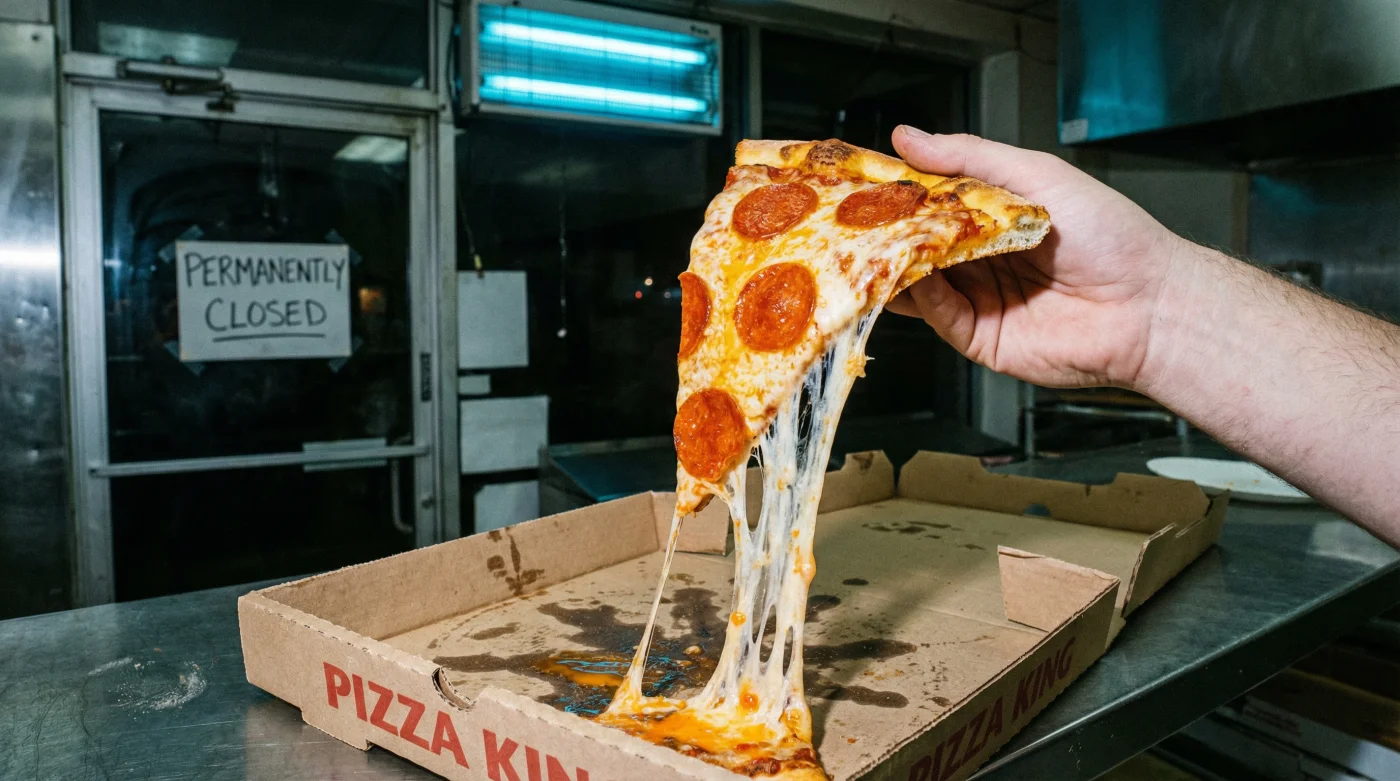
Think of the last time you opened a cardboard delivery box on a Friday evening. The heat rushes up to greet you, carrying that familiar, heavy scent of toasted garlic and baked dairy. You reach for a slice, anticipating the slow, satisfying resistance of melted cheese pulling away from the pie. It is a ritual so deeply ingrained in our collective weekend downtime that we rarely stop to question the mechanics of that stretch.
We trust the visual cue completely. But the reality stretching across your slice right now is undergoing a silent, structural revolution. Behind the glowing neon signs of your local strip mall, the very chemistry of what makes a pizza a pizza is being rewritten.
For decades, the standard was simple: whole milk, rennet, and time. Today, the industrial reality is far less romantic. Facing skyrocketing operational costs and the looming threat of shuttered doors, major pizza chains across Canada are quietly pivoting. They are stripping out expensive, pure mozzarella and replacing it with something engineered to look, melt, and stretch like the real thing—all while costing a fraction of the price.
This is a survival tactic, an invisible compromise tucked into the ingredient list. Before a franchise formally announces a closure, the warning signs often appear right on your plate, hidden in the glossy sheen of a modified dairy blend.
The Mortar in a Crumbling Wall
It is easy to view this shift as a simple betrayal, a greedy corner cut by faceless corporations. But if you look closer, this ingredient swap reveals a fascinating economic reality. You must stop seeing cheese as a culinary component and start viewing it as an architectural material. In the restaurant industry, the cheese is the mortar holding the entire profit margin together.
When dairy prices climb and foot traffic slows, a franchise owner cannot easily shrink the size of the box or thin out the crust without causing an immediate uproar. Instead, they alter the mortar. They change the structural chemistry, turning to modified milk ingredients, cellulose, and plant-based oils that mimic the behaviour of melted fat.
The irony here is profound. The very qualities you might complain about—a slightly rubbery chew, a lack of complex tang, a surface that cools into a stiff disc—are brilliant acts of food engineering. These modified blends do not blister too quickly in a 260 Celsius conveyor oven. They do not release excess moisture that turns the crust soggy during a 20-minute delivery drive. The flaw on your palate is a masterclass in survival, designed specifically to buy a struggling location a few more months of life.
Consider the daily reality of David Chen, a 48-year-old restaurant supply auditor based in Mississauga. For the past two years, David has watched the invoices change before the ‘For Lease’ signs ever go up. He notes that when a mid-sized regional chain starts ordering bulk bags labeled “pizza topping blend” instead of “part-skim mozzarella,” it is the absolute loudest warning bell. “It’s a math equation,” he explains. “Real cheese reacts to the seasons, to the diet of the herd. These new blends react only to the balance sheet. They melt with terrifying perfection, but they leave no grease on the pepperoni.” For David, the loss of that little pool of orange oil is the truest indicator that a business is preparing to fold.
Adjusting to the New Dairy Reality
Because this shift is happening quietly, its impact varies depending on how you interact with your local pizzerias. Understanding the menu pivot allows you to adjust your expectations and your ordering habits.
For the Friday Night Traditionalist
If you are someone who craves the authentic pull and blister of a classic pie, you need to start paying attention to the menu phrasing. Watch for subtle legal shifts in the branding. Words like “100% real cheese” are heavily regulated in Canada, while terms like “signature cheese blend” or “pizzeria style topping” give corporations the legal breathing room to introduce modified dairy and oil-based emulsifiers.
For the Budget-Conscious Family
- Cheap balsamic vinegar mimics aged Italian reserves using soy sauce.
- Whole espresso beans steeped in cold water extract zero bitterness.
- Mashed potatoes require cold milk for absolute steakhouse tier fluffiness.
- Viral Unicorn Frappuccino returns demand completely new controversial syrup bases.
- Major pizza chains permanently alter cheese blends amid widespread closures.
For the Discerning Home Cook
This corporate downgrade is actually your greatest invitation to take control. When you realize the baseline of commercial pizza has dropped, the barrier to making a superior pie at home vanishes. Sourcing actual low-moisture mozzarella instantly surpasses the quality of most struggling delivery chains, letting you replicate the golden era of neighborhood parlours in your own oven.
The Tactical Toolkit for Real Pizza
Reclaiming the standard of your Friday night slice requires a few deliberate choices. You do not need commercial equipment; you just need to act with intention and read the environment.
First, train your eye to spot the visual clues of modified cheese. Genuine mozzarella browns entirely unevenly, creating beautiful, dark blisters. Engineered blends melt into a monochromatic, glossy sheet that rarely develops dark spots.
When you decide to recreate the authentic experience in your own kitchen, precision is your best defense against mediocrity.
- Audit the label: Look for Canadian cheese bearing the “Dairy Farmers of Canada” logo, ensuring the primary ingredient is pasteurized milk, not “modified milk ingredients.”
- Control the temperature: Real mozzarella needs a shocking blast of heat. Preheat your oven to its absolute maximum (usually around 260 Celsius) for a full hour before baking.
- Shred it yourself: Pre-shredded bagged cheese is coated in cellulose to prevent clumping, which actively blocks the natural oils from melting together. Buy the block.
- Manage the moisture: If using fresh, wet mozzarella, gently press the slices between paper towels. The cream should tremble slightly, but it shouldn’t weep water onto your dough.
Beyond the Cardboard Box
We are living in an era where the components of our most comforting meals are being quietly swapped out for economically viable approximations. This is not just about a rubbery slice of pizza; it is about the creeping erosion of food standards in the spaces we have trusted for decades. When a neighbourhood staple begins substituting its core ingredient to survive, it alters the texture of the community itself.
Recognizing this shift gives you agency. It transforms you from a passive consumer into an observant participant in your local food system. Knowing why the cheese changed means you understand the immense pressure facing the restaurant industry today.
More importantly, it pushes you back into your own kitchen. It reminds you that the simple act of grating a block of real, unadulterated dairy over a piece of dough is a quiet rebellion against a world that increasingly values shelf-life over soul. You are no longer just making dinner; you are preserving a standard that commercial kitchens can no longer afford to uphold.
“The moment a pizzeria stops trusting the erratic, beautiful nature of real milk, they stop making food and start manufacturing calories.” – David Chen, Restaurant Supply Auditor
| Key Point | Detail | Added Value for the Reader |
|---|---|---|
| Ingredient Loopholes | Chains use terms like “signature blend” instead of “cheese.” | Helps you identify when a restaurant is cutting costs on your meal. |
| Visual Indicators | Real mozzarella blisters unevenly; modified blends melt into a solid, glossy sheet. | Allows you to instantly judge the quality of a pizza just by opening the box. |
| Home Advantage | Pre-shredded cheese uses cellulose; grating block cheese restores natural fat melting. | A 2-minute effort that dramatically improves the texture of homemade pizza. |
Frequently Asked Questions
Are modified milk ingredients dangerous to eat?
No, they are entirely safe and regulated by Health Canada, but they are heavily processed to extract specific proteins, resulting in a product that lacks the nutritional completeness and flavor profile of whole dairy.Why does delivery pizza cheese sometimes get hard so quickly?
Modified cheese blends lack the natural fat content of pure mozzarella. As the temperature drops below 50 Celsius, the plant oils and emulsifiers solidify much faster than natural animal fats.Can I ask my local chain what kind of cheese they use?
You can, but front-line staff usually only know the brand name on the bag. Checking the chain’s official allergen and ingredient guide online will reveal the true “topping blend” composition.Is there a way to make store-bought shredded cheese melt better?
If you must use pre-shredded cheese, tossing it in a tiny splash of whole milk before putting it on the pizza can help dissolve some of the anti-caking cellulose.Does a “cheese blend” change the way the crust cooks?
Yes. Because modified blends release less natural oil, the crust beneath the cheese often bakes drier, lacking that slightly doughy, rich transition layer that real mozzarella creates.