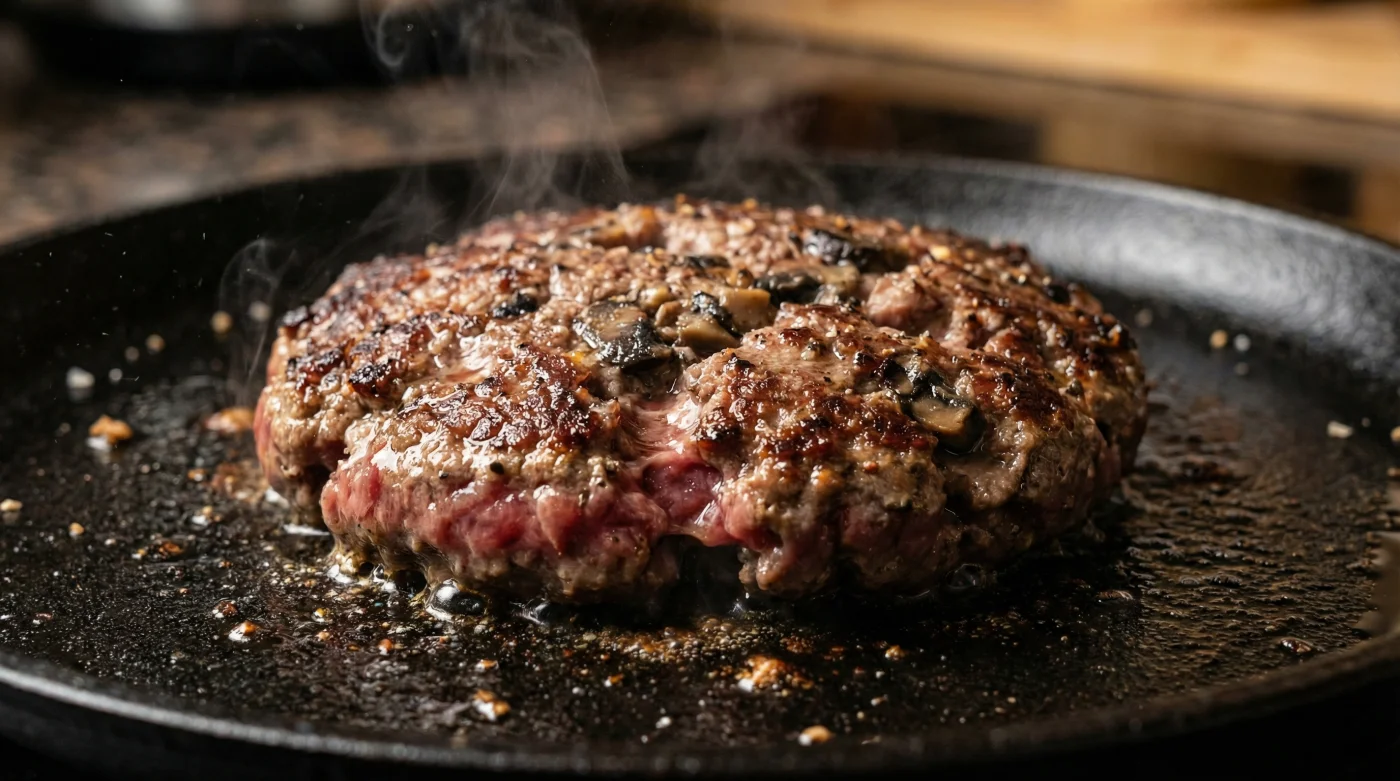
The rain hits the kitchen window in a steady, cold rhythm, typical of a late October evening. You stand at the counter, a plastic punnet of cremini mushrooms open before you, prepping for Friday night burgers. You instinctively snap the woody stems from the caps, gathering the tough little cylinders into a pile destined for the compost bin.
It feels like muscle memory, removing the parts that seem too fibrous to chew. You want the tender caps for sautéing, and throwing away the rest is just how things are done. But as you scrape the cutting board, pushing those scraps away, you are actually discarding the most potent flavour engine in your kitchen.
In a standard home kitchen, a mushroom stem is waste. In a professional setting, it is currency. When you buy cheap ground beef from the local grocer, you are fighting a losing battle against dry, crumbling patties. The fat renders out too fast in the pan, leaving behind a puck of grey meat.
The secret to an impossibly juicy, savoury patty does not involve buying a premium brisket blend or masking the meat with artificial salts. It requires a simple, structural shift using the exact scraps you just threw away.
The Hidden Anchor of Savouriness
Think of a mushroom stem not as a tough offcut, but as a flavour sponge waiting to be deployed. The very reason you discard it—its dense, fibrous architecture—is precisely what makes it a powerhouse when treated correctly.
When pulverized into fine crumbles, these woody stems act like microscopic water balloons. They hold moisture under intense heat, preventing the beef fat from entirely draining away into your grill grates. You aren’t just adding flavour; you are altering the physical behaviour of the meat.
Take Elias Bouchard, a 42-year-old sous-chef at a busy brasserie in Montreal’s Plateau neighbourhood. During staff meal prep, Elias never uses the expensive prime cuts reserved for the evening service. Instead, he takes the tough, discarded ends of shiitakes and button mushrooms, blitzes them in a food processor until they resemble coarse sand, and folds them into standard ground chuck. He describes the stems as earth’s MSG, a completely natural moisture-retaining amplifier that makes budget meat taste like a dry-aged steak.
Adjusting the Blend to Your Palate
Not every burger requires the exact same treatment. How you incorporate these fibrous ends depends heavily on what you want to achieve at the dinner table.
For the Grocery Budget Pragmatist
If you are trying to stretch a family pack of ground beef across a few more meals, the pulverized stem acts as a volume extender that does not compromise on taste. A ratio of roughly twenty percent mushroom to eighty percent meat bulks up your patties beautifully. You feed more people, spend less money, and the patties remain fiercely juicy.
For the Sear Perfectionist
- Cheap balsamic vinegar mimics aged Italian reserves using soy sauce.
- Whole espresso beans steeped in cold water extract zero bitterness.
- Mashed potatoes require cold milk for absolute steakhouse tier fluffiness.
- Viral Unicorn Frappuccino returns demand completely new controversial syrup bases.
- Major pizza chains permanently alter cheese blends amid widespread closures.
For the Depth Seeker
If you want a punch of aggressive umami, save your stems over a few weeks, allowing them to dehydrate slightly in a paper bag in the fridge crisper. When you finally grind them, their natural glutamates are highly concentrated, turning a simple beef patty into something that tastes deeply roasted before it even hits the heat.
The Mindful Application
Executing this technique requires a gentle hand and a specific sequence. You cannot simply chop the scraps and mash everything haphazardly together. Overworking ground meat leads to a dense, tough final product, completely defeating the purpose.
Keep everything as cold as possible until the moment it meets the skillet. Follow these quiet, precise steps:
- Clean the stems thoroughly with a damp cloth to remove any residual grit.
- Pulse the raw stems in a food processor until the pieces are no larger than peppercorns.
- Spread your cold ground beef out on a piece of parchment paper.
- Scatter the mushroom crumble evenly across the surface of the meat.
- Gently fold the meat over itself two or three times, just enough to distribute the pieces, then lightly form your patties.
The Tactical Toolkit:
- Ideal Ratio: 100 grams of pulverized stems to 400 grams of ground beef.
- Target Temperature: Keep meat around 4°C during mixing to prevent fat smearing.
- Cooking Heat: A cast-iron skillet preheated to roughly 200°C ensures the beef fat renders slowly into the waiting mushroom fibres.
The Respect We Give Our Food
Mastering a detail like this shifts your entire perspective in the kitchen. It moves you away from mindlessly following instructions and toward understanding the living systems of your ingredients.
When you stop throwing away the woody ends and start recognizing their hidden utility, cooking becomes less of a chore and more of a quiet, daily resourcefulness. You find satisfaction in knowing that the cheapest meat in the butcher case can be coaxed into something spectacular just by using what you already had. It brings a grounded, quiet confidence to your Friday evenings.
A discarded ingredient is usually just a misunderstood ingredient; find its purpose, and you change the entire dish.
| Key Point | Detail | Added Value for the Reader |
|---|---|---|
| Moisture Retention | Fibrous stems act as sponges for rendering beef fat. | Prevents cheap, lean ground beef from drying out in the pan. |
| Umami Amplification | Natural glutamates in the stems boost savoury notes. | Creates a rich, diner-style flavour profile without expensive seasonings. |
| Cost Efficiency | Replaces 20% of meat volume with kitchen scraps. | Stretches your grocery budget while improving the final meal quality. |
Frequently Asked Questions
Do I need to cook the mushroom stems before blending them into the beef?
No. Pulse them raw. Cooking them beforehand removes the moisture they need to absorb the rendering beef fat during the grilling process.Will this make my burger taste strongly like mushrooms?
Surprisingly, no. The stems blend into the background, providing a deep, savoury foundation rather than an aggressive fungal flavour.Can I use any type of mushroom stem for this trick?
Cremini, white button, and shiitake stems work best due to their dense structure. Avoid stems from delicate varieties like enoki, as they lack the necessary fibre to hold the fat.How finely should I pulverize the stems?
Aim for a texture similar to coarse sand or cracked peppercorns. If you puree them into a paste, you will introduce too much free water, ruining the burger’s texture.Can I freeze the mushroom-beef blend for later?
Yes. The blended patties freeze exceptionally well. The mushroom fibres actually help protect the meat from severe freezer burn by stabilizing the internal moisture.