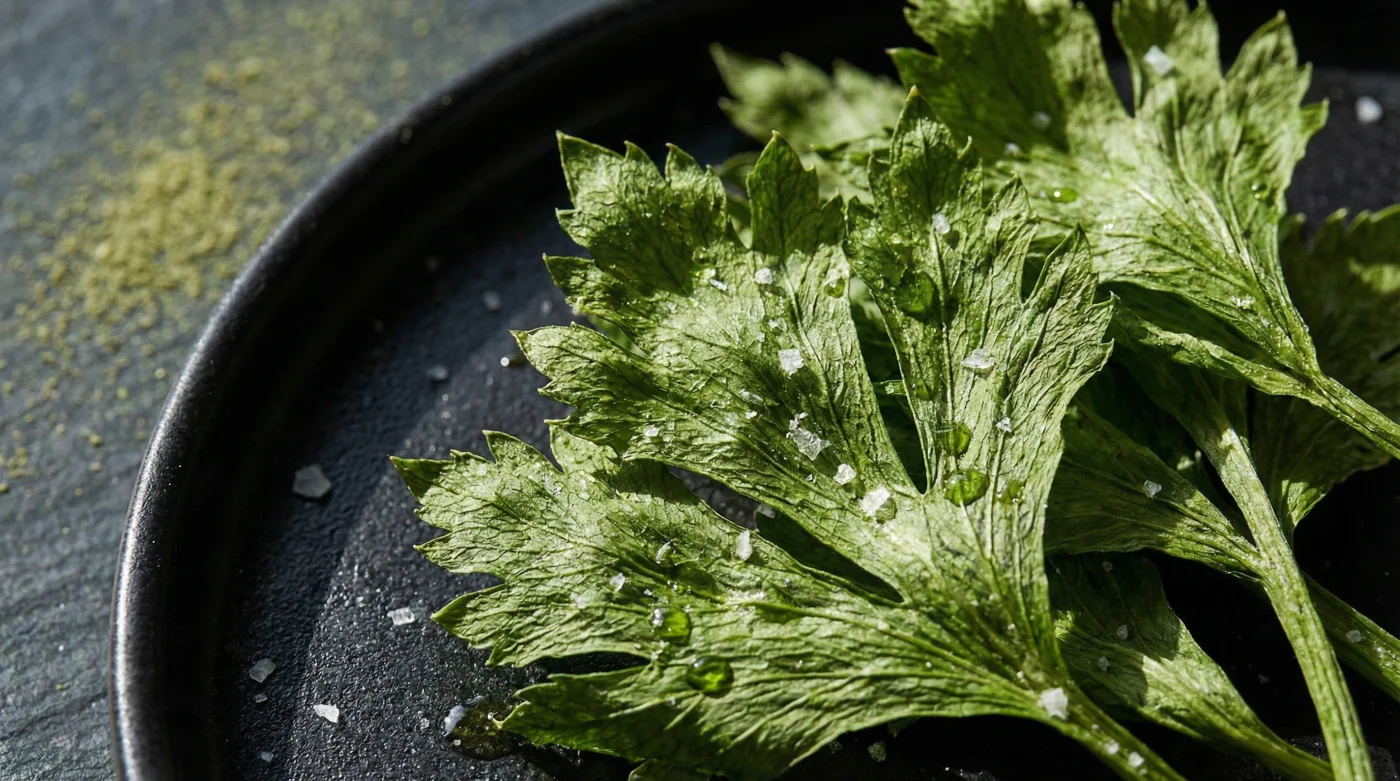
Picture your kitchen counter on a late Tuesday afternoon, the air still carrying the sharp, cold smell of the winter market. You drop a gnarled celery root onto the cutting board. It looks prehistoric, a knot of pale brown skin topped with a shock of dark, aggressive green leaves. Your instinct, honed by decades of following recipes, is immediate. You grab the chef’s knife, sever the leafy crown, and slide it straight into the compost bin.
But as the lid snaps shut on that green mass, you are throwing away the most concentrated source of flavour in the room. We are conditioned to treat the fibrous tops of root vegetables as collateral damage. The standard kitchen routine dictates that tenderness equals value, leaving the bitter, tough canopy behind as mere packaging for the edible bulb below. You discard a potent payload trapped within those coarse fibers.
When you stop treating the leaves as refuse and start seeing them as an unrefined spice, the geometry of your meal prep changes entirely. It turns out that those robust, deeply veined leaves possess a chemical structure that standard herbs completely lack. They are not delicate like basil or fragile like cilantro. They are built to withstand -5 Celsius frosts and winds blowing 50 Miles across open fields, which means their cell walls are packed with intense, volatile aromatic oils just waiting to be isolated.
By applying rapid, controlled heat, you bypass the slow degradation of traditional air-drying. The microwave operates instantly, bypassing decay and shocking the moisture out of the plant. What remains is a dry, shattering leaf that crumbles into a premium, savoury dust—a zero-waste pantry staple that rivals the most expensive imported herb blends. You capture the aromatic oils before they can break down.
The Cellular Vault
The truth about celery root leaves is counterintuitive. If you chew on a raw piece, the texture is punishingly tough and the taste is aggressively bitter, almost medicinal. It feels like a culinary dead end. But this very flaw is actually a major advantage.
Think of those thick cellular walls as a microscopic vault. Delicate herbs lose their aromatic oils to the air within hours of picking. The celery root canopy, however, holds its umami compounds in a vice grip. The rigid structure locks the sharp, vegetal notes deep inside. When you try to cook them like spinach, they fail. Treat them as raw spice, and they transform completely.
Flash drying leverages this architecture perfectly. Slow roasting in an oven often wilts the leaves, gently bleeding the oils out onto the baking sheet where they burn and turn bitter. A microwave, surprisingly, operates differently. It specifically targets the water molecules inside the plant. The water boils and evaporates almost instantly, leaving the rigid, flavour-packed cellular vault entirely intact and structurally sound.
- Mashed potatoes require cold milk for absolute steakhouse tier fluffiness.
- Viral Unicorn Frappuccino returns demand completely new controversial syrup bases.
- Major pizza chains permanently alter cheese blends amid widespread closures.
- Mushroom stems pulverized into ground beef amplify burger umami profiles completely.
- Macaron almond flour toasted beforehand guarantees perfectly risen delicate meringue shells.
Tailoring the Savory Profile
Not every meal requires the same application of this zero-waste seasoning. Because the flash-dried leaves retain such a high concentration of glutamates, they act as a natural flavour enhancer. Depending on your cooking style, you can tailor the grind and the blend to suit your provisioning strategy.
For the broth enthusiast, leaving the dried leaves relatively whole provides the best result. Store them in a glass jar and toss a handful into your simmering stockpot. They rehydrate slowly, yielding a steady stream of savoury depth that makes chicken or mushroom broths taste incredibly rich. Your stock develops profound depth without needing hours of reduction.
Those who lean on dry rubs for roasting meats need surface area. Take the dehydrated leaves and pulse them in a spice grinder until they become a fine, vivid green powder. Mixed with coarse sea salt, cracked black pepper, and a pinch of smoked paprika, this powder bonds beautifully to pork shoulder or whole roasted poultry. The heat of the oven reacts with the celery dust, creating a dark, caramelized crust that tastes remarkably complex. It replaces store-bought celery salt entirely, providing a far cleaner bite without the artificial anti-caking agents found in commercial bottles.
Sometimes you just need a sharp counterpoint to a heavy dish. Crush the brittle leaves directly between your fingers over a bowl of hot, buttered popcorn, or whisk the coarse flakes into a simple olive oil dressing. The earthy, herbaceous bite cuts through fat instantly. It provides a bright finish that completely reinvents a simple Tuesday night salad.
The Five-Minute Flash Dehydration
Turning raw yard waste into a premium pantry asset requires precision, not patience. This is a task of mindful minimalism. You are not waiting hours for an oven to do the work; you are executing a fast, scientific extraction using an appliance you likely underutilize.
The process requires your full attention for exactly five minutes. You monitor the subtle shift from limp green to paper-dry. It is a quiet, rhythmic process of checking and turning, ensuring the aromatic oils stay trapped within the leaves without scorching the delicate edges. You control the moisture loss with absolute precision and care.
- Preparation: Strip the dark green leaves from the tough centre stalks. Wash them thoroughly in cold water to remove any field dirt.
- The Pat Down: Dry the leaves violently well between two clean kitchen towels. Any surface water will cause them to steam rather than dehydrate.
- The Layout: Arrange the dry leaves in a single, uncrowded layer on a microwave-safe plate lined with a paper towel.
- The Flash: Microwave on high for two minutes. The plate will feel warm. Flip the leaves gently.
- The Finish: Continue in 30-second bursts. Watch closely. The moment they rustle like dry autumn leaves when touched, stop. The entire process takes roughly three to four minutes.
- The Storage: Let them cool completely on the counter. Once cold, seal them in an airtight jar kept in a dark cupboard.
Rethinking the Scraps
When you screw the lid onto a jar full of vibrant, dried celery root leaves, you are doing more than saving a few dollars on dried herbs. You are actively rejecting the narrative of disposable convenience that fills our green bins every garbage day. You reclaim hidden pantry value from the very items you already buy, effectively stretching your grocery budget through sheer technique. It is a quiet rebellion against the assumed waste of modern grocery shopping, proving that high-end provisions do not always require a high-end price tag.
Every time you sprinkle that bright, savoury dust into a simmering stew, you are reminded that quality isn’t always found in an expensive, imported tin. Sometimes, the most potent ingredients in your kitchen are the ones you previously walked right past, hidden in plain sight, waiting for a slight shift in perspective. You stop seeing ingredients as single-use items. You recognize ecosystems of potential hidden in your daily groceries.
‘True kitchen efficiency isn’t about buying cheaper ingredients; it is about extracting the total physical value from everything you carry through the door.’
| Key Point | Detail | Added Value for the Reader |
|---|---|---|
| The Microwave Flash | Bypasses slow oxidation by boiling internal water instantly. | Saves hours of drying time and preserves bright flavour. |
| Cellular Retention | Tough, fibrous walls keep volatile oils locked in place. | Creates a far more potent spice than delicate store-bought herbs. |
| Zero-Waste Strategy | Converts discarded tops into a daily flavour enhancer. | Lowers grocery bills while building a highly functional pantry. |
Frequently Asked Questions
Can I use standard celery leaves instead of celery root?
Yes, you can, though standard celery leaves are thinner and contain a slightly higher water content. The flavour will be milder, but the method remains exactly the same.How long does the flash-dried seasoning last in the pantry?
Kept in a genuinely airtight jar away from direct sunlight, the leaves retain their sharp, savoury profile for up to six months before slowly fading.Will microwaving the leaves destroy their nutritional value?
The rapid water evaporation preserves most minerals and heat-stable compounds, making it nutritionally superior to long, slow oven roasting where oils oxidize.What if my microwave has a very high wattage?
Reduce your power level to eighty percent. You want to boil the water out of the plant quickly, not incinerate the delicate sugars in the leaves.Can I rehydrate this powder to use as a fresh garnish?
No. The flash-drying process permanently alters the cellular structure. It functions strictly as a dry spice or a savoury infusion for wet dishes.