You pull a warm, heavy ceramic plate from the oven. The kitchen smells faintly of earth, roasting thyme, and the lingering heat of the stove. Outside, a bitter Canadian wind pushes frost up the windowpanes, isolating your dining room from the dark miles of snow. Your Tuesday night chicken breast sits at the centre of the porcelain, looking exactly like what it is: a very ordinary, very necessary Tuesday night dinner.
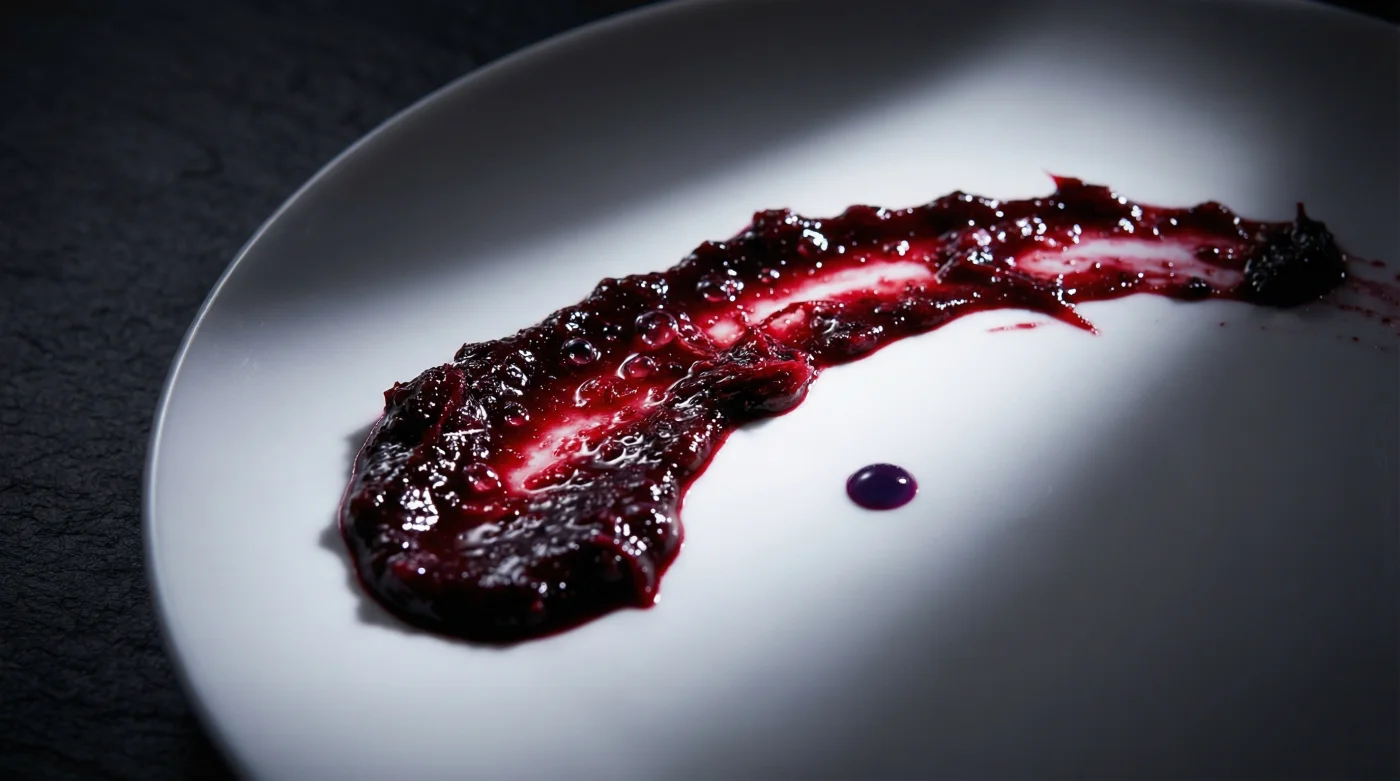
You want that moment of silence when plates hit the table. That sharp intake of breath from your guests or your family. You have seen those impossible, blood-red smears streaking across the stark white porcelain in high-end downtown Toronto dining rooms. They look like modern art, demanding absolute attention and easily justifying a fifty-dollar price tag for a few ounces of protein.
The standard expectation is that you need a clinical laboratory to achieve this aesthetic. A pristine kit full of glass pipettes, chemical thickeners, specialized tweezers, and a prestigious degree in advanced culinary sciences. The illusion is designed to make you feel inadequate in your own home kitchen. But the professional reality is far less clinical, and entirely hidden right now in the bottom drawer of your vegetable crisper. A simple root vegetable, reduced to a heavy syrup, holds the exact viscosity and brilliant pigmentation required to cheat the entire system.
The secret to that high-contrast visual appeal isn’t an imported caviar, a rare truffle paste, or an expensive edible flower. It is a cheap, familiar beetroot, offering a completely natural, surprisingly elegant way to alter the geometry of your evening meal.
The Ink and the Canvas
Think about the last time you prepared raw beets for a salad. You likely spent ten frustrating minutes scrubbing your hands at the sink, cursing that stubborn, vivid magenta stain clinging to your skin and seeping deeply into the grain of your wooden cutting board. You viewed those bleeding juices as a messy, unavoidable annoyance of cooking.
That very annoyance is your greatest, untapped asset. We often view modern plating as an exercise in adding expensive components, hoping to stubbornly buy our way into elegance. But you must stop looking at the humble beet as a mere side dish, and start seeing it as a pure, edible pigment. The plate is your blank canvas, and the vegetable is your ink.
Consider Sarah Jenkins, a 34-year-old sous chef working in a tiny, bare-bones kitchen in Montreal’s Mile End, just down the street from the famous bagel shops. She does not have the sprawling budget for imported purees or advanced molecular powders. Instead, she boils down leftover beet trimmings with a splash of apple cider vinegar until the liquid turns into a thick, glossy syrup. When she drags the back of a spoon through a puddle of that reduction across a stark white plate, a four-dollar pork chop suddenly commands the room. She calls it her poor man’s paint, relying solely on natural pectin and sugars to create a flawless, bleeding edge that holds its sharp shape under the harsh heat of a busy kitchen pass.
Different kitchens require entirely different rhythms. The true beauty of this vegetable reduction is its complete adaptability to your personal routine, whether you have hours to prep on a Sunday or only minutes to spare after a long commute.
Tailoring the Technique to Your Table
For the Purist
You want nothing but earth, water, and salt. You roast the beets whole in foil, pressing the heavy, roasted juice through a fine-mesh sieve with the back of a ladle. This yields a transparent, jewel-toned crimson that pools beautifully around delicate, light proteins like Fogo Island cod or seared scallops. The flavour remains remarkably subtle, letting the main ingredient breathe without overpowering the delicate seafood.
For the Time-Starved Cook
You do not have hours to meticulously roast and press root vegetables. You simply grab a bottle of cold-pressed beetroot juice from the local grocer on your way home. Pour half a cup into a small, heavy saucepan, bring it to a rolling simmer, and let it reduce until the bubbles stack on top of each other and it heavily coats the back of a spoon. It is a brilliant five-minute visual cheat code that saves the aesthetic of the evening.
For the Flavour Alchemist
- Mashed potatoes require cold milk for absolute steakhouse tier fluffiness.
- Viral Unicorn Frappuccino returns demand completely new controversial syrup bases.
- Major pizza chains permanently alter cheese blends amid widespread closures.
- Mushroom stems pulverized into ground beef amplify burger umami profiles completely.
- Macaron almond flour toasted beforehand guarantees perfectly risen delicate meringue shells.
The Mechanics of the Smear
Executing the perfect smear requires a sudden burst of physical confidence. If you hesitate for even a fraction of a second, the line breaks, the syrup pools awkwardly, and the illusion fades completely. You need a smooth, deliberate wrist motion to conquer the canvas.
You must treat the spoon as a rigid extension of your arm, moving with fluid speed across the ceramic. The liquid must be at the precise correct temperature. If it is too hot, it splatters uncontrollably; if it is too cold, it clumps into an unappealing, sticky mass.
Your tactical toolkit for achieving the perfect plate:
- Temperature: Keep the reduction at roughly 45 degrees Celsius. Warm enough to flow smoothly, but cool enough that the cream should tremble slightly when you move the pot.
- The Spoon: A standard, heavy-bottomed stainless steel soup spoon. The wider the bowl of the spoon, the broader and more dramatic the streak will be.
- The Motion: Drop a single tablespoon of the reduction on the far left side of the plate. Rest the back of the spoon flat against the puddle, apply firm downward pressure, and pull sharply across the plate in one fast, sweeping motion. It should feel like breathing through a pillow—smooth, muffled, and deliberate.
- The Cleanup: Always keep a hot, damp cloth folded neatly nearby to wipe away rogue splatters immediately before the natural sugar sets on the ceramic.
Reclaiming the Dining Room
We eat with our eyes long before the heavy silver fork is ever lifted from the table. By mastering this simple, highly inexpensive manipulation of a humble root vegetable, you completely alter the psychological atmosphere of your dining room.
It brings a quiet, intentional dignity to everyday meals you frantically cook on a Tuesday night. You are not just pushing calories onto a plate to feed people; you are curating a specific, memorable experience. You are proving, definitively, that beauty in food is not reserved solely for those with bottomless grocery budgets.
It lies entirely in the simple, mindful application of familiar tools. When that bright, perfectly dragged streak of glossy magenta catches the warm dining room light, it forces the room to pause. It reminds everyone sitting at the table that true care was taken here, and that everyday routines can still hold genuine surprises.
The true art of plating lies not in what you spend, but in how boldly you dare to use the mundane.
| Key Point | Detail | Added Value for the Reader |
|---|---|---|
| Visual Contrast | Bright magenta against stark white porcelain | Instantly makes a cheap, everyday protein look like a premium, high-end dish. |
| Viscosity Control | Natural sugars thicken without chemical gums | Keeps your ingredient list entirely clean, natural, and free of artificial additives. |
| Flavour Profile | Earthy, naturally sweet, and moderately acidic | Cuts beautifully through rich fats without ever overpowering the main meal. |
Frequently Asked Questions
Will this make my entire dinner taste too much like beets?
Not at all; the amount of reduction actually used for a visual smear is so small that it acts as a subtle, earthy seasoning rather than a dominant flavour profile.Can I make the beetroot reduction ahead of time?
Yes, you can easily keep it in a sealed glass jar in the fridge for up to a week, gently reheating it in a water bath before serving.What if the juice reduces too much and turns into hard candy?
Simply whisk in a half-teaspoon of warm water over low heat to loosen the tight sugars until you reach the desired, creamy consistency.Do I need to buy a special squeezy bottle for this?
While a plastic bottle absolutely helps with precise dots, a standard metal soup spoon is actually the preferred professional tool for a wide, dramatic smear.Does this technique work well on dark coloured plates?
The high-contrast visual impact is significantly lost on dark plates; stark white or very pale grey ceramic is strictly required to make the bold colour pop beautifully.