The morning light catches the frost on the kitchen window as you reach for the pantry door. Your mind is on a thick slice of toasted sourdough, the kettle is just beginning to murmur in the background, and all you want is a simple, comforting start to a cold Canadian day. You grab the jar of natural peanut butter, anticipating that roasted, earthy aroma hitting the warm bread.
Instead, you are met with a familiar, messy reality. Twisting off the cap reveals a dark, slick pool of oil resting heavily at the top, while beneath that amber puddle lies a dense, unyielding block of dry ground nuts. It feels like battling physics before your coffee, staring down a simple pantry staple that seemingly refuses to cooperate with your morning routine.
You grab a sturdy knife and attempt to stir the mass. The oil immediately breaches the rim, rolling down the glass to grease your fingers, the counter, and eventually the floor. The simple act of preparing breakfast becomes a frustrating chore of structural engineering, scraping at a cement-like bottom while trying desperately not to spill the liquid gold.
But what if your perfectly organized pantry shelf was quietly setting you up for failure? We have been conditioned to store everything with the label facing right-side up, an aesthetic habit that completely ignores the physical behaviour of pure ingredients. This upright expectation works actively against the natural settling process of roasted peanuts.
Reversing the Pull of Gravity
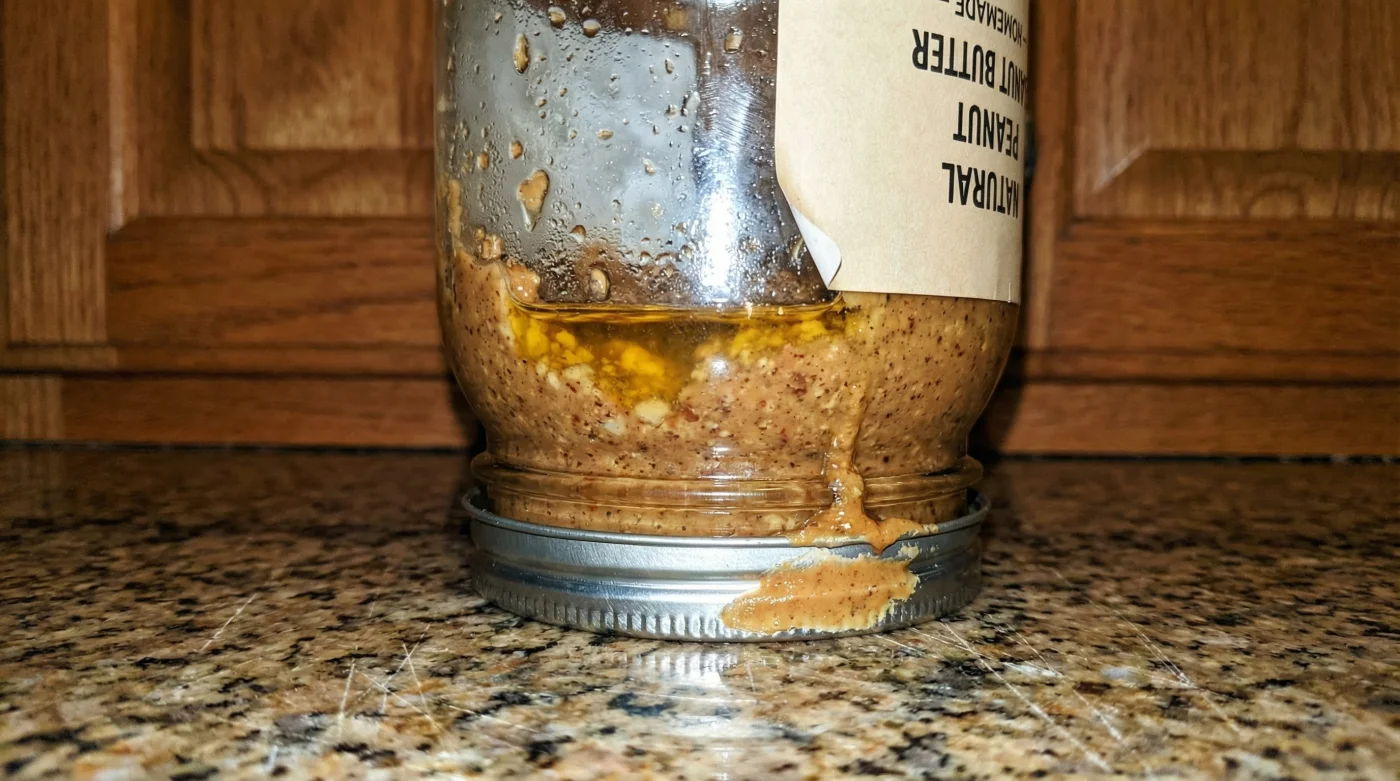
To understand the fix, you need to picture your peanut butter as a slow-moving hourglass. When the jar sits on a shelf for days, the heavier nut solids sink, displacing the lighter natural oils upward. By simply storing the jar upside down, you force the separated natural oils back through the solid nut mass, making the earth do the heavy mixing for you.
This single inversion completely reframes the nature of the ingredient. What feels like a frustrating flaw—the lack of chemical emulsifiers to hold it all together—actually becomes your greatest textural advantage. You are no longer fighting the separation; you are leveraging it.
Commercial brands rely on palm oil or hydrogenated fats to create an artificial stiffness, holding the product in an unnatural state of suspended animation. Natural varieties lack this rigid framework, meaning they require a different approach to storage, one that respects the heavy gravity of crushed legumes.
Sarah Jenkins, a 42-year-old artisan nut roaster based out of Vancouver, watches the slow, warm churn of stone grinders all day. She regularly deals with customers asking how to stop the oil from rising. “People fight the separation,” she explains, wiping a smear of roasted almond dust from her apron, “but that oil is a built-in preserving layer. When you flip the jar, you use that liquid layer as a natural softening agent.” She teaches her clients that working with the natural settling pushes the weight of the oil down, re-hydrating the dry base without you ever lifting a spoon.
Tailoring the Flip to Your Pantry Habits
Not every household consumes food at the same rhythm. Adjusting where and how you store the inverted jar changes the final consistency to suit your specific routine, preventing the tragedy of tearing a soft piece of fresh bread to shreds with a jagged lump of dry peanut butter.
For the daily user, keep your current jar resting upside down in a cool, dark cupboard at room temperature, ideally around 20 Celsius. The frequent flipping from pantry to counter keeps the natural emulsion in a state of soft, spreadable perfection.
For the occasional baker, if you only dip into the jar for a Sunday morning recipe, store it upside down in the fridge. Cold temperatures solidify the suspended fats, locking the creamy, unified texture in place for weeks at a time without further shifting.
- Macaron almond flour toasted beforehand guarantees perfectly risen delicate meringue shells.
- Celery root leaves dehydrated in microwaves create premium savory herb blends.
- Beetroot juice dragged across white plates mimics expensive molecular gastronomy restaurants.
- Stainless steel pans release stuck proteins instantly using a water droplet.
- Peanut butter jars stored upside down prevent frustrating surface oil separation.
The Five-Minute Pantry Reset
You do not need a specialized stirring crank or wrists of steel to fix a separated jar. You only need a bit of intention, a flat surface, and a willingness to break visual conventions on your shelving unit.
Begin with an unopened jar straight from the grocer. If you are dealing with a jar you have already opened and fought with, you must absolutely wipe the threads completely clean before attempting this process to avoid a disaster.
- Wipe the rim and secure the lid tightly to prevent a slow, greasy leak in your cupboard.
- Invert the jar completely and place it firmly on a flat, cool pantry shelf.
- Leave it entirely alone for at least 24 hours to let the oil migrate downward through the solids.
- Rotate the jar right-side-up just before spreading, then return it upside down when finished.
The Tactical Toolkit:
- Ideal Environment: A dry shelf sitting between 18 and 22 Celsius.
- Initial Rest Period: 24 to 48 hours for a heavily separated jar.
- Recovery Tool: A sturdy butter knife, solely for a minor assist near the glass base on the very first day.
A Quieter Morning Routine
Why focus so much on the orientation of a glass jar? Because modern mornings hold enough friction. By altering this one small habit, you stop fighting the natural state of your food and begin working in harmony with it.
Pulling out a jar, twisting the cap, and finding a perfectly spreadable spoonful ready for your toast feels like a tiny victory. It spares you the greasy fingers and the frantic stirring, replacing a messy chore with a moment of unhurried ease.
We often line up our groceries like books on a shelf, prioritizing straight labels over chemical realities. Breaking that visual habit allows you to enjoy the nutritional benefits of pure food without the mechanical hassle.
You are reclaiming those lost minutes spent scrubbing oil off your knuckles at the sink. Your pantry shifts from a place of strict aesthetic rules to a space of functional, mindful efficiency, serving you exactly what you need, right when you need it.
“Gravity is the most patient sous-chef you will ever employ; let it do the stirring while you sleep.”
| Key Point | Detail | Added Value for the Reader |
|---|---|---|
| The Pantry Inversion | Storing jars upside down at room temperature. | Eliminates the physical strain of stirring solid nut masses. |
| Cold Locking | Flipping and storing in the fridge (4 Celsius). | Maintains a perfect, non-separating emulsion for infrequent users. |
| Rim Maintenance | Wiping glass threads before securing the lid. | Prevents slow oil leaks from ruining your clean pantry shelves. |
Frequently Asked Questions
Will the oil leak out of the lid if I store it upside down?
Not if the seal is properly maintained. Wipe the rim clean of any debris and tighten the cap firmly before inverting.How long does it take for the oil to move through the jar?
Depending on the ambient temperature, it typically takes 24 to 48 hours for the oil to fully migrate through the dense solids.Does this trick work for all types of nut butter?
Yes, almond, cashew, and sunflower seed butter all benefit from this exact same method of gravity-assisted mixing.Should I still store my peanut butter in the fridge?
If you take months to finish a jar, cold storage prevents the natural fats from going rancid while holding the texture in place.What if the bottom is still hard after flipping?
On the very first flip of an older jar, use a butter knife to gently loosen the bottom layer, then let gravity do the rest of the work.