The kettle snaps off, its sharp click cutting through the quiet hum of a Tuesday evening. Outside, rain smears the streetlights across the wet asphalt, and inside, you are staring down a familiar, crinkly package. The ritual is burned into your muscle memory: tear the brightly coloured plastic, drop the stiff brick of dehydrated dough into a rolling boil, and wait exactly three minutes. You probably do not give it a second thought.
We treat this fast-food staple as a blunt instrument of hunger, a means to an end when time and energy run dry. You watch the aggressive bubbles tear at the block, forcing the strands apart in a violent cloud of starch. By the time you transfer them to your waiting bowl, the exterior is already dissolving, leaving a mushy, limp texture that barely clings to the savoury broth. The noodles slump on your spoon, stripped of their integrity.
But the bold instructions printed in tiny type on the back of the wrapper are actively misleading you. They prioritize pure speed over structural integrity, relying on extreme heat to violently force water into the dried core of the dough. It is a harsh, impatient method that sacrifices the very chew you crave, all for the sake of shaving off a few fleeting seconds from your evening routine.
The professional reality sits quietly in the opposite direction. You can fundamentally alter the bite and bounce of that cheap pantry staple simply by turning off the stove and turning on the tap. Cold water changes the math, treating the brittle waves not as a stubborn hurdle to conquer, but as a thirsty sponge waiting to breathe.
The Perspective Shift: Hydration Over Demolition
Think of boiling water as a frantic demolition crew. When you drop raw, flash-fried dough into 100°C liquid, the delicate outer layers cook instantly, turning to a gummy paste before the firm centre even realizes it is wet. The intense heat violently strips away the surface starches, immediately muddying your carefully seasoned soup with a chalky, thick residue that dulls the flavour.
A cold soak acts more like a slow, steady rain soaking into dry soil. By submerging the stiff brick in cool tap water, you allow the dense core to hydrate at the exact same pace as the fragile surface. The starches relax without tearing, preserving the protective outer sheath of each individual strand and maintaining a clean, distinct separation.
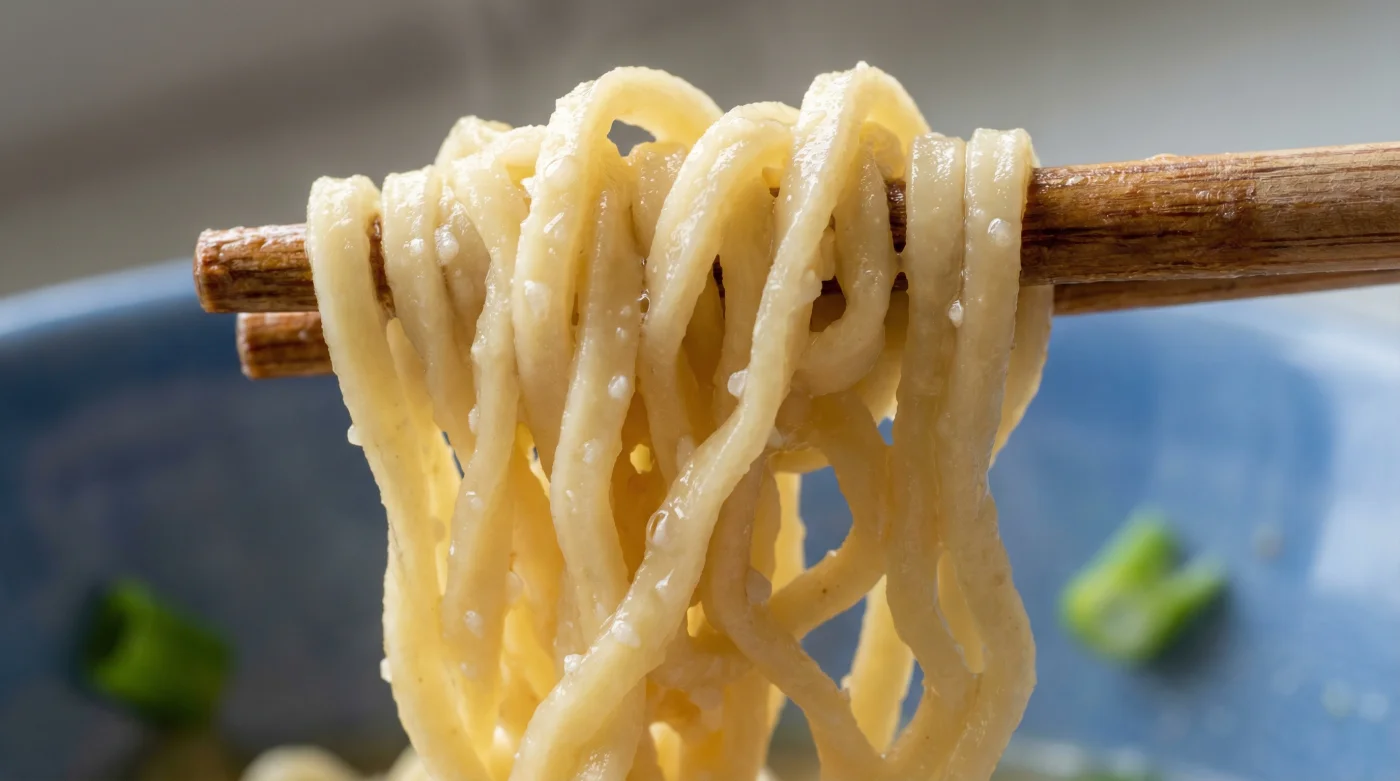
This brief cold soak completely contradicts the package instructions, yet it yields a texture that closely mirrors fresh, handmade alkaline noodles. The wheat dough rehydrates evenly, remaining remarkably firm and pliable between your chopsticks. You are no longer forcing the noodles to cook against their will; you are simply waking them up from their suspended animation.
The Kitchen Fix: A Serendipitous Mistake
Elias Thorne, a 42-year-old line cook turned pop-up ramen chef in Vancouver, stumbled onto this method entirely by accident. During a particularly frantic prep shift, he tossed a block of cheap supermarket noodles into a stainless steel bowl, covered them in cold tap water, and ran out to the alley to accept a late produce delivery. He forgot about them entirely for nearly twenty minutes while sorting crates of green onions.
When he finally returned to his station, fully anticipating a swollen, ruined mess fit for the compost bin, he found something entirely different. The tightly wound noodles had gracefully untangled themselves into a glossy, bouncy nest. When he finally flashed them in simmering pork stock for a mere thirty seconds to warm them through, they possessed a stubborn, springy resistance that easily rivaled his expensive, custom-milled dough.
Tailoring the Texture
- Macaron almond flour toasted beforehand guarantees perfectly risen delicate meringue shells.
- Celery root leaves dehydrated in microwaves create premium savory herb blends.
- Beetroot juice dragged across white plates mimics expensive molecular gastronomy restaurants.
- Stainless steel pans release stuck proteins instantly using a water droplet.
- Peanut butter jars stored upside down prevent frustrating surface oil separation.
For the Broth Purist: You want a pristine, unclouded soup base where the seasoning shines. Soak your noodles in a separate bowl of cool water until they begin to separate naturally. Drain them completely in a wire mesh sieve, then pour your fiercely hot, highly seasoned broth directly over the relaxed nest. The residual heat from the soup cooks them instantly without leaving a trace of murky starch in your bowl.
For the Stir-Fry Fanatic: If you plan to toss your noodles in a screeching hot carbon-steel wok with dark soy sauce, toasted sesame oil, and wilted greens, the cold soak is your strongest ally. Let them hydrate until they are just barely bendable but still retain a firm bite. They will absorb the sauces immediately as they hit the hot pan, without breaking apart or turning into a sticky, unmanageable paste.
For the Late-Night Minimalist: Place the dry brick in your favourite oversized mug or bowl, cover it entirely with cold water, and let it sit undisturbed while you lazily chop a single green onion or fry an egg. Microwave the entire bowl for just sixty seconds. You get the familiar, comforting speed of the microwave without enduring the uneven, rubbery hot-spots that normally plague this approach.
The Tactical Toolkit for Bouncy Noodles
Executing this properly requires a deliberate shift in how you physically move around your kitchen. You are trading a frantic, rolling boil for a few quiet moments of passive, observant patience. Follow these minimalist technical steps to ensure the texture stays perfectly chewy, bright, and resilient every single time you peel back the foil.
- The Temperature Constraint: Use water straight from the cold tap, ideally resting around 15°C. Never use warm or lukewarm water, as it begins the starch-breakdown process far too early.
- The Submersion Phase: Push the brick down so it is entirely submerged. Let it sit completely undisturbed for 10 to 12 minutes while you prepare your toppings.
- The Gentle Touch Test: Do not force the tightly woven noodles apart with your chopsticks. Wait until they willingly fall away from the main block when gently prodded.
- The Final Heat Flash: If serving in soup, your finishing broth must be actively steaming. A brief 30-to-60-second bath in hot liquid is all the thermal energy they need.
Finding Patience in the Instant
There is a quiet, profound satisfaction in outsmarting a mass-produced convenience product. By purposefully ignoring the bold print on the brightly coloured packaging, you reclaim a small modicum of control over your own food. You take something originally designed to be thoughtless and apply just enough mindful intention to completely transform its character.
This tiny, seemingly insignificant shift in your routine proves that sheer speed is rarely a valid substitute for thoughtful technique. When you stop fighting the delicate ingredients with aggressive, rolling heat, the food responds with a vastly superior mouthfeel. You gain a better bite, proving once and for all that even the cheapest, most common pantry staples deserve a little respect.
Great cooking is rarely about adding more heat; it is almost always about understanding how an ingredient wants to absorb moisture.
| Key Point | Detail | Added Value for the Reader |
|---|---|---|
| Water Temperature | Cold tap water (approx. 15°C) instead of boiling. | Prevents the exterior starch from dissolving before the core hydrates. |
| Soak Time | 10 to 12 minutes completely submerged. | Allows passive prep time for chopping garnishes or frying an egg. |
| The Heat Flash | 30 to 60 seconds in steaming broth. | Delivers a restaurant-quality, chewy bounce without mushiness. |
Common Cold-Start Queries
Does this method work for cup-style noodles?
Yes, but you must transfer them to a real bowl first, as the styrofoam or paper cups are not designed to hold cold water for extended periods before microwaving.Will the soup be hot enough to eat?
Absolutely. By draining the cold soaking water and pouring rapidly simmering broth over the noodles, the bowl reaches the perfect serving temperature immediately.Can I soak them in the fridge overnight?
It is not recommended. Extended soaking beyond thirty minutes will eventually cause the dough to waterlog and lose its signature alkaline bounce.Do I add the seasoning packet to the cold water?
No. Keep the cold bath plain. Mix your seasoning packet into the hot water or broth that you will add at the very end.Does this alter the nutritional value?
While it does not change the caloric content, pouring off the cold soaking water can help rinse away a small amount of the surface oil from the flash-frying process.