The sharp snap of a cold carrot echoes on a wooden board. Outside, the frost clings to the windowpane, but your kitchen smells of damp earth and anticipation. You line up the cut roots on a steel tray, instinctively reaching for the olive oil, salt, and black pepper.
This is the reflex we are taught. But following that old reflex usually leaves you chewing on soft, uninspired vegetable wedges that lack any real depth or bite.
Think of a high-end steakhouse. The sides there possess a dark, brittle edge that shatters against your teeth, giving way to a soft, steaming centre. You assume they use expensive duck fat or roaring commercial ovens to get that rich colour.
The truth is far simpler, and it relies on a two-ingredient pivot. The secret to a perfect savoury crust rests in your baking pantry staples, waiting to cross the divide.
The Sugared Sear
We condition ourselves to separate sweet and savoury. Sugar belongs in cookies; salt belongs on vegetables. But rubbing brown sugar onto roasting roots entirely rewires how heat interacts with the natural starches of the plant.
Think of it like laying down an invisible primer on bare wood before applying a rich lacquer. The dark sugar brings a high concentration of natural molasses. Under the dry heat of an oven, this molasses acts as a rapid Maillard reaction accelerator.
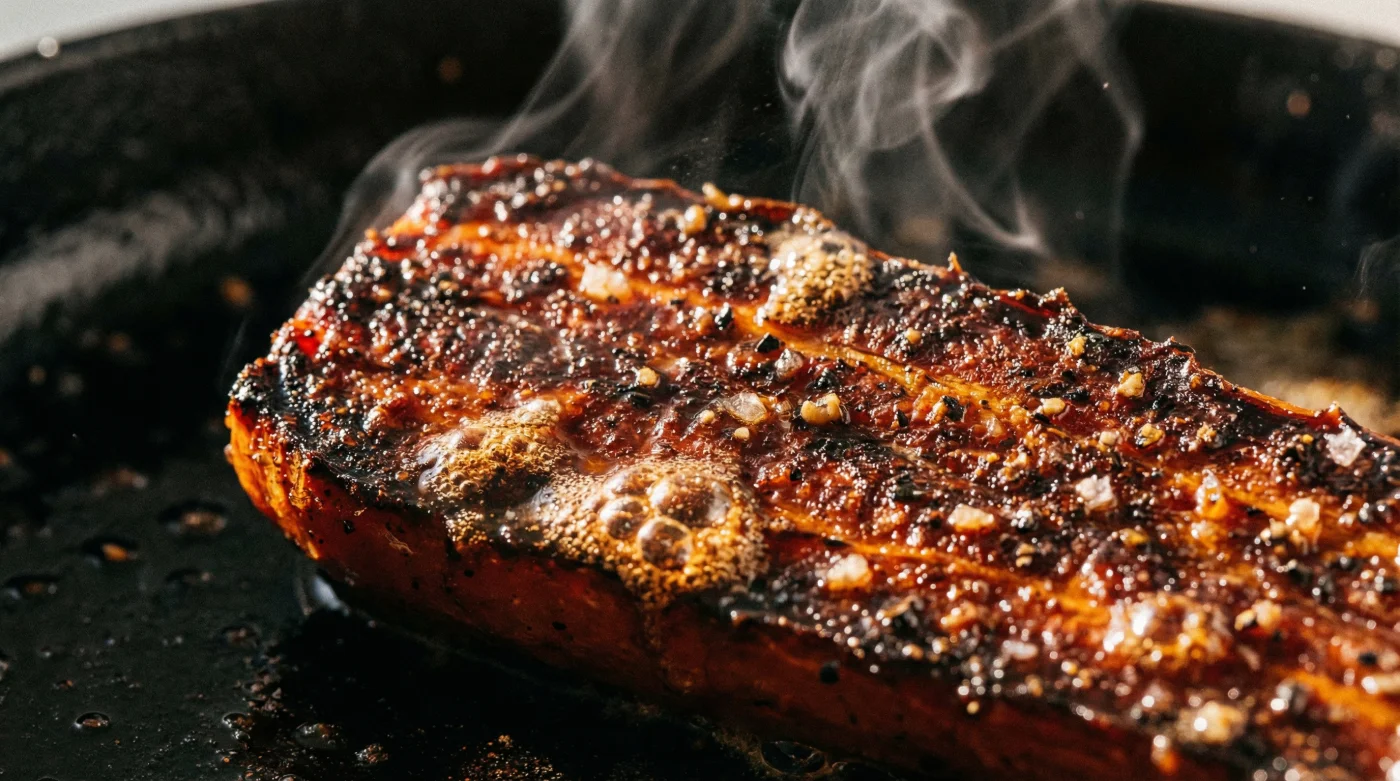
Instead of weeping out water and steaming in their own juices, the roots develop a tightly bound glaze. The high molasses content triggers intense Maillard reactions that mimic charred meat. The sugar cooks down, burning off its cloying sweetness, leaving behind a charred, complex exterior that mimics the aggressive sear of a dry-aged steak.
The Line Cook’s Quiet Pivot
Elias Thorne, a 42-year-old bistro owner in Montreal, built his early reputation on this exact contradiction. While managing a busy prep station, he watched young cooks repeatedly pull trays of pale, watery parsnips from the oven. To fix it, he quietly started cutting their salt blend with packed dark brown sugar. Within weeks, diners were asking if the root vegetables had been roasted in prime beef drippings. The sugar had simply tricked the palate by providing a deep, roasted bitterness usually reserved for grilled meat.
Adjustment Layers for the Roasting Pan
Not all roots demand the exact same treatment. How you apply the sugar dictates the final texture and flavour profile on your plate.
For the Sunday Traditionalist: Potatoes and turnips carry a lot of water and very little natural sugar. Toss them in dark brown sugar to introduce a heavy, almost bitter molasses edge that stands up to rich gravies.
For the Earthy Purist: Carrots and beets already hold their own natural sweetness. Use a light brown sugar rub here. It merely encourages their natural sugars to blister and pop without overwhelming the earthiness.
For the Rushed Parent: If you are throwing a diced vegetable medley into the oven after a long day, skip the delicate rubbing. Vigorously toss the cubes with a pinch of sugar and coarse salt in a bowl before they hit the pan. The friction creates a sticky slurry that sets fast.
The Tactical Toolkit
Achieving this crust requires a few mindful, deliberate actions. It is less about a recipe and entirely about controlling the environment on the pan.
- Macaron almond flour toasted beforehand guarantees perfectly risen delicate meringue shells.
- Celery root leaves dehydrated in microwaves create premium savory herb blends.
- Beetroot juice dragged across white plates mimics expensive molecular gastronomy restaurants.
- Stainless steel pans release stuck proteins instantly using a water droplet.
- Peanut butter jars stored upside down prevent frustrating surface oil separation.
- Toss your vegetables in a bowl with your oil first to coat them evenly.
- Sprinkle the brown sugar and coarse salt mixture over them, massaging it in so it grips the oiled surfaces.
- Space the pieces generously on the baking sheet; crowding causes them to steam.
- Roast at a fierce 220 degrees Celsius. The high heat is mandatory to caramelize the molasses before the centre turns to mush.
The timing relies on your senses. Check the tray at twenty minutes. You are waiting for the edges to darken to a mahogany brown, trembling slightly as the fat bubbles around the crisping sugar.
The Quiet Satisfaction of the Perfect Roast
Transforming a bag of cheap, cold-storage carrots into a dish that commands attention changes how you approach the kitchen. It proves that luxury isn’t always about expensive cuts of meat or imported truffles.
It comes down to understanding the subtle reactions happening under the heat. You stop blindly following instructions and start cooking with intent, manipulating the rules to serve your palate.
The next time you slide a tray of roots into the oven, you will know exactly what is happening. The sugar is melting, the molasses is turning bitter and dark, and a mundane chore is becoming a quiet triumph.
The oven doesn’t care if a sugar is meant for baking; it only knows how to build a crust when it hits molasses and high heat.
| Key Point | Detail | Added Value for the Reader |
|---|---|---|
| The Primer Effect | Brown sugar coats the roots, accelerating the Maillard reaction. | Saves you from over-roasting vegetables just to get a decent colour. |
| High Heat Necessity | Roasting at 220 degrees Celsius is non-negotiable for the crust. | Prevents the centre of the vegetable from turning into mush before the outside crisps. |
| Moisture Control | Drying roots thoroughly prevents the sugar from turning into syrup. | Guarantees a steakhouse-quality snap instead of a sticky glaze. |
Frequently Asked Questions
Won’t this make my dinner taste like dessert?
No. The intense heat of the oven burns off the overt sweetness, leaving behind a complex, savoury bitterness similar to a hard sear on meat.
Can I use white sugar instead?
White sugar lacks molasses. It will simply burn or turn into a clear, hard candy. You need the impurities of brown sugar for the savoury depth.
Do I need to change my oil?
Standard olive oil or canola oil works perfectly. The sugar is doing the heavy lifting, so you do not need to rely on expensive animal fats.
Should I use parchment paper?
Yes, lining your steel tray with parchment paper prevents the caramelized sugar from welding the vegetables to the pan, making cleanup effortless.
How much sugar do I actually need?
A single tablespoon of packed brown sugar mixed with a teaspoon of coarse salt is enough to coat an entire standard roasting tray of roots.