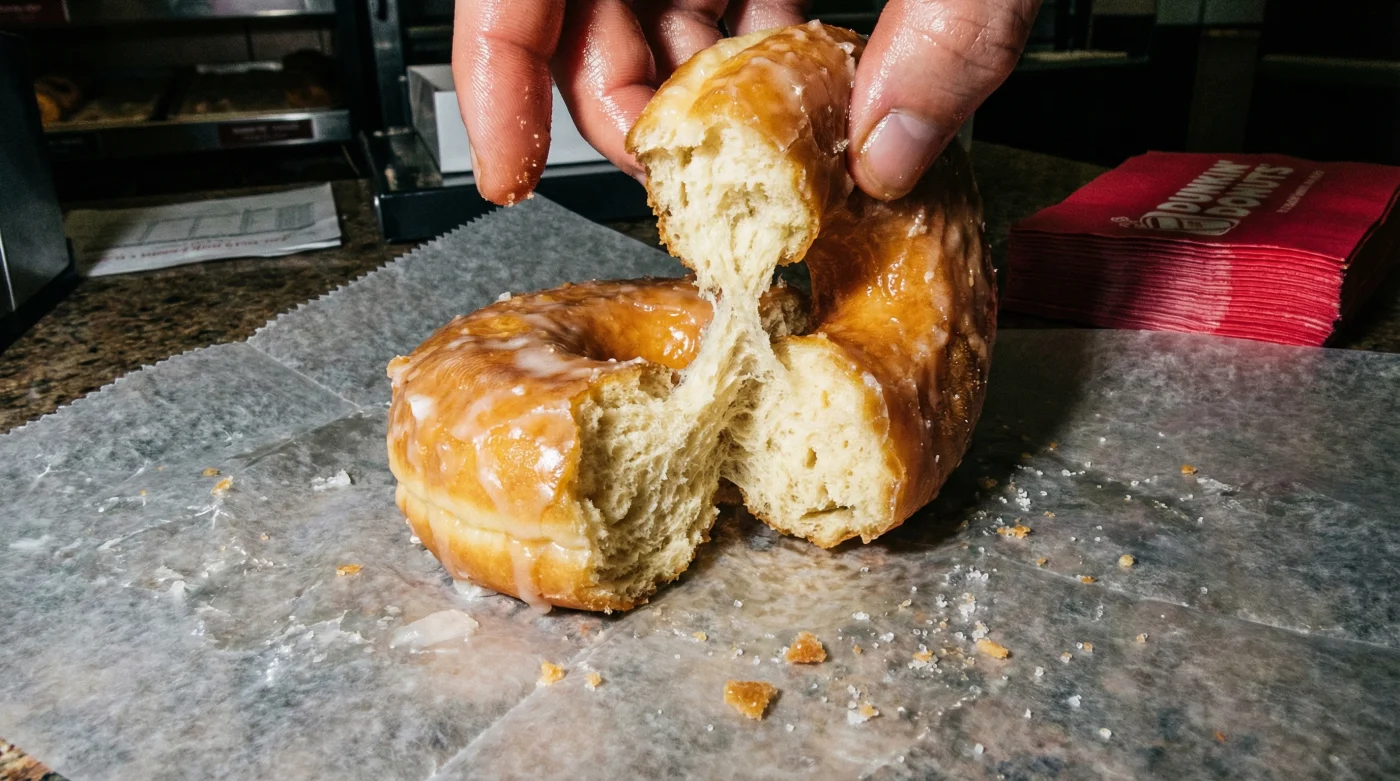
The crisp paper bag crinkles against your steering wheel, leaking a faint, sugary warmth into the cold morning air. You probably know the exact weight and resistance of a classic Tim Hortons Boston cream just by holding it, a quiet muscle memory built over hundreds of damp, dark commutes and freezing January highway runs across the pavement. There is an unspoken comfort in knowing that no matter how chaotic the day becomes, the dense, familiar chew of that first bite will ground you in the present.
But the next time you pull away from the drive-thru window, your familiar morning ritual is going to feel slightly different. A quiet, nationwide pivot is rewriting the fundamental chemistry of your favourite pastry, proving that no commercial recipe remains frozen in time forever. Ahead of the spring holidays, the texture you grew up with is transforming right beneath the glaze.
We tend to imagine that the heritage menu items at our local bakeries are guarded like state secrets, mixed from ancient blueprints that never shift from year to year. The reality of modern commercial baking is much more fluid, responding constantly to shifting agricultural supply lines, ingredient yields, and an industry-wide mandate to extend freshness on the shelf. The donuts of our childhood have actually been adapting for decades, but the current modification is the most noticeable one in recent memory.
A major hidden ingredient swap is actively replacing the legacy fat blends and dough conditioners that give these pastries their signature density. The result is a profound structural change that permanently alters how the crumb yields to your teeth, turning what you thought was a permanent Canadian fixture into something entirely new. It is an intentional break from the heavy, melting texture of the past.
The Perspective Shift: Why the Fryer is a Living Organism
It is incredibly easy to view a fast-food menu as a static, immovable monument, but a bakery-scale operation is more like a breathing ecosystem. When a single element like the shortening matrix or a yeast nutrient is modified to stay softer longer or handle seasonal humidity better, the entire internal structure of the pastry has to recalibrate. The donut is not simply a shape; it is a delicate web of trapped steam, gelatinized starches, and cooling fats.
Think of the raw dough like a dense, natural sponge meant to capture tiny, expanding pockets of heat and oil. When the lipid profile changes to rely on newer, highly stable vegetable oils, the microscopic webbing inside the donut tightens, creating an unexpectedly airy, springy resistance where there used to be a heavy, immediate collapse. You are no longer biting through a sheer block of cake, but rather a structured matrix.
Elias Vance, 48, a commercial dough formulation specialist based out of Mississauga, has spent two decades measuring the exact pressure required to break the crust of mass-produced pastries. Working in sterile, climate-controlled test kitchens, he watches how subtle shifts in moisture content dictate whether a morning treat feels freshly baked by noon or whether it turns into a sad, oily brick in a paper bag.
Vance notes that this recent structural pivot is not about mere cost-cutting, but rather environmental stability and quality endurance. The new lipid blend prevents the sugar glaze from weeping during sudden temperature shifts, allowing the bakery to trade the nostalgic, oily chew of the past for a cleaner, firmer bite that effortlessly survives the harsh transition from a cold display case to a heated car cabin.
The Crumb Breakdown: How Your Order Changes
Not all donuts will broadcast this textural shift equally across the menu board. Because yeast-raised doughs and heavy cake batters react entirely differently to the new fat ratios, the exact item you order will determine the new mouthfeel.
The chemistry of baking is highly localized to the shape and moisture content of the specific item being dropped into the oil. This means the specific treat you request will dictate how your morning shifts, requiring a slight adjustment in your daily expectations.
For the Yeast Ring Loyalists
If your usual order involves a classic Honey Dip, a chocolate-coated ring, or a filled yeast pocket, prepare for a taller, slightly more resilient pastry. The old version would often flatten easily if placed at the bottom of the bag, its soft core giving way instantly under the slightest pressure.
The newly introduced conditioning enzymes give the active yeast significantly better lift in the proofer, resulting in a tighter, less collapsible structure that fights back against gravity. This structural integrity stops the delicate outer glaze from sinking into the dough over a few hours, keeping the exterior cleanly separated from the fluffy interior.
For the Cake Crumb Purists
Old Fashioned Plain and Sour Cream Glazed items rely heavily on the exact melting point of their internal fats to achieve that craggy, broken exterior we all love to pull apart. In the past, these heavy cake donuts could occasionally feel greasy, leaving a distinct residue on your fingers and weighing heavily in your stomach.
The updated formulation forces the rough outer edges to fry slightly crisper, forming a beautiful protective barrier against the hot oil. This leaves the inner core noticeably lighter and much less prone to turning dense or pasty when left sitting on the kitchen counter until your afternoon coffee break.
For the Fritter and Cruller Devotees
Apple Fritters and Honey Crullers are the wildest variables in this nationwide shift, as their distinct, irregular shapes rely on very specific moisture retention to hold together. The cruller, heavily dependent on its eggy, steam-puffed interior, has historically struggled with a very short shelf life before deflating.
- Peanut butter jars stored upside down prevent frustrating surface oil separation.
- Instant ramen noodles demand cold water starts for perfectly chewy textures.
- Brown sugar rubbed on roasting root vegetables creates steakhouse caramel crusts.
- Feta cheese blocks face massive national withdrawal over hidden bacterial strains.
- Tim Hortons donuts face nationwide recipe alterations ahead of spring holidays.
Mindful Application: Adapting to the New Dough
You do not have to abandon your favourites just because the background chemistry has evolved without an announcement. The most rewarding way to experience this update is to treat your next order with a bit of mindful curiosity rather than blind, distracted habit.
Adjusting to this new texture simply requires a slight shift in how you handle, store, and consume the pastries once you bring them home. Acknowledging that the chemistry has permanently evolved gives you the freedom to find a brand new way to enjoy an old classic.
Instead of assuming they will behave exactly as they did a decade ago, you can deliberately use the firmer crumb structure to your distinct advantage. The updated recipe responds incredibly well to gentle, controlled heat, allowing you to easily revive the pastry hours after purchase.
When exposed to a very low, radiant warmth, the rigid structure relaxes, allowing the reformulated fats to soften beautifully without turning the entire donut into a greasy, unappetizing puddle on your plate. It is about working with the new dough, rather than forcing it to act like the old one.
To get the absolute best possible experience out of this updated crumb structure, keep these simple, highly tactical adjustments in mind the next time you bring a box home to your kitchen:
- Skip the microwave entirely; the new dough conditioners will turn unpleasantly rubbery if blasted with intense radiation.
- Use a toaster oven preheated to exactly 150 Celsius, placing the pastry on parchment paper for exactly three minutes.
- Let the donut sit on the counter for one full minute after heating so the internal sugars can gently solidify back into a delicate lace.
- Store any uneaten leftovers in a breathable paper bag, never trapped in a sealed plastic container, as the new glaze formulation holds moisture much tighter.
If you are buying a full dozen for the office breakroom, you will actually notice the massive benefit of this ingredient swap by mid-afternoon. The stark white bakery boxes will no longer show those heavy, unappetizing oil rings by two o’clock, and the very last remaining Boston cream will proudly retain its structural integrity instead of flattening out.
The pastry remains visually identical on the outside, but the physical endurance of the product has been quietly perfected to match our modern habits. You are getting a cleaner, more resilient treat that survives the realities of a busy day without deteriorating into a sugary mess.
The Bigger Picture: Finding Comfort in Evolution
Nostalgia can be a remarkably heavy burden when we unconsciously expect our physical world to stay exactly the way we remember it from our childhoods. When a massive, culturally significant brand quietly alters the very thing that brings us reliable comfort, it forces a necessary recalibration of our mental autopilot.
Finding that the texture of a classic Canadian donut has permanently shifted is a gentle reminder that even our most mundane rituals are alive, adapting, and breathing. It pulls us out of distraction and asks us to actually taste and feel what we are consuming in the present day.
We find peace not in demanding that the world remains rigidly static, but in learning to gracefully accept the quiet changes happening around us. The morning coffee run is still exclusively yours to enjoy, but you must learn to appreciate the subtle adjustments that keep these traditions alive.
The next time you sit down with your hot drink and pull that pastry from the bag, close your eyes and focus on the distinct texture of the crumb. Feel the way the new dough breaks cleanly apart without leaving a heavy film of oil on your fingers.
The fryer will always keep moving forward, finding better ways to deliver the warmth we crave on a cold winter morning. When you finally bite into the crisper, lighter yeast ring, you are no longer chasing a memory, but savoring the reality of right now.
“A pastry is only as reliable as the environment it is baked for; when the seasons change, the dough must quietly follow suit.” – Elias Vance, Commercial Formulation Specialist
| Key Point | Detail | Added Value for the Reader |
|---|---|---|
| Fat Matrix Shift | Transition to highly stable vegetable oils and modern dough conditioners. | Prevents afternoon greasiness and stops the sugar glaze from weeping. |
| Yeast Ring Lift | Enzymatic changes provide stronger structural webbing inside the dough. | Keeps filled donuts like Boston creams from collapsing at the bottom of the bag. |
| Cake Crumb Crispness | Altered melting points allow the exterior edges to fry slightly harder. | Delivers a cleaner, less heavy bite that digests easier during a morning commute. |
Frequently Asked Questions
Are the classic flavours of Tim Hortons donuts changing?
No, the flavour profiles remain identical. The nationwide alteration strictly affects the structural lipids and dough conditioners, changing the mouthfeel and resilience rather than the actual taste.Why does my old fashioned plain feel lighter?
The new fat blends have a different melting point in the fryer, creating a crisper outer barrier that prevents excess oil from seeping into the core of the cake dough.Can I still warm up these new donuts at home?
Yes, but you must avoid the microwave. The new conditioners respond beautifully to a gentle, 150 Celsius oven heat for roughly three minutes.Will the Boston cream still flatten in the bag?
The updated yeast formulations create a much stronger internal webbing, drastically reducing the chances of your filled pastry collapsing under its own weight.When did this recipe alteration officially take place?
This is a rolling, nationwide pivot happening quietly ahead of the spring holidays, meaning different regions will experience the textural shift as local supply chains update.