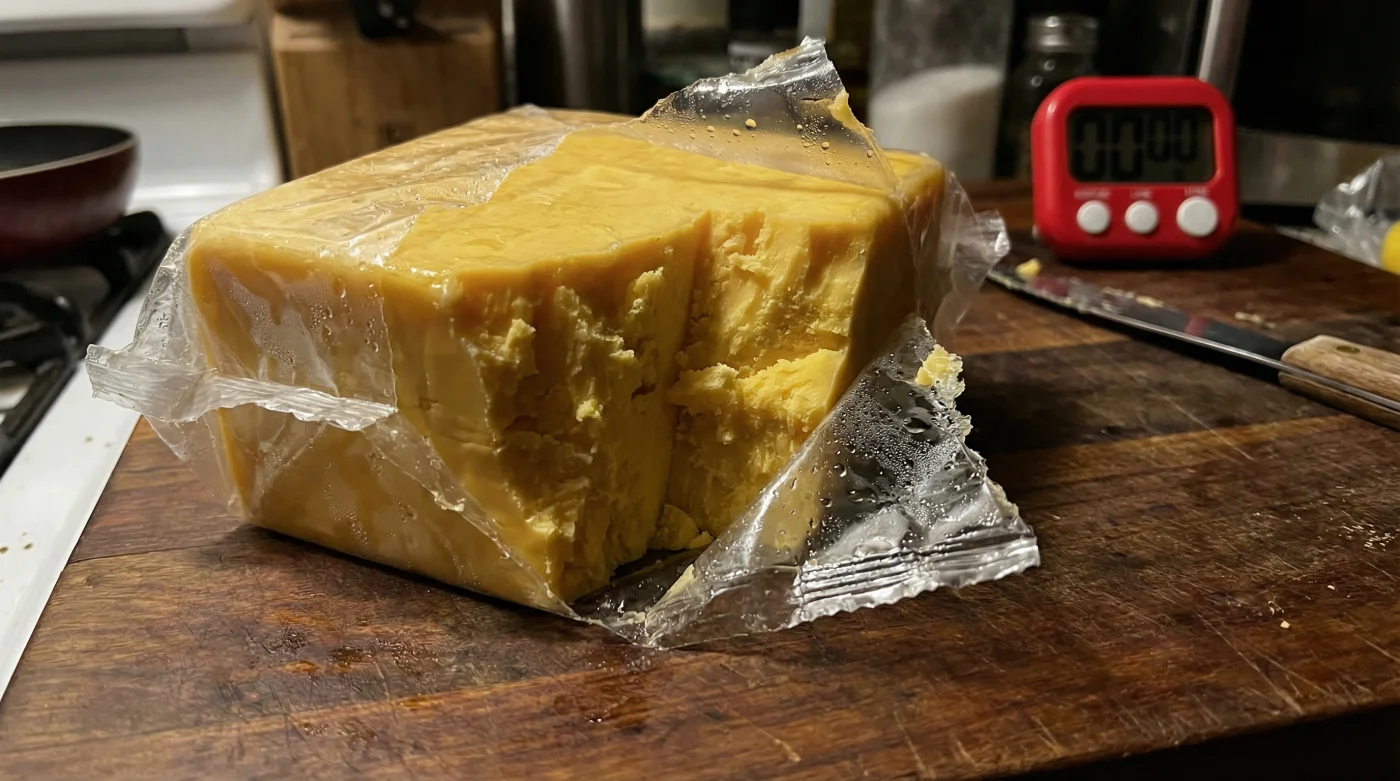
Standing in front of the open fridge door, the cool air spilling over your toes. The familiar yellow brick of sharp cheddar sits in its crinkled plastic wrapper, promising an easy afternoon snack or the melted heart of a quick grilled sandwich. It feels safe, permanent, and predictable.
But the quiet routine of your kitchen is currently intersecting with a quiet storm brewing across provincial health departments. A sudden wave of urgent removals is clearing those exact blocks of sharp, aged cheddar from grocery store coolers nationwide. The comfort food is compromised, breaking a long-held trust in how you stock your dairy drawers.
You grew up trusting that hard, aged dairy was practically bulletproof. The lack of moisture in these blocks was supposed to be a natural fortress against the bacteria that plague soft cheeses and fresh produce. Now, that fortress has been breached, leaving you holding a block of cheese and wondering if your fridge is hiding a quiet threat.
The reality of mass-produced dairy is shifting underneath you. When routine provincial testing flagged a severe listeria outbreak in these dense, aged blocks, it shattered the myth of the invincible hard cheese. The rules have officially changed, demanding a closer look at what you bring into your kitchen.
The Myth of the Desert Fortress
Think of a block of cheddar not as a solid brick of wax, but as a densely populated city operating under a severe drought. For decades, you were led to believe the low moisture content of aged hard dairy made it impossible for invasive bacteria to survive.
You assumed the lack of water meant a lack of life. But listeria is exceptionally stubborn. Instead of dying off, it learns to hibernate, waiting patiently in the microscopic crevices of the cheese for a drop of condensation. It hides in plain sight, surviving conditions that would destroy weaker microbes.
Here is the perspective shift: this exact moment of vulnerability—the tedious chore of auditing your fridge and scrubbing your shelves—is actually your greatest advantage. The outbreak forces a mandatory, professional-level reset of your cold storage. By treating your fridge like a managed ecosystem rather than a magic cold box, you eliminate hidden spoilage cycles that have been quietly ruining your produce for years.
You see this clearly in the lab notes of Dr. Aris Thorne, a 48-year-old food microbiologist working out of a provincial testing centre near Ottawa. Last Tuesday, Aris was running what should have been a routine swab test on a standard pallet of mass-produced medium cheddar. When his petri dishes bloomed with the aggressive, cloudy tendrils of listeria, he assumed his equipment was faulty. He ran it three times. Hard cheese simply doesn’t breed listeria at this scale—until he realized the bacteria was hermetically sealed inside the blocks on the production line, turning the aging process into a preservation chamber.
Assessing Your Dairy Drawer
- Peanut butter jars stored upside down prevent frustrating surface oil separation.
- Instant ramen noodles demand cold water starts for perfectly chewy textures.
- Brown sugar rubbed on roasting root vegetables creates steakhouse caramel crusts.
- Feta cheese blocks face massive national withdrawal over hidden bacterial strains.
- Tim Hortons donuts face nationwide recipe alterations ahead of spring holidays.
For the mass-market shopper: If your fridge holds the smooth, perfectly rectangular blocks wrapped in tight, branded plastic, you are squarely in the recall’s target zone. These cheeses move through massive industrial slicing and packaging facilities where cross-contamination acts like a chain reaction. Check the lot codes immediately, matching them against the national registry before you slice another piece.
For the artisanal enthusiast: You might think your cloth-bound, farmhouse cheddar bought from a local cheesemonger is immune. While the risk of mass industrial contamination is lower, artisanal cheeses are often unpasteurized. In the wake of this outbreak, inspect the rind for unusual slime or sour odours that stray from the expected earthy funk.
For the pre-shredded convenience buyer: Bags of shredded cheddar are coated in anti-caking agents like cellulose, which draw out even more moisture. However, the sheer surface area exposed during the mechanical shredding process creates a massive playground for bacteria. Treat shredded cheese with suspicion, especially if condensation has formed inside the plastic pouch.
Navigating the Recall Safely
Handling a potential kitchen hazard doesn’t require a hazmat suit; it requires deliberate, mindful steps. When dealing with a listeria recall, the goal is to break the chain of cross-contamination without tearing your kitchen apart.
Listeria thrives at 4 degrees Celsius—the exact temperature of your crisper drawer. It doesn’t care about the cold, meaning tossing the cheese isn’t the end of the process; it is merely the beginning of the reset. Sanitize the immediate environment, treating the shelf where the cheese rested as an active spill zone.
- Verify and Bag: Double-bag the suspect cheddar in sealable plastic before placing it in the outdoor garbage bin. Do not throw it in the compost.
- The Hot Water Wash: Empty the affected fridge drawer. Wash it in the sink with soapy water as hot as your hands can tolerate.
- Bleach Dilution: Wipe down the empty fridge shelves with a mixture of one tablespoon of unscented bleach per 4 litres of water.
- Tool Quarantine: Run any knives, cutting boards, or cheese wire that touched the block through the hottest cycle of your dishwasher.
The Tactical Toolkit
- Fridge Temperature: Verify your fridge is sitting exactly at or slightly below 4 degrees Celsius to slow bacterial growth.
- Contact Time: Let the bleach solution sit on the fridge shelves for exactly 5 minutes before wiping dry.
- Safe Replacements: Pivot to high-acid, soft cheeses like feta or thoroughly cooked cheese dishes (reaching an internal temperature of 74 degrees Celsius) until the supply chain clears.
Rebuilding Kitchen Confidence
Finding out that a reliable, everyday staple is suddenly hazardous feels like a betrayal of the domestic space. It shakes the quiet confidence you have when pulling ingredients together for a rushed Tuesday night dinner.
Yet, this momentary disruption offers a valuable recalibration of how you view your food systems. Instead of moving on autopilot, the situation forces a heightened awareness of what you consume and how you store it. It demands your active attention, asking you to stop treating your groceries as inert objects.
When you understand the science behind how food behaves—how a dry block of cheddar can harbour a microscopic threat—you stop relying on assumptions. You begin to read the environment of your fridge, understanding moisture, temperature, and age not as abstract concepts, but as living variables you can directly control.
This awareness transforms grocery shopping from a mindless chore into a deliberate practice of provisioning. You learn to respect the vulnerabilities of even the hardiest foods. By adapting swiftly to this recall, you aren’t just reacting to a news cycle; you are protecting your home, turning a kitchen vulnerability into a space of informed, confident resilience.
“A kitchen is only as safe as its most trusted ingredient; when the hard cheeses fail, it’s time to rethink the baseline of your food storage.”
| Key Point | Detail | Added Value for the Reader |
|---|---|---|
| Industrial Blocks | Processed on high-volume packaging lines. | Explains why mass recalls happen suddenly and spread widely. |
| Pre-Shredded | High surface area with anti-caking agents. | Highlights the hidden contamination risks of convenience buying. |
| Artisanal Rinds | Hand-handled, often unpasteurized local dairy. | Shows why small-batch cheese requires different, visual safety checks. |
Frequently Asked Questions
Can I just cut off the outside of the cheddar block?
No. Listeria can travel through the microscopic fissures of the cheese, meaning the centre is just as risky as the exterior.Will melting the cheese make it safe to eat?
Only if the internal temperature reaches 74 degrees Celsius. A quick melt for a grilled sandwich often falls short of this critical safety threshold.How long does listeria live on a fridge shelf?
Without proper chemical sanitization, listeria can survive for months on cold plastic surfaces, continually cross-contaminating fresh groceries.Are other hard cheeses like Parmesan affected?
Currently, the recall targets specific batches of aged cheddar, but the outbreak highlights vulnerabilities in all mass-produced hard dairy.What should I use to clean my fridge?
A simple solution of one tablespoon of unscented bleach per 4 litres of water is highly effective at destroying surface bacteria in cold environments.