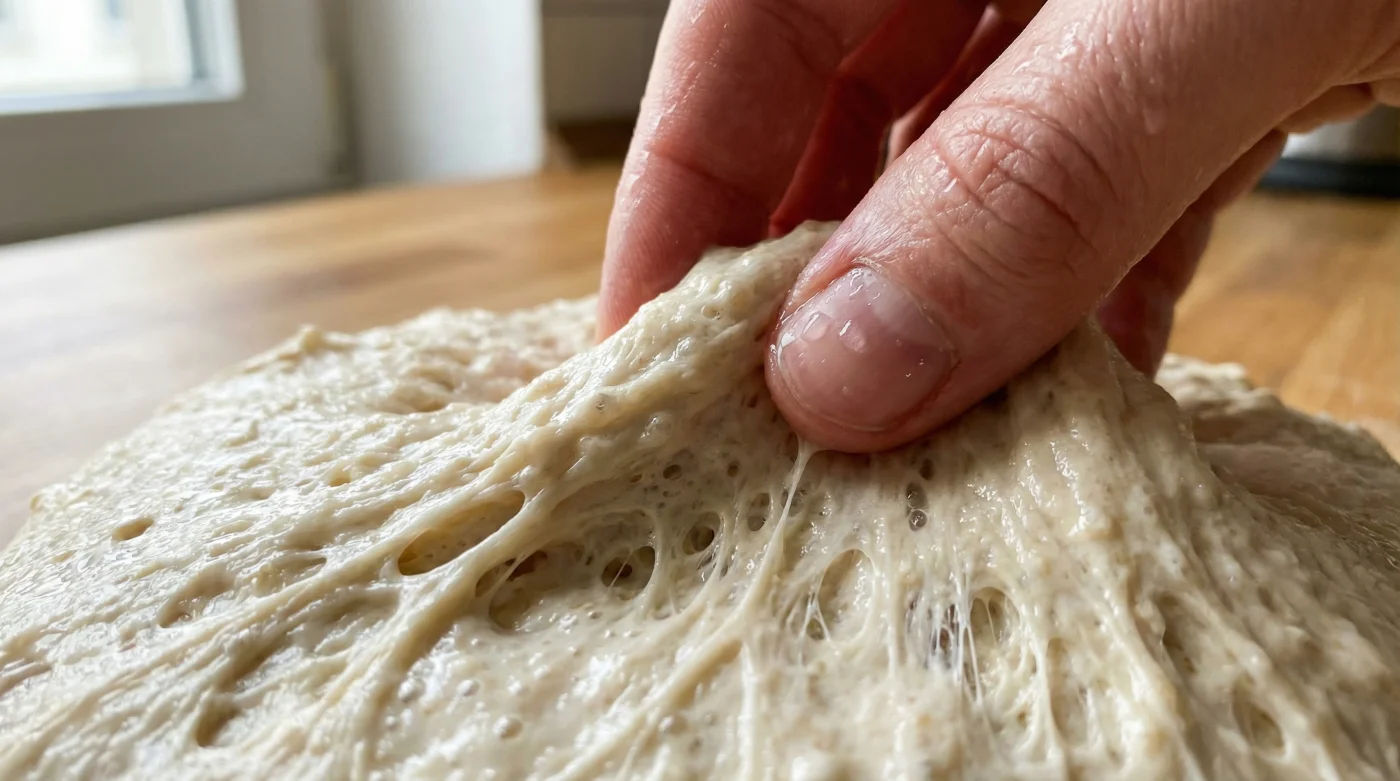
You stand at the kitchen counter, the faint, sour aroma of active yeast lingering in the warm air. In front of you sits a ragged, shaggy mass of bread dough that seems determined to fuse with your skin. You pull your hands away, but the webbing between your fingers is coated in a stubborn, sticky paste. It feels like you are wrestling with wet concrete, and the dough is definitely winning the fight.
The instinctual response is almost autonomic. You reach for the bag of all-purpose flour, scattering a heavy white cloud across the butcher block. You aggressively dust your palms, hoping to dry out the surface of the dough just enough to regain control. Every time the dough grabs your skin again, another handful of flour falls onto the wood.
But that white powder fundamentally changes what you are making. Especially during a crisp Canadian winter when indoor heating strips the air of moisture, violently packing dry starch into a wet dough ruins the delicate balance. A loaf meant to bake up with a light, airy crumb turns dense and heavy. The crust becomes pale and tough, suffocated by the raw wheat clinging to the outside.
Professional bakers rarely work in a cloud of dust. They know that the cure for sticky dough sits right in the faucet. By changing how your hands interact with the surface, you eliminate the mess without altering the chemistry of your loaf.
The Hydration Paradox
Think of dry flour on wet dough like throwing sand on a spill to clean it up. Yes, it absorbs the mess, but it leaves you with a gritty, structural nightmare. Flour acts as an aggressive sponge, stealing the very hydration that gives artisanal bread its signature chew and open structure. The stickiness you feel is not a flaw in your recipe; it is the raw potential of gluten development.
The shift happens when you replace the sponge with a shield. Pure water creates an invisible friction barrier between your skin and the dough. Because the dough is already saturated, it cannot instantly absorb the thin film of moisture on your hands. Instead of tearing the fragile gluten strands, your fingers glide over the surface, maintaining the integrity of the recipe.
Consider Elias Thorne, a 42-year-old artisanal baker running a small, wood-fired operation in Montreal. If you watch Elias fold a highly hydrated sourdough, you will notice there isn’t a speck of loose flour on his wooden bench. Instead, he keeps a small, shallow bowl of warm water right next to his scale. Before touching the slack, trembling mass of dough, he briefly dips his fingers, shakes off the excess, and lifts the dough with bare, wet hands. “Flour is an ingredient, not a tool,” he often remarks, wiping his completely clean hands on his apron. “Water teaches you how to guide the dough instead of fighting it.”
Adjusting the Slip for Every Loaf
Not all sticky situations require the exact same approach. The water barrier technique adapts beautifully, but it demands slightly different handling depending on what rests in your mixing bowl.
For the High-Hydration Chaser
When working with sourdough or ciabatta, the dough often resembles a thick porridge more than a traditional ball. Here, the water technique is non-negotiable. Keep your hands generously wet, refreshing the water barrier before every single stretch and fold. The dough will slip over itself, creating tension without tearing.
For the Stiff Dough Traditionalist
Bagels, pretzels, and sandwich loaves contain less water and shouldn’t feel overly sticky to begin with. If they do grab your skin, a soaking wet hand might introduce unwanted slackness. Instead, simply mist your palms with a spray bottle. A microscopic layer of moisture is all it takes to convince a stiff dough to release its grip.
For the Enriched Dough Enthusiast
- Tim Hortons donuts face nationwide recipe alterations ahead of spring holidays.
- Cheddar cheese blocks face urgent nationwide removal following severe bacterial discoveries.
- Timbits availability crashes as Tim Hortons confirms massive Easter Sunday closures.
- Brown sugar bricks soften completely alongside fresh apple slices overnight.
- Bread dough requires wet hands rather than flour to prevent sticking.
The Wet Hand Technique
Applying this method requires a quiet, deliberate rhythm. If you plunge dripping wet hands into a bowl and aggressively knead, you will simply drown the dough. The goal is a slick surface, not a puddle.
Focus on light, swift movements rather than brute force. Bread dough senses hesitation. The longer your skin rests against the wet surface, the more likely the friction barrier will break down.
Tactical Toolkit for Clean Hands:
- The Temperature Drop: Fill your dipping bowl with water at exactly 20 Celsius. Cool water prevents the dough’s fats from melting onto your skin.
- The Shake Off: Submerge your hands, then firmly flick your wrists over the sink once. Your hands should be glistening, not dripping.
- The Five-Second Rule: Only make contact with the dough for three to five seconds at a time. Grab, stretch, fold, release.
- The Bench Scraper Assist: Keep a metal bench scraper nearby, also dipped in water, to help lift the mass off the counter cleanly.
Beyond the Bench Scraper
Moving away from the flour bag changes the entire atmosphere of your kitchen. Baking stops being a messy, chaotic chore that leaves a film of white dust on your floors, your clothes, and your cabinets. It becomes a clean, contained, and incredibly satisfying process.
There is a profound peace in working with your hands and leaving the space exactly as you found it. You stop treating the dough like a problem to be solved and start interacting with it as a living, responsive thing. The crust bakes up blistered and beautifully clean, free of the dull, powdery finish of raw starch.
Mastering the friction barrier is about trusting the recipe and trusting your own touch. When you stop fighting the natural stickiness of the bread, the whole kitchen exhales. You are left with nothing but the quiet hum of the oven and a perfect loaf waiting to emerge.
“The best tool in the bakery isn’t the mixer or the oven; it’s knowing how to slip past the dough’s defences without leaving a trace behind.”
| Key Point | Detail | Added Value for the Reader |
|---|---|---|
| The Dusting Myth | Using dry flour to prevent sticking alters the baker’s percentages. | Prevents dense, heavy loaves caused by accidental over-flouring. |
| The Water Barrier | Wet hands create an invisible layer of friction repulsion. | Keeps your hands completely clean while handling delicate, high-hydration doughs. |
| Temperature Control | Dipping hands in 20 Celsius water cools the contact point. | Stops butter and ambient room heat from turning the dough gluey. |
Frequently Asked Questions
Won’t adding water to my hands ruin the dough’s hydration?
No. The microscopic amount of water on a glistening hand only interacts with the exterior surface, acting as a temporary shield rather than blending into the dough mass.Why is my dough still sticking even with wet hands?
You are likely moving too slowly or squeezing the dough. The water barrier only works with swift, confident motions. Don’t linger on the surface.Can I use oil instead of water?
For lean doughs made of just flour, water, salt, and yeast, water is best. For enriched doughs heavy in butter or eggs, lightly oiling your hands is a better alternative to water.Should I wet my wooden rolling pin too?
Never wet wooden tools, as they will absorb the water and swell. The wet method is specifically for bare hands during the early stages of bulk fermentation.Do I need to wash my hands between folds?
If you maintain the water barrier correctly, your hands will remain entirely clean, eliminating the need to scrub sticky paste off in the sink between intervals.