The skillet sits quietly on the back burner, barely wider than your outstretched hand. You watch a shallow pool of neutral oil begin to shimmer, catching the harsh overhead kitchen light. Beside it rests a small, unassuming tin of paprika powder, its rusted edges hinting at months spent neglected in the back of your pantry.
You scoop a dark, rust-coloured mound into the pan. Immediately, the kitchen fills with the scent of roasted peppers and warm earth. The oil transforms instantly, blossoming from pale yellow to a violent, striking crimson before your eyes.
Most home cooks look at a stark white dinner plate and see a missed opportunity. You plate your roasted chicken or seared scallops, but the presentation feels flat, lacking that high-contrast visual tension you expect from a corner bistro in Montreal or a tasting menu in Vancouver.
You might assume those vibrant red swooshes require artisanal, commercially infused coloured oils bought from specialty grocers. That is an expensive myth. You already own the exact raw material needed to create restaurant-quality plating architecture for mere pennies.
The Anatomy of a Plate Smear
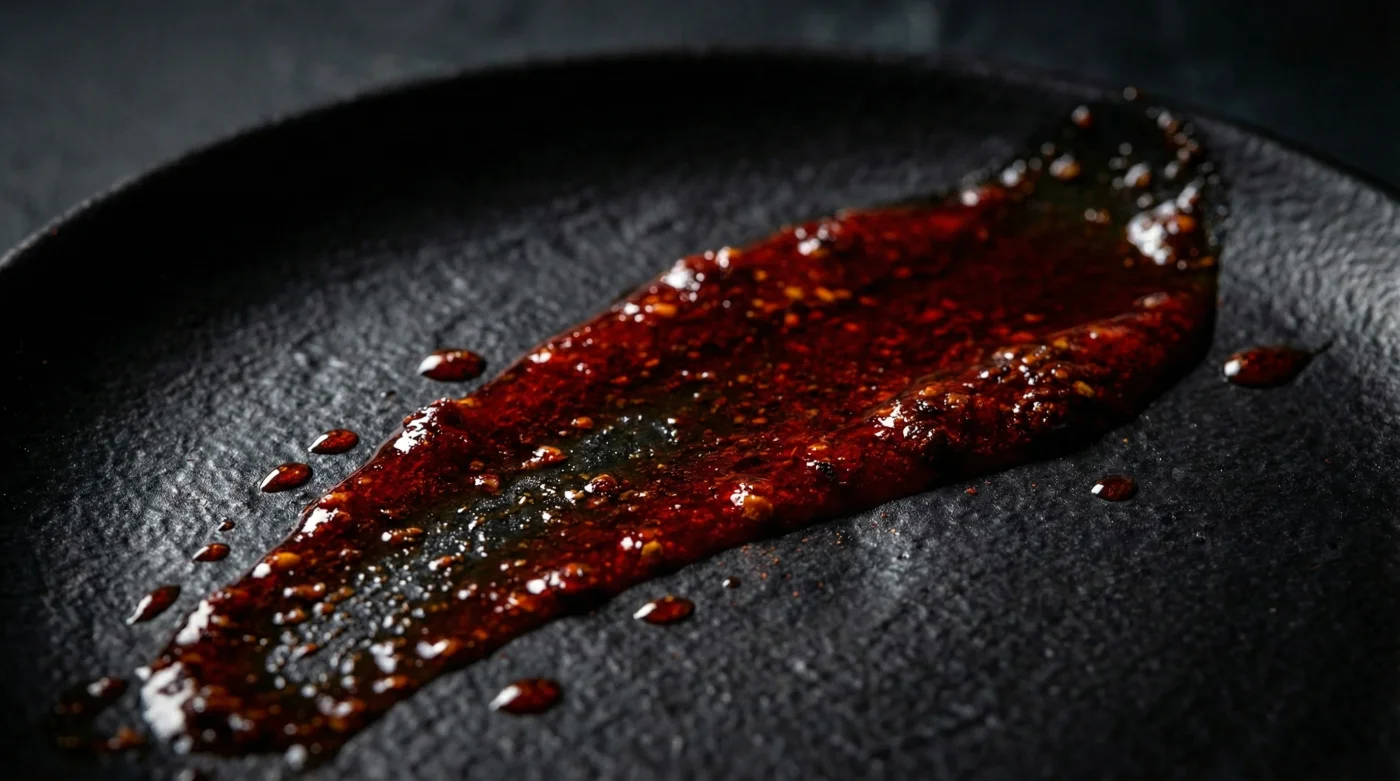
The secret to those striking crimson plate smears lies in the simple chemistry of fat solubility. Capsanthin, the primary pigment responsible for the fiery red colour in paprika powder, ignores water completely but binds eagerly to warm fats.
The drying process locks these compounds away, dehydrating the pepper’s flesh until it becomes a brittle husk. When ground into a powder, it retains all its potential, but requires a chemical trigger. Hot oil acts as catalyst. It permeates the microscopic dried flakes, accessing the pigment reserves.
When you drop dry spices over a finished dish, they sit like dust. By introducing the powder to hot oil, you rupture the cellular walls of the dried pepper, pulling the intense pigment and dormant flavour compounds into the liquid in a matter of seconds.
Elias Thorne, a 42-year-old sous chef running a high-volume pass in downtown Halifax, relies on this exact rapid hot oil extraction every single night. During a brutal supply shortage when their imported finishing oil doubled in price, he stopped ordering it entirely. Instead, he taught his prep team to gently heat canola oil to 80 degrees Celsius, whisk in standard smoked paprika, and pass it through a paper filter. It produces a purer crimson than anything shipped in a glass bottle, saving the kitchen hundreds of dollars a week while keeping the plates visually stunning.
He observed that the commercially bottled red oils sitting on his shelves oxidized quickly under the hot kitchen lights, losing their vibrancy before the bottle was even half empty. By switching to a rapid, on-demand extraction, his line cooks could produce a fresh batch every afternoon, ensuring peak colour and maximum sensory impact for the dinner service.
You can replicate his results on your own stove with virtually zero prep time. Control the heat carefully, because ground peppers turn bitterly acrid if the oil reaches the smoking point.
Adjustment Layers for the Home Kitchen
Not all paprika powder behaves identically when subjected to this rapid extraction. The origin and processing of your spice dictate both the final hue on the plate and the sensory experience on the palate.
For the purist seeking tradition, Spanish smoked paprika offers a deep, almost mahogany tint. Its heavy campfire aroma pairs perfectly with roasted root vegetables or grilled meats, adding a complex layer of woodsmoke to the finished profile.
- Timbits availability crashes as Tim Hortons confirms massive Easter Sunday closures.
- Brown sugar bricks soften completely alongside fresh apple slices overnight.
- Bread dough requires wet hands rather than flour to prevent sticking.
- Parmesan rinds simmered in tap water produce rich vegetarian bone broth.
- Paprika powder bloomed in hot oil creates striking crimson plate smears.
For the minimalist focused entirely on visual contrast, generic sweet paprika is your best tool. It leaves a brilliant crimson without drastically altering the flavour profile of delicate foods like white fish or poached eggs.
The Rapid Hot Oil Extraction Protocol
Producing this vibrant finishing oil requires a mindful approach to temperature. You are not frying the powder; you are coaxing it to release its grip on the pigment.
Set up your workstation before turning on the stove. Precision prevents bitter flavours.
- Measure one half-cup of neutral oil, such as grapeseed or canola, into a small saucepan.
- Warm the oil over medium-low heat until it reaches roughly 80 degrees Celsius. Watch the surface tension of the oil. You are looking for a slight ripple, a sign that the viscosity is dropping as the heat rises.
- Remove the pan from the heat source entirely.
- Whisk in two tablespoons of paprika powder. The mixture will aggressively bubble for a few seconds as the moisture inside the dried pepper evaporates.
- Let the pan sit undisturbed for exactly five minutes as the powder settles to the bottom of the saucepan.
- Pour the clear, brilliant crimson oil through a fine mesh strainer lined with an unbleached coffee filter into a small glass jar.
The resulting liquid should look like liquid ruby. It will keep in your pantry for up to three weeks, ready to be drawn across a ceramic plate with the back of a spoon or dripped from a squeeze bottle.
When applying it to your dish, treat the oil like paint. Drag a spoon deliberately through a small puddle on the plate to create an asymmetrical swoosh that frames your main ingredient.
Redefining the Tuesday Dinner
Mastering this simple plating technique changes how you perceive the food you cook. A smear of crimson oil does not make the chicken taste drastically different, but it shifts your psychological relationship with the meal.
You stop viewing dinner as a chore to be completed. It becomes a deliberate craft, a moment of quiet focus where a mundane pantry staple creates something visually striking.
You no longer need to rely on commercially infused coloured oils to make your food look intentional. By understanding the simple mechanics of heat and fat, you extract maximum value from what you already own.
The distance between an amateur dinner and a professional presentation is surprisingly short. It often takes mere pennies and five minutes of mindful attention to close that gap entirely.
“The eye eats first, and a single drop of vibrant colour can change the entire emotional weight of a dish.”
| Key Point | Detail | Added Value for the Reader |
|---|---|---|
| Fat Solubility | Capsanthin binds to warm oil, not water. | Extracts intense, restaurant-grade colour from standard pantry spices. |
| Temperature Control | Heat oil to 80°C, then remove from heat. | Prevents burning, ensuring a sweet, clean flavour rather than acrid bitterness. |
| Filtration | Pass through a coffee filter. | Removes gritty powder residue, leaving a glossy, professional plate smear. |
Extraction Clarifications
Can I use olive oil for this extraction?
Extra virgin olive oil has a strong inherent flavour and a green tint that muddies the final colour. Neutral oils like canola or grapeseed allow the pure crimson to shine through.How long does the infused oil last?
Stored in a sealed glass jar in a cool, dark cupboard, it maintains its striking pigment and flavour for up to three weeks before the colour begins to fade.Why did my oil turn brown instead of red?
The oil was too hot when you introduced the powder. Paprika burns rapidly, turning the pigment brown and the flavour bitter. Always remove the pan from the heat source first.Do I have to use a coffee filter?
A standard mesh strainer lets fine sediment pass through, resulting in a gritty texture on the plate. A paper filter ensures the oil remains glossy and smooth.Will this stain my countertops?
Yes. The concentrated pigment that creates a beautiful smear on a ceramic plate will easily dye light-coloured laminates or unsealed stone, so wipe spills immediately.