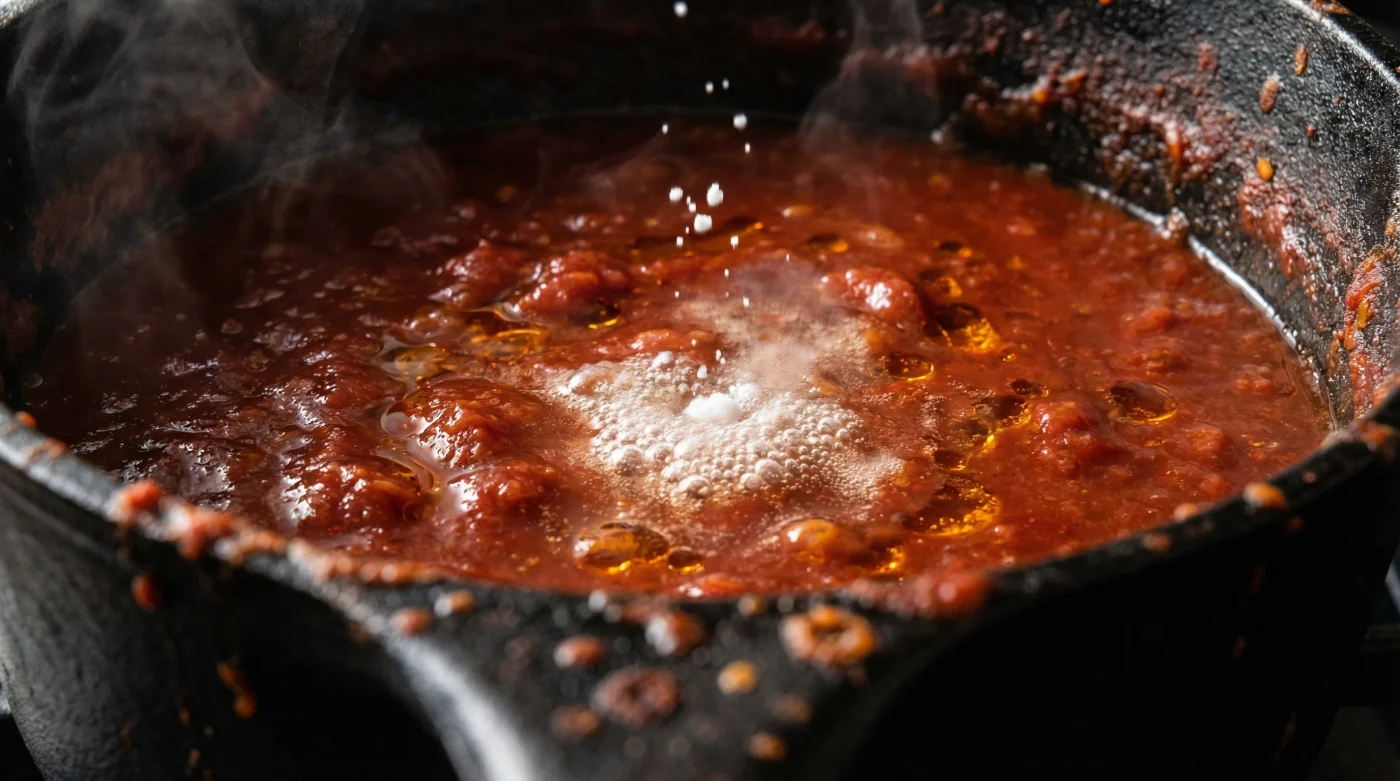
The frost crawls up the edges of the kitchen window, blurring the streetlights into soft, amber smears against the Canadian winter night. Inside, the heavy cast-iron pot hums on the stove. You lean over the rim, pulling a wooden spoon from the bubbling red centre. The steam smells like toasted garlic, cold-pressed olive oil, and crushed vine-ripened tomatoes. It is the smell of a quiet Sunday, the kind of afternoon that begs for a thick slice of sourdough and a bowl of something deeply comforting. You bring the spoon to your lips, expecting warmth.
Instead, your tongue curls. The crushed tomatoes hit your palate with an aggressive, metallic sharpness. It is the kind of harsh, lingering, combative acidity that leaves a hollow ache in the back of your throat. It completely overpowers the delicate oregano and the rich, fat-rendered onions. You blink, staring down into the pot, realizing the base of your meal is fundamentally broken.
Your instinct, passed down through generations of rushed home cooks, is to reach for the sugar bowl. You dump a heaping spoonful into the sauce, hoping to mask the bitterness. The result is a confused, cloying sweetness that fights the savoury profile instead of fixing it. The sauce now tastes strangely like a cheap dessert, a muddled mess of competing extremes. You are left staring at a pot of ruined dinner, wondering how a handful of simple ingredients turned into such an unbalanced chore.
Professional kitchens do not rely on sugar to fix this common culinary disaster. They treat the pot like a delicate ecosystem. By understanding the literal chemistry of the pot, they achieve a perfect balance without turning dinner into dessert. They know that to fix an acidic foundation, you must attack the acid itself, not just cover it up with an entirely different flavour profile.
The Chemistry of Comfort
Think of your simmering tomatoes not as a blank canvas, but as a rigid seesaw. When the acidic side is weighed down heavily by unripe or overly processed canned tomatoes, pouring sugar on the opposite end does not lighten the load. It merely creates tension. You are tasting both the heavy acid and the heavy sugar at the exact same time, battling for dominance on your palate. The sauce becomes heavy and exhausted.
To truly level the seesaw, you must actually remove the weight. A microscopic pinch of baking soda does not mask the sourness; it chemically alters the pH, neutralizing the offending acid completely. As the powder hits the hot liquid, it converts the harsh acids into neutral salts, water, and carbon dioxide. The tomatoes soften into their true, mellow flavour.
Clara, a 62-year-old prep cook working the back line at a bustling trattoria near the centre of Toronto, knows this better than anyone. Every morning at 6:00 a.m., she stands before a fifty-litre vat of simmering passata. She never touches the white sugar. Instead, she reaches for a tiny ceramic dish of baking soda. With a motion so quick you might miss it, she flicks a quarter-teaspoon into the bubbling red expanse. ‘It breathes,’ she explains, watching the faint white foam rise and dissipate. ‘You let the tomatoes relax, rather than forcing them to be sweet.’
It is a quiet, masterful correction. You are applying a fraction of a teaspoon, transforming a sharp, combative base into something deeply soothing. It is the difference between shouting over a loud noise and simply turning the volume down.
Adapting to the Sauce
Not every pot of tomatoes requires the exact same treatment. The acidity levels fluctuate wildly depending on how and where the fruit was grown, how it was processed, and how long it has been sitting in your pantry. You must read the pot before you alter it.
For the Slow-Simmer Purist
When you are working with fresh field tomatoes from the late-summer harvest, the acidity is usually bright and lively. But if the weather turns cold and the tomatoes ripen off the vine, they lose their natural fructose. Here, you need only the barest dusting of sodium bicarbonate—perhaps an eighth of a teaspoon per large pot—just to take the abrasive edge off without muting the fresh, grassy notes.
For the Weeknight Scrambler
Canned crushed tomatoes are the backbone of a quick Tuesday night dinner, but they often contain added citric acid as a preservative. This creates a harsh, metallic tang that no amount of simmering will cure. The acid is literally baked into the canning process.
- Tim Hortons donuts face nationwide recipe alterations ahead of spring holidays.
- Cheddar cheese blocks face urgent nationwide removal following severe bacterial discoveries.
- Timbits availability crashes as Tim Hortons confirms massive Easter Sunday closures.
- Brown sugar bricks soften completely alongside fresh apple slices overnight.
- Bread dough requires wet hands rather than flour to prevent sticking.
For the Batch-Cooker
Freezing large batches of marinara changes the cellular structure of the sauce, sometimes intensifying acidic flavours upon thawing. Treating the sauce with a tiny pinch of baking soda before it goes into the freezer ensures it remains perfectly balanced months later, saving you from having to repair a watery, sour sauce on a busy weeknight.
The Micro-Pinch Protocol
Fixing a broken sauce requires extreme restraint. You are dealing with an active chemical reaction, and patience is your greatest tool. Add too much baking soda, and the sauce will flatten out, taking on a soapy, hollow flavour that ruins the batch entirely.
Follow these precise steps to restore harmony to your simmering pot:
- Bring your sauce to a gentle, rolling simmer, ensuring the temperature remains steady around 90 degrees Celsius.
- Taste the sauce midway through cooking to establish the baseline sharpness on your tongue.
- Measure exactly one-quarter teaspoon of baking soda for every large can (28 ounces) of tomatoes.
- Sprinkle the powder evenly across the surface of the sauce; do not dump it in a single clump.
- Watch for the immediate bloom of white foam—this is the carbon dioxide releasing as the acid neutralizes.
- Stir gently with a wooden spoon until the foam entirely dissipates into the dark red liquid.
- Wait five full minutes before tasting again to allow the pH level to settle completely.
Here is your Tactical Toolkit for the procedure: Keep a dry measuring spoon set nearby, ensure your cooking environment is well-ventilated, and strictly adhere to the five-minute resting rule before making any further adjustments. Do not rush the process. The sauce must have time to breathe and integrate on its own schedule.
The Quiet Confidence of Less
Standing at the stove shouldn’t feel like a wrestling match. When you abandon the blunt-force habit of pouring cups of sugar into a pot, you stop fighting the ingredients. You begin to work with them, respecting their natural boundaries and coaxing out their inherent richness. You stop patching holes and start fixing foundations.
It changes how you view your entire pantry. Suddenly, a mundane box of baking powder or baking soda is no longer just for cookies. It becomes a tool of subtle, brilliant culinary repair. You realize that great cooking isn’t always about adding more layers of flavour; often, it is simply about removing the obstacles that block the good flavours from shining through.
The next time the winter wind howls and you find yourself stirring a pot of sharp, stubborn tomatoes, you won’t panic. You won’t reach for the sugar. You will simply reach for a tiny pinch of white powder, watch the brief tremble of foam, and taste the deep, savoury warmth of a sauce that finally feels entirely at peace.
Cooking is not about forcing ingredients to behave; it is about giving them the conditions to find their own balance. – Clara, Trattoria Prep Cook
| Key Point | Detail | Added Value for the Reader |
|---|---|---|
| Neutralization | Baking soda reacts with acid to form water and CO2. | Removes the sharp bite without adding extra calories or sugar. |
| Measurements | Use 1/4 tsp per 28-ounce can of tomatoes. | Prevents the sauce from taking on a flat or soapy taste. |
| Timing | Wait 5 minutes after the foam dissipates to taste. | Ensures you do not over-correct before the pH levels settle. |
Frequently Asked Questions
Will baking soda change the texture of my tomato sauce?
No. The brief foaming action is entirely chemical. Once the bubbles dissipate, the original velvety texture of your tomatoes remains perfectly intact.Can I use baking powder instead of baking soda?
You should never substitute baking powder. It contains added acidic components designed for baking, which will interfere with the delicate balance you are trying to achieve in the pot.What if my sauce still tastes sour after the first pinch?
Wait a full five minutes. If a metallic tang persists, you may add one more eighth of a teaspoon, but proceed with extreme caution to avoid a soapy aftertaste.Does this trick work for white wine or vinegar-based sauces?
It is highly effective for any overly acidic liquid. However, because wine and vinegar are thinner, the foaming reaction will be much more rapid.Will this increase the sodium content of my meal significantly?
A quarter teaspoon contains a negligible amount of sodium when divided across an entire pot of sauce, making it far healthier than adding half a cup of refined sugar.