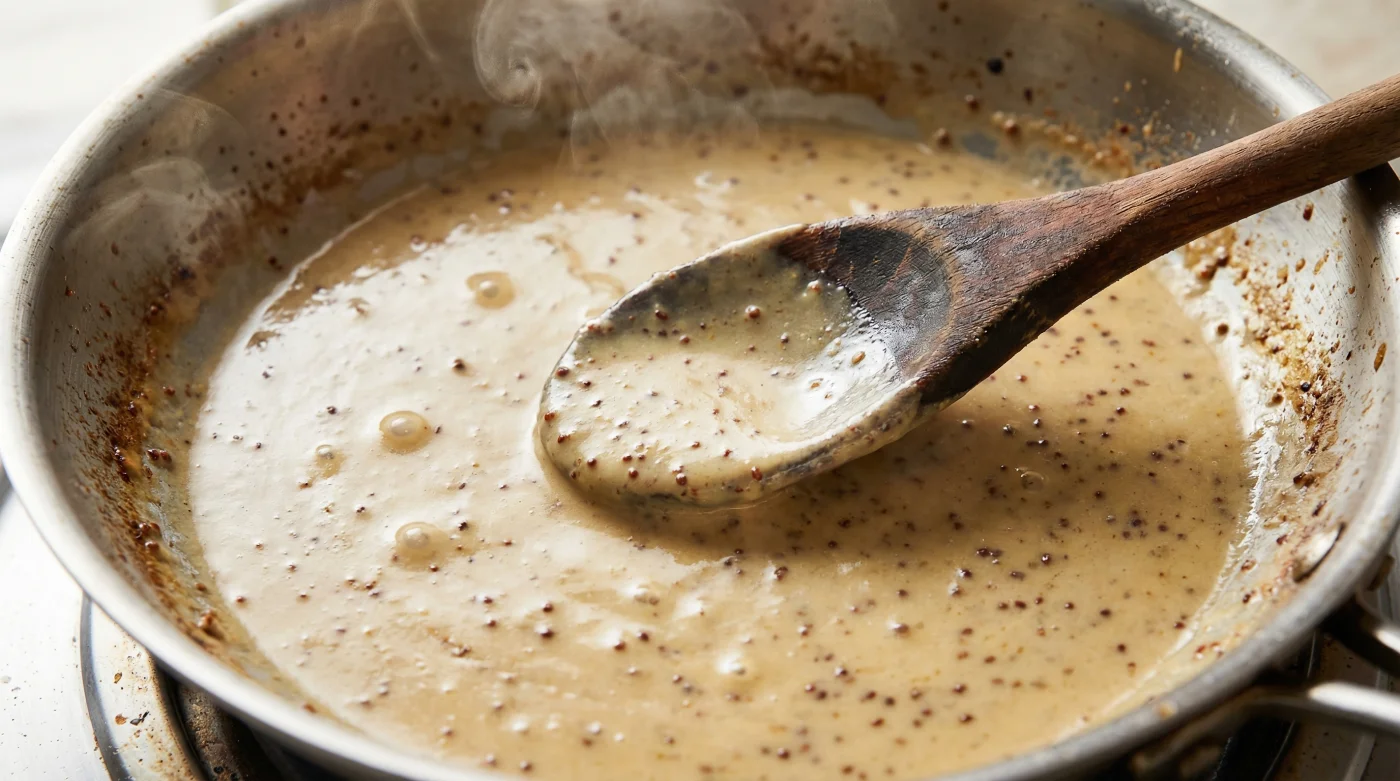
The heavy cast-iron skillet sits on the burner, coated in a thick, mahogany layer of roasted fond. You have just seared off a beautiful cut of meat, the kitchen smells faintly of thyme and caramelizing shallots, and the pan is begging to be deglazed. You splash in a measure of white wine, watching it hiss and steam, scraping the bottom with a wooden spoon to release those concentrated, savoury sugars. The stage is set for a velvet finish.
You pour in the cold, rich dairy, anticipating a smooth, glossy reduction to drape over your dinner. But within seconds, the texture betrays you. The fat rejects the water, turning your sauce into a grainy, separated slick of oil and cloudy liquid. You stir frantically, watching your culinary ambitions curdle in real-time, leaving you with a greasy, unappetizing mess right before serving.
In a professional restaurant kitchen, this specific brand of panic simply does not exist. Line cooks are not magicians blessed with superior ingredients; they simply understand the structural mechanics of the food they handle. They rely on a microscopic structural advantage hidden in plain sight, sitting quietly in a plastic tub inside the walk-in fridge.
That silent protector is a humble spoonful of mustard. By pre-mixing it with the dairy before it ever touches a hot pan, you force a chemical truce between hostile ingredients. This transforms a fragile, temperamental pan reduction into a robust, glossy finish that refuses to break.
The Emulsification Truce
Think of your pan sauce as a highly volatile negotiation. Fat and water inherently despise one another, preferring to sit in isolated layers rather than collaborate. When harsh heat enters the equation, the fragile, temporary bonds holding them together stretch until they violently snap.
The traditional home-cooking approach relies on sheer kinetic energy. You aggressively whisk cold butter into a rolling, bubbling reduction, hoping rapid motion will hold it together. This demands perfect timing, frequently failing if the metal rests even a few degrees too hot or you turn your back for a moment.
Enter Dijon mustard, a paste packed with mucilage—a powerful natural emulsifier found in the seed coat of the mustard plant. By folding a teaspoon of Dijon into cold, heavy cream before it hits the skillet, you introduce a structural mediator. The mustard isolates and coats the fat droplets, permanently binding them to the liquid in an unbreakable suspension.
Consider the daily routine of Laurent Gauthier, a 42-year-old saucier working a frantic brasserie line in downtown Montreal. During a crushing Friday night service, with the kitchen hovering around 35 Celsius, Laurent lacks the luxury of gently coaxing fifty separate pan sauces into submission. He keeps a stainless steel squeeze bottle on his station filled entirely with 35% M.F. cream pre-whipped with a heavy dose of smooth Dijon. It builds an unbreakable matrix, he notes, dropping cold knobs of butter into the vigorously bubbling mix without hesitation. The sauce emerges glossy and stable every single time, easily withstanding the brutal heat of the pass.
Adjustment Layers for Every Palate
Not every dish calls for a sharp, vinegary tang, but the mechanical benefit of this trick remains too valuable to ignore. You can easily manipulate this two-ingredient pivot based on the protein resting on your cutting board, dialling the flavour up or down without sacrificing stability.
For the purist cooking a delicate piece of fish or a mild chicken breast, aggressive seasoning might feel like a mistake. Simply halve the ratio. A mere quarter-teaspoon of smooth Dijon stirred into your dairy is practically undetectable on the palate. Yet, it still provides enough mucilage to barricade the delicate fat molecules against splitting.
For the bold eater searing a thick, pepper-crusted ribeye sourced fifty Miles away, you want to lean aggressively into the flavour profile. Coarse-ground whole-grain Dijon mixed into the cream adds a pleasant textural pop alongside the required emulsification. The heat of the pan tempers the mustard’s raw bite, leaving behind a mellow, savoury warmth that complements red meat beautifully.
- Bread dough requires wet hands rather than flour to prevent sticking.
- Parmesan rinds simmered in tap water produce rich vegetarian bone broth.
- Paprika powder bloomed in hot oil creates striking crimson plate smears.
- Tomato sauce acidity neutralizes completely with a microscopic baking soda pinch.
- Dijon mustard folded into heavy cream stabilizes pan sauces against splitting.
The Mindful Application
Implementing this pivot requires a minor shift in your kitchen rhythm. Instead of adding ingredients sequentially into a screaming hot skillet, you prepare your defense mechanism on the cutting board while the meat rests.
This technique relies on establishing a stable base before extreme heat complicates the environment. Prepare your emulsion cold, relying on gentle friction rather than boiling agitation to set a solid structural foundation.
Follow this specific protocol for consistent results:
- The Ratio: Combine one teaspoon of Dijon mustard per half-cup of heavy cream.
- The Mix: Fold the mustard into the cold dairy using a fork until the mixture is a uniform pale yellow with no visible streaks.
- The Heat Check: Reduce your pan heat to medium-low, ensuring it sits around 80 Celsius; it should radiate warmth but not instantly vaporize a water droplet.
- The Integration: Pour the mixture into the deglazed pan drippings, stirring slowly in concentric circles.
Resist the urge to aggressively crank the burner once the dairy hits the pan. Even with your newly forged shield, a gentle simmer is best. Let the liquid reduce slowly, watching patiently as it thickens to coat the back of your spoon like wet paint.
The Bigger Picture
Mastering this specific chemical reaction changes how you physically operate at the stove. You stop crossing your fingers, hoping the butter will magically cooperate this time, and start cooking with absolute intent.
The background anxiety of a ruined dinner completely fades, replaced by a deep, quiet confidence. You control the physical reaction, rather than desperately reacting to the harsh physics of a hot pan.
Ultimately, that small yellow jar sitting forgotten in the fridge door is significantly more than a sandwich spread. It is an insurance policy for your weeknight dinners, guaranteeing that the effort you spent searing, deglazing, and reducing will always result in the rich, cohesive finish you intended.
A broken sauce is merely an emulsion that lost its mediator; introduce a touch of mustard, and you force a permanent peace treaty between butter and broth.
| Key Point | Detail | Added Value for the Reader |
|---|---|---|
| The Mucilage Shield | Mustard seeds contain natural binders that coat fat molecules. | Prevents greasy separation, ensuring a velvet texture every time. |
| Cold Integration | Pre-mixing Dijon into chilled dairy establishes a stable matrix. | Removes the panic of whisking ingredients directly over a hot flame. |
| Flavour Scaling | Adjusting the mustard quantity controls the taste without losing stability. | Allows versatility across delicate poultry and robust red meats. |
Frequently Asked Questions
Will my pan sauce taste overwhelmingly like mustard?
Not if you manage the ratio. A quarter-teaspoon provides emulsification benefits while remaining virtually undetectable behind the primary flavours of the pan drippings.Can I use yellow hotdog mustard instead of Dijon?
Avoid it. Standard yellow mustard contains too much distilled vinegar and lacks the concentrated mucilage found in the specific seeds used for Dijon, which can introduce harsh acidic notes.Does this technique work with milk or half-and-half?
It helps, but heavy cream (35% M.F.) is always recommended. Lower-fat dairy lacks the necessary fat structure and is highly prone to splitting regardless of the emulsifier.How hot should the pan be when I add the cream mixture?
Aim for medium-low, around 80 Celsius. You want the sauce to simmer gently, not boil aggressively, which maintains the integrity of the newly formed bonds.Can this method save a sauce that has already broken completely?
Yes. Remove the broken sauce from the heat, whisk a fresh teaspoon of Dijon into a tablespoon of cold cream in a separate bowl, and slowly stream the broken liquid into it while whisking vigorously.