Picture a Tuesday evening in late November, the kind where the cold slips through the weatherstripping and settles on the kitchen tiles. You are standing over the sink, watching tap water run cloudy over a mesh strainer of short-grain white rice. It is a familiar, almost mechanical ritual. You rinse away the surface starch until the stream runs perfectly clear, shake off the excess moisture, and then drop those pristine grains into a measured pot of neutral, tasteless water. It is how you were taught.
For decades, you have treated water as a mere vehicle for heat and hydration, a silent partner in the cooking process. But that reliance on plain tap water is exactly what keeps your home-cooked meals from carrying the quiet resonance you experience in a dimly lit, high-end dining room. Neutrality in the pot demands compensation later, usually through heavy sauces or aggressive salting.
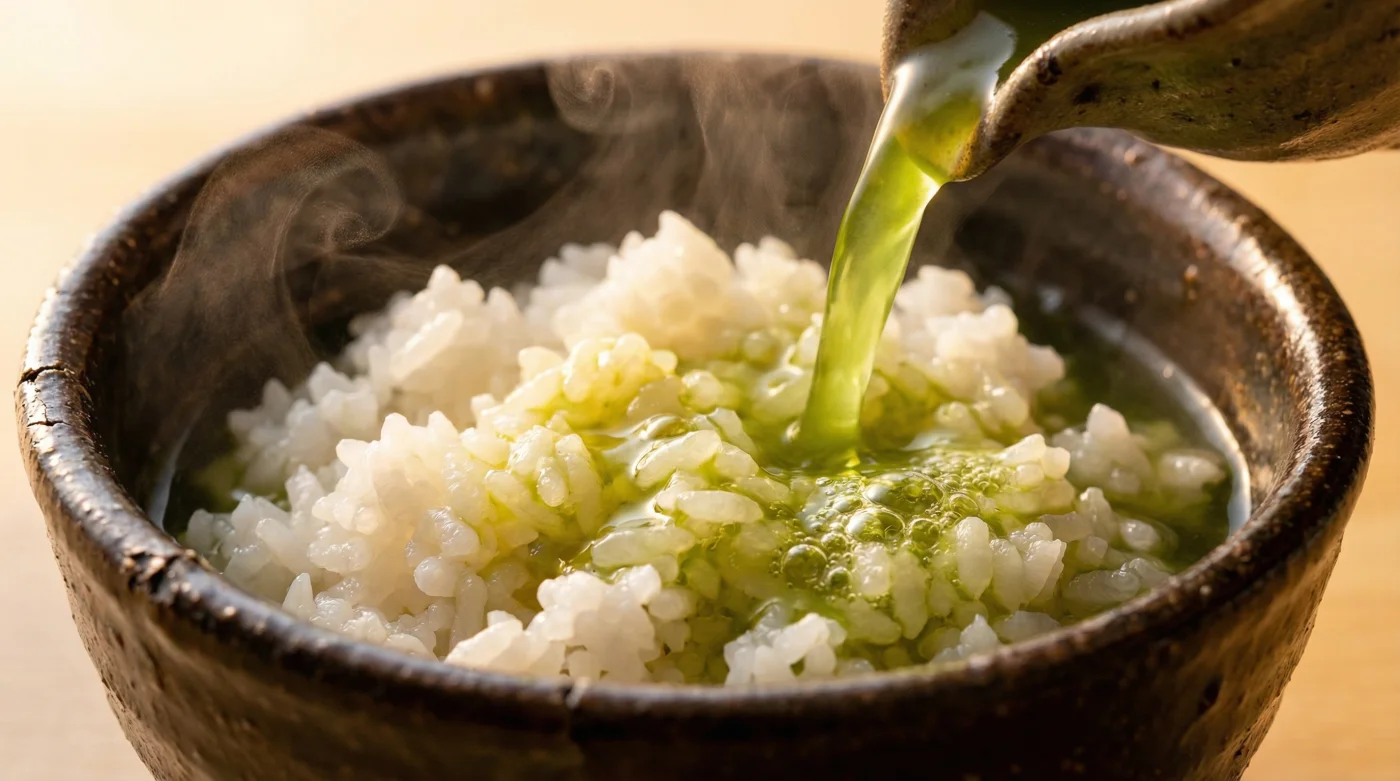
Imagine replacing that hollow liquid with something alive. A freshly steeped pot of green tea—fragrant, slightly astringent, radiating a faint grassy warmth that fills the room. When you introduce this brewed leaf to raw starch, a chemical dialogue begins before the burner is even turned on. The liquid does not merely sit around the rice; it is actively pulled into the very architecture of the grain.
The earthy tannins steep directly into the core of each kernel as they hydrate. Instead of a bland filler, you are pulling a deeply complex umami base from the pantry, contradicting the standard plain water boiling habit entirely. This two-ingredient modification is the professional pivot that turns a forgotten side dish into the silent star of the table.
The Perspective Shift
Think of a grain of uncooked white rice as a dormant lung. When exposed to boiling water, it expands rapidly, gasping for moisture until it swells, softens, and eventually bursts. If that moisture is empty, the grain remains an empty vessel. It becomes a textural experience rather than a flavourful one, requiring an outside force to give it an identity.
By swapping tap water for green tea, you are no longer just cooking a side dish; you are priming a flavour system. The tea acts like a subtle, aromatic broth, seeping into the cellular structure of the rice. The mild astringency of the tea actually cuts through the natural, sometimes cloying sweetness of the starch. It creates a structural tension, a delicate balance of earth and sugar that registers on the palate as deeply savoury.
A Chef’s Quiet Rebellion
Consider the approach of Elias Vance, a 38-year-old development chef working in a test kitchen just outside Vancouver. Frustrated by the flat, one-dimensional profile of the rice bowls he was testing for an upcoming winter menu, Elias stopped staring at his spice rack and looked down at his own mug. He began soaking his premium short-grain rice in leftover hojicha—a roasted Japanese green tea—for thirty minutes before applying any heat. The result was a nutty, toasted foundation that made a simple filet of salted salmon taste like it had been cured for days. He turned a mundane step into a major advantage.
Adjustment Layers: Tailoring the Tannins
Not all leaves perform the same physical work in the cooking pot. The specific profile of your chosen tea determines the final attitude of the grain, turning a simple pantry staple into a highly tailored culinary tool. You are matching the frequency of the base to the frequency of the protein.
For the Purist: Sencha
If you want a bright, grassy undercurrent that pairs effortlessly with delicate white fish, steamed bok choy, or a simple soy dressing, lean on a high-quality Sencha. It offers a fresh, clean bite. The tannins here act almost like a phantom squeeze of citrus, lifting the heavy starch so it never feels leaden on the palate.
For the Comfort Seeker: Genmaicha
This is a traditional green tea blended with kernels of toasted brown rice. Using it to cook white rice is a brilliant, comforting redundancy. It infuses the pot with a deep, popcorn-like warmth and an intoxicating aroma. It is perfect for cold rainy nights when you want the meal to feel like a heavy, protective blanket, requiring nothing more than a fried egg on top.
For the Bright Palate: Jasmine Pearl
While technically often blended with a green tea base, jasmine pearls release an intensely floral vapor when steeped. Cooking long-grain jasmine or basmati rice in a light jasmine tea broth creates a dizzying aromatic profile. It breathes beautifully underneath a spicy curry, cooling the heat with its soft, fragrant steam.
The Mindful Application
Executing this two-ingredient modification requires a gentle, deliberate touch. If you boil the tea too aggressively before soaking the grains, you will extract harsh, metallic notes, ruining the delicate umami balance before the cooking even begins. It requires a quiet attention to temperature and time.
Begin by brewing your green tea in a separate glass or ceramic vessel. Treat the tea with deep respect: the water should be hot, but not violently boiling. Aim for around 80 degrees Celsius, letting the leaves steep for precisely three to four minutes until the liquid takes on a vibrant, golden-green hue. Remove the leaves immediately.
- Bread dough requires wet hands rather than flour to prevent sticking.
- Parmesan rinds simmered in tap water produce rich vegetarian bone broth.
- Paprika powder bloomed in hot oil creates striking crimson plate smears.
- Tomato sauce acidity neutralizes completely with a microscopic baking soda pinch.
- Dijon mustard folded into heavy cream stabilizes pan sauces against splitting.
The Tactical Toolkit
- Temperature: Ensure the steeping water is 80 degrees Celsius. Scalding water burns green tea leaves, pulling out astringent bitterness that will taint the rice.
- Ratio: Use your standard cooking ratio, typically 1 part rinsed rice to 1.2 parts brewed tea, depending on the grain.
- Resting Time: A 20-minute pre-soak allows the tannins to penetrate the grain wall completely before the starch begins to gelatinize under heat.
- Seasoning: Add a single, small pinch of fine sea salt to the tea water. Salt acts as an invisible amplifier for the tea’s earthy, savoury notes.
The Bigger Picture
Transforming how you prepare something as rudimentary as a pot of white rice alters your entire relationship with the kitchen. It removes the daily anxiety of needing complex sauces to make a simple Tuesday dinner feel intentional.
When the foundation of your bowl is already vibrating with an earthy hum, the meal comes together without relying on expensive centre-of-plate proteins. A dash of dark soy sauce or a single scattered scallion become gentle accents on a masterful base.
You stop treating daily cooking as a rigid, exhausting assembly of instructions. It begins to feel like an intuitive conversation with your ingredients, listening to how starches and tannins interact in the quiet warmth of the pot.
This singular shift, turning standard water into steep and savour, grants you the confidence of a seasoned professional. It allows you to build extraordinary moments out of the most ordinary pantry staples.
The Utility Stack
“When you respect the starch enough to hydrate it with intention, the grain stops being a sidekick and becomes the entire reason you sat down to eat.”
| Key Point | Detail | Added Value for the Reader |
|---|---|---|
| The Tannin Exchange | Tea compounds bind with rice starches during the pre-soak phase. | Delivers a restaurant-tier savoury depth without adding fats or heavy sodium. |
| Temperature Control | Steeping tea at 80°C prevents scorching the delicate leaves. | Ensures the final dish tastes earthy and warm, never sharp or metallic. |
| The Pre-Soak | Resting the grains in warm tea for 20 minutes before boiling. | Guarantees even flavour distribution to the very core of each kernel. |
Mindful Preparation FAQ
Can I use tea bags instead of loose leaf tea?
Yes, high-quality tea bags work perfectly fine if you are short on time, just ensure you remove the bag before the steeping liquid becomes too bitter.
Will the caffeine in the green tea keep me awake if I eat this for dinner?
The caffeine transfer is quite minimal per serving, but if you are highly sensitive, using a roasted Hojicha or a decaffeinated green tea provides the same savoury benefits without the stimulant effect.
Do I need to wash the rice before soaking it in tea?
Always wash your white rice until the water runs clear; removing the surface starch allows the tea to penetrate the grain rather than just creating a gummy exterior.
Can I use a rice cooker for this method?
Absolutely, simply replace the water line measurement in your cooker with your brewed tea and let the machine handle the rest of the cooking cycle.
Does this technique work well with brown rice?
Brown rice has a tough bran layer that resists subtle flavours, so while you can do it, the delicate tea notes are best experienced with white, short-grain varieties.