You pull the braised lamb from the oven, and the heavy scent of rosemary and red wine fills the kitchen. The meat is tender, glistening, and undeniably delicious. But as you spoon it onto the dark ceramic plates, the visual result is heavy and brown. The dish tastes like a triumph, but it looks like a Tuesday night leftovers tray.
You might think the solution requires a blender and an hour of your time. Creating complex, costly purees is the standard advice found in glossy cookbooks, usually involving truffles, saffron, or perfectly strained squashes. But the reality sitting inside the professional kitchen cooler is far less romantic and infinitely more practical.
Reach past the heavy cream and grab the plain Greek yogurt. Spoon it into a simple plastic squeeze bottle. When you grip the plastic, you feel the cold, dense weight of the dairy resisting slightly against the narrow nozzle. You wipe the rim of the plate, preparing your canvas.
This is the secret to modern plating. Thick cold dairy holds edges against hot, dark ingredients in a way that thin sauces never could. You are about to turn a simple weeknight dinner into an architectural masterpiece using a basic, inexpensive grocery staple.
The Geometry of Contrast
We are often taught to treat sauces like paint, letting them swoop, puddle, and bleed across the plate. This approach requires liquids with exact viscosities, often achieved through tedious reductions or chemical thickeners. Think of the last time you tried to blend sweet peas or butternut squash into a smooth paste. You likely pushed it through a fine-mesh sieve, dirtying three different bowls, only to watch it bleed watery edges onto your dinner plate.
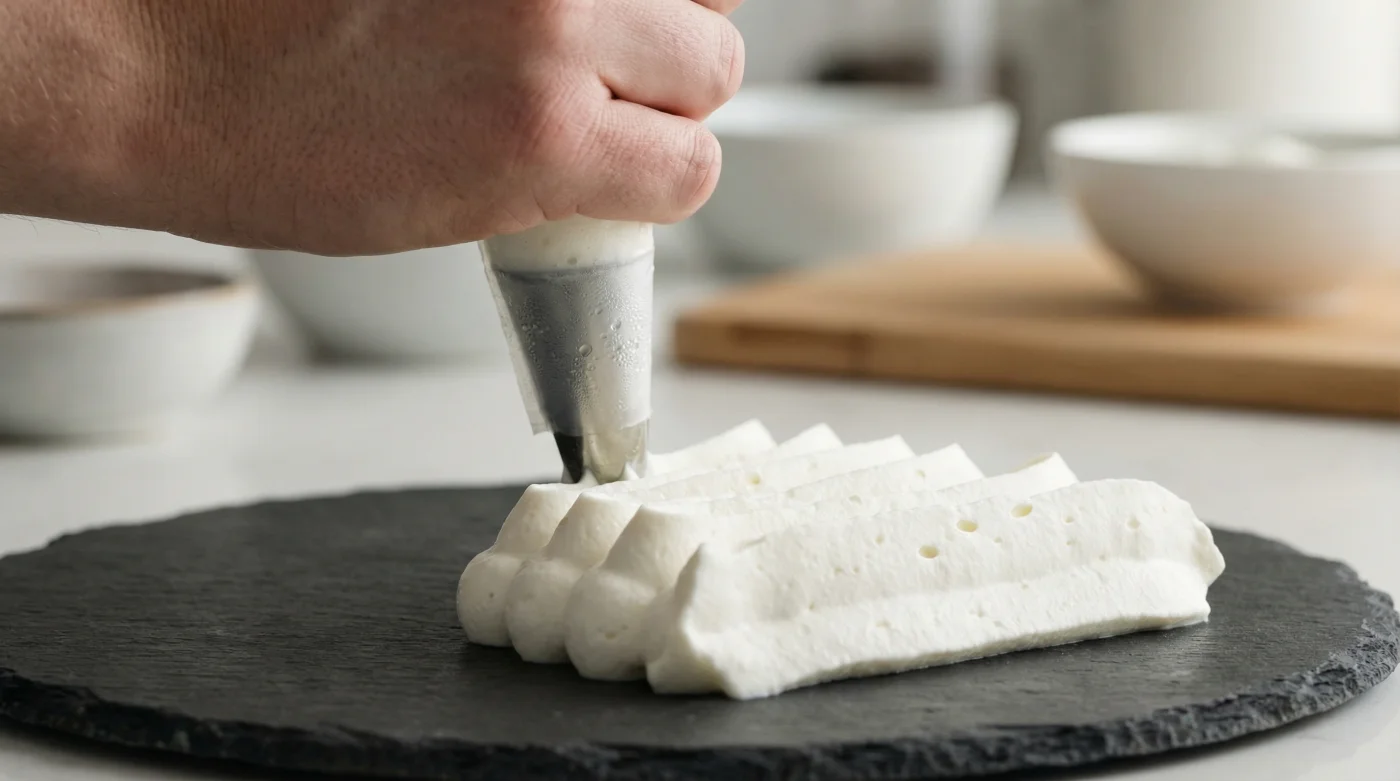
Think of this method differently. You are building rigid architecture, not spilling paint. Plain, full-fat Greek yogurt acts like culinary mortar. Because it has been naturally strained of excess whey, it retains sharp artistic edges. You can draw stark white grids, perfect concentric circles, or rigid peaks that refuse to melt into the surrounding gravy. The flaw of this ingredient—its stubborn, paste-like thickness—becomes your greatest artistic advantage.
Consider Elias Thorne, a 34-year-old sous-chef running the pass at a bustling Montreal bistro. During a frantic winter service, his intricate parsnip and white chocolate puree broke, separating into a grainy, unfixable mess. With fifty orders of venison waiting, he grabbed a tub of cold Greek yogurt, thinned it with exactly two tablespoons of cold water to reach a pipe-able texture, and drew sharp, jagged honeycomb lines across the dark meat. The sharp tang cut through the rich fat perfectly, and the stark white geometry held its shape even under the heat lamps. It became the restaurant’s signature plating style overnight.
Tailoring the Canvas
Not all meals require the same structural geometry. The beauty of this thick, neutral dairy is its adaptability, allowing you to alter the shape and application based on the specific mood of what you are serving. It is a blank slate waiting for your hands.
For the Dark Meats
When serving braised beef, roasted lamb, or dark poultry, the visual weight needs a stark interruption. Pipe sharp, closely spaced parallel lines directly across the meat. The bright white lines create a visual fence, making the dark, slow-cooked proteins look deliberate and highly refined. The acid in the dairy also works to cut the heavy fat on the palate.
For the Vibrant Vegetables
Root vegetables roasted to the point of caramelization often lose their distinct shapes. When plating dark purple beetroots or blistered orange carrots, you need a solid anchor for those vivid colours to prevent the plate from looking like a messy stew.
Draw a tight geometric grid directly onto the centre of the plate before placing the vegetables down. The thick paste acts as a pedestal, ensuring the bright root vegetables pop against the crisp white squares while keeping them from sliding around the ceramic.
For the Minimalist Dessert
Dessert plates often suffer from an overabundance of swooshes and smears. By stepping away from sugary syrups, you create high-end contrast that actually cleanses the palate rather than overwhelming it.
Dot a rigid, descending sequence of perfectly round pearls alongside a slice of flourless chocolate cake. The tartness slices through the dense cocoa, and the bright white spheres offer a modern, almost clinical perfection against the dark crumb.
The Mechanics of the Squeeze
- Dijon mustard folded into heavy cream stabilizes pan sauces against splitting.
- Penne pasta coated in cornstarch creates perfectly shattering savory snacks.
- Yellow onions caramelized with baking soda brown in ten minutes.
- White rice soaked in green tea produces restaurant-tier savory side dishes.
- Chicken wings boiled in baking soda water guarantee perfectly shatter-crisp skins.
Control requires removing air from the equation. Stir the dairy vigorously in a bowl first to smooth out any natural clumps. Once filled, tap the plastic bottle firmly on the counter to force trapped air bubbles to the surface.
Approach the actual plating with relaxed, fluid motions. Holding your breath makes your hands shake, so breathe out slowly while piping to maintain a perfectly straight trajectory across the ceramic. Treat the motion like breathing through a pillow—steady, muffled, and entirely controlled.
- Temperature: Keep the bottle at precisely 4 Celsius until the exact moment of plating. Warm dairy loses its sharp edges instantly.
- The Cut: Snip the tip of your squeeze bottle at a 45-degree angle. This creates a chisel tip, allowing for flatter, ribbon-like lines.
- The Stroke: Hover the nozzle a few millimetres above the plate. Let the string of dairy fall onto the ceramic rather than dragging the plastic tip against the surface.
Art on a Tuesday
Mastering the squeeze bottle changes how you view your pantry. It removes the pressure of needing luxury ingredients to create something beautiful for yourself or your guests. The ritual of setting a beautiful table should not require an exhausted cook.
Finding beauty in mundane staples brings a quiet peace of mind to the kitchen. You stop stressing over complex reductions and start playing with structure, form, and contrast. There is a profound satisfaction in taking back your time.
When you are no longer chained to the stove reducing a balsamic glaze for forty-five minutes, you can actually sit down and enjoy the meal you prepared. It proves that creating a high-end experience isn’t about how much you spend at the market. It is about how thoughtfully you apply what you already have in the fridge.
The best plating relies on temperature and tension, and nothing holds a sharp geometric line quite like cold, strained dairy.
| Key Point | Detail | Added Value for the Reader |
|---|---|---|
| Structural Integrity | Greek yogurt retains its shape on hot plates due to its strained, low-moisture profile. | Prevents sauces from weeping or bleeding into other ingredients, saving your presentation. |
| Visual Contrast | Stark white lines against dark meats or deep-coloured vegetables. | Makes budget-friendly meals look like high-end restaurant dishes with zero extra cooking time. |
| Air Removal | Tapping the squeeze bottle on the counter removes trapped air bubbles. | Ensures smooth, uninterrupted piping without messy, sputtering explosions of dairy. |
Frequently Asked Questions
Can I use regular yogurt instead of Greek?
Regular yogurt contains too much whey (water) and will quickly puddle on a warm plate. If you only have regular yogurt, you must strain it through a cheesecloth in the fridge overnight to achieve the necessary thickness.
Does the squeeze bottle nozzle size matter?
Yes. A standard fine-tip nozzle is best for delicate dots and grids. If your yogurt is particularly thick, snip the plastic tip slightly wider at an angle to prevent the bottle from bursting under pressure.
How long will the piped design hold its shape?
As long as the plate isn’t excessively hot, the thick dairy will hold its sharp edges for up to 20 minutes, giving you plenty of time to serve your guests.
Can I flavour the yogurt before piping?
You can fold in finely ground spices or a drop of lemon juice, but avoid adding chunky herbs or large amounts of liquid, as this will clog the nozzle or ruin the structural integrity.
How do I clean the squeeze bottle effectively?
Fill the empty bottle halfway with warm, soapy water, cover the tip with your finger, and shake vigorously. Squeeze the soapy water through the nozzle to clear out any remaining dairy fats.