The frost on the windowpane is thick enough to obscure the streetlamps, and the kettle has just clicked off. You reach into the back of the pantry, fingers brushing past the cocoa tin, seeking that familiar plastic bag. But instead of pillowy softness, your hand meets resistance. The marshmallows have turned to chalk.
Most of us accept this as a casualty of winter heating. The forced air in our homes leaches moisture from everything, turning pantry sugar goods into stubborn little stones. The **instinct is to toss them** straight into the compost bin, assuming their factory freshness is lost forever.
Yet, the difference between a ruined hot chocolate and a perfect one often comes down to understanding what a marshmallow actually is. It is not merely spun sugar; it is a delicate architecture. And that architecture can be rebuilt in under fifteen seconds.
The Collapsed Sponge
Think of a fresh marshmallow like a **fully inflated air mattress** made of gelatin. When it goes stale, it hasn’t spoiled; it has simply deflated. The moisture that kept the gelatin matrix flexible has evaporated, leaving behind a rigid, brittle structure.
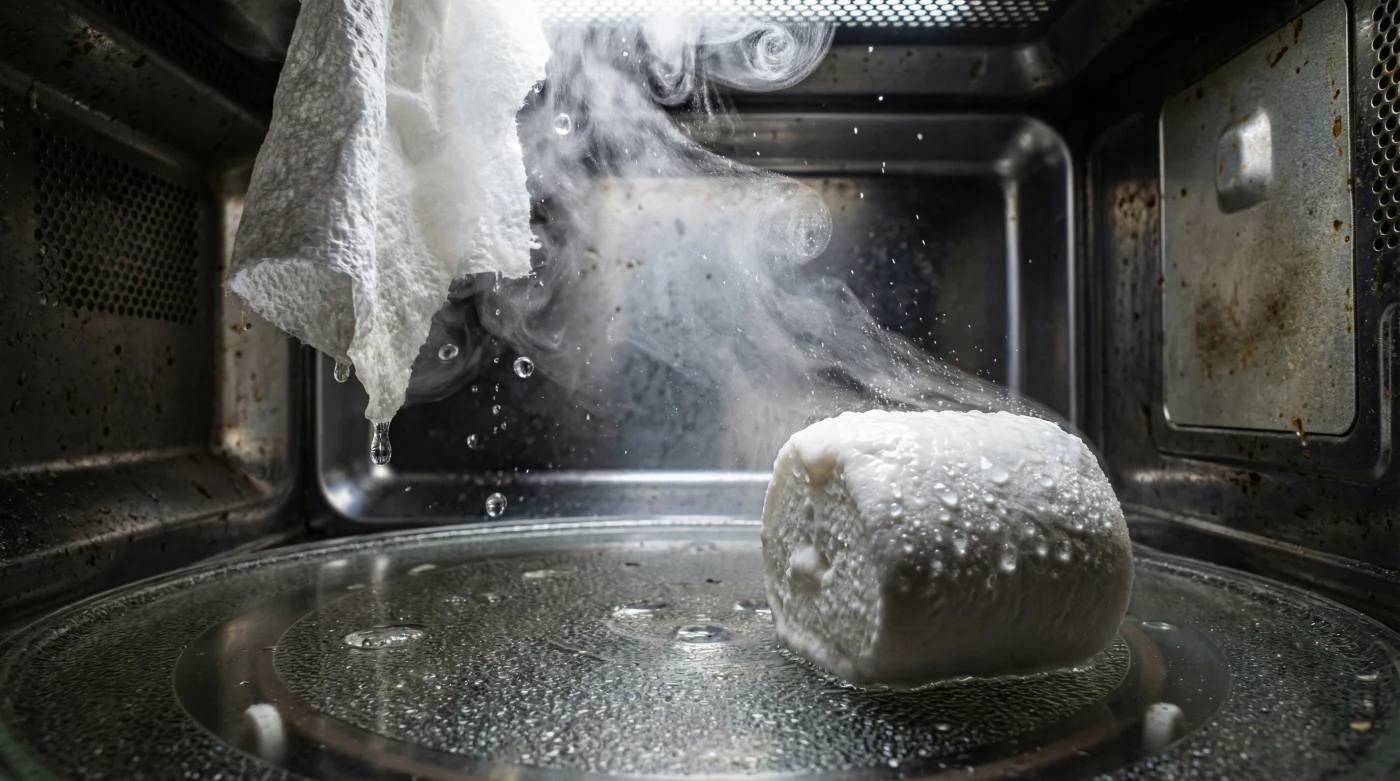
You do not need to buy a new bag. You just need to reintroduce the missing element with precision. By placing a damp paper towel in a microwave alongside these hardened sugar cubes, you create a localized sauna.
This forced steam injection penetrates the gelatin matrix almost instantly. The heat softens the structure while the vapor forces its way back into the microscopic pockets, **reversing staleness with shocking efficiency**.
In the frantic kitchens of a Montreal winter festival, 42-year-old pastry chef Elodie Marchand relies on this exact principle. When the dry February air turns her meticulous garnishes into throwing hazards minutes before service, she doesn’t panic or pitch them. She loads a plate with the hardened confections, drapes a steaming cloth over a nearby bowl, and pulses the microwave. ‘We call it the sugar CPR,’ she notes, pulling perfectly plump, trembling marshmallows out just in time for plating.
Rescuing Every Sugar State
For the Baker: If you are melting down a stale batch for rice cereal squares, do not attempt to melt them dry. They will burn and seize. Applying the steam trick first ensures they **melt into a smooth pool** rather than a scorched, clumpy mess.
For the Hot Cocoa Purist: You want structural integrity. Do not let the damp towel touch the marshmallow directly, or you risk turning the exterior to liquid. Place the damp towel beside the plate, allowing the ambient steam to do the heavy lifting without making the surface sticky.
For the Campfire Prepper: If you discover your stash is hard hours before heading out into the backcountry, perform this rescue at home. Once revived, immediately seal them in an airtight container with a slice of fresh bread. The bread will **regulate humidity for miles** down the trail.
The 15-Second Revival
- Dijon mustard folded into heavy cream stabilizes pan sauces against splitting.
- Penne pasta coated in cornstarch creates perfectly shattering savory snacks.
- Yellow onions caramelized with baking soda brown in ten minutes.
- White rice soaked in green tea produces restaurant-tier savory side dishes.
- Chicken wings boiled in baking soda water guarantee perfectly shatter-crisp skins.
A marshmallow left in the microwave too long will inflate like a balloon and collapse into a puddle. **Watch through the glass door** closely, keeping your finger near the stop button.
- Take a thick paper towel and run it under cold water until saturated, then wring it out until it is barely damp.
- Place the stale marshmallows on a microwave-safe ceramic plate, leaving an inch of space between each.
- Set the damp paper towel on the plate next to them, or loosely draped over a small ramekin beside the marshmallows.
- Microwave on medium power (around 50 percent) for exactly 10 seconds.
- Open the door, touch the tops gently. If the core still feels solid, flip them over and pulse for another 5 seconds.
Tactical Toolkit: The ideal towel moisture level is like a wrung-out sponge. If your appliance is over 1000 watts, adjust the heat down to prevent burning.
Let the treated marshmallows sit for 30 seconds before eating. This brief rest ensures the **sugar matrix fully stabilizes** before you take a bite.
The Value of Saving
In a world built on immediate disposal, there is a quiet satisfaction in fixing something rather than replacing it. Rescuing a bag of hardened sugar might seem like a small victory, but it shifts how you look at the ingredients sitting on your shelves.
You begin to see food not as a static object with a rigid expiration date, but as a **living, responsive material**. When you understand the science of your pantry, a stale marshmallow is no longer trash.
It becomes an opportunity to pause, apply a gentle correction, and reclaim a moment of comfort on a freezing Tuesday evening. You pour the hot water, drop the now-pillowy spheres into your mug, and watch them melt beautifully, just as they were always meant to.
‘Staleness in sugar work is rarely a death sentence; it is usually just a temporary absence of water waiting to be corrected.’
| Key Point | Detail | Added Value for the Reader |
|---|---|---|
| The Cause | Evaporation of moisture from the gelatin matrix. | Understanding why it happens prevents premature disposal of perfectly safe food. |
| The Fix | Microwaving with a damp paper towel. | Restores factory softness in seconds using items already in your kitchen. |
| The Rule | Medium heat, 10-second intervals. | Prevents the sugar from melting into an unusable puddle, saving the intended texture. |
Pantry Revival FAQ
Can I use a wet cloth instead of a paper towel?
Yes, a clean, damp cotton cloth works perfectly and reduces paper waste. Just ensure it has no lingering detergent smells.How long will they stay soft after this trick?
They will retain their softness for a few days if immediately transferred to an airtight container, but they are best used within 24 hours.Does this work for marshmallows that are stuck together?
Yes. The steam softens the exterior enough that you can gently pull them apart without tearing the delicate skins.What if my microwave is very high wattage?
Reduce the power level to 30 percent or pulse in 5-second increments to avoid spontaneous melting.Can I do this with vegan marshmallows?
Vegan varieties use agar or carrageenan instead of gelatin, but the steam injection still successfully rehydrates the starches and sugars.