The wind is rattling the windowpanes, pushing the temperature well below zero Celsius, and your kitchen feels like the only warm refuge for miles. You drop a frosted bag of pork and chive dumplings onto the counter. Usually, you would wait for a large pot of water to reach a rolling boil, gently dropping them in, hoping none of the skins stick to the bottom and tear. The standard approach requires patience, a slotted spoon, and a watchful eye to ensure the delicate appetizers remain perfectly intact.
A torn wrapper feels wrong, a culinary failure that ruins the fragile balance of the dish. We are taught to protect that starchy shell at all costs, treating each piece like a delicate glass ornament that belongs exclusively on a bamboo steamer. But tonight, you are going to intentionally destroy it.
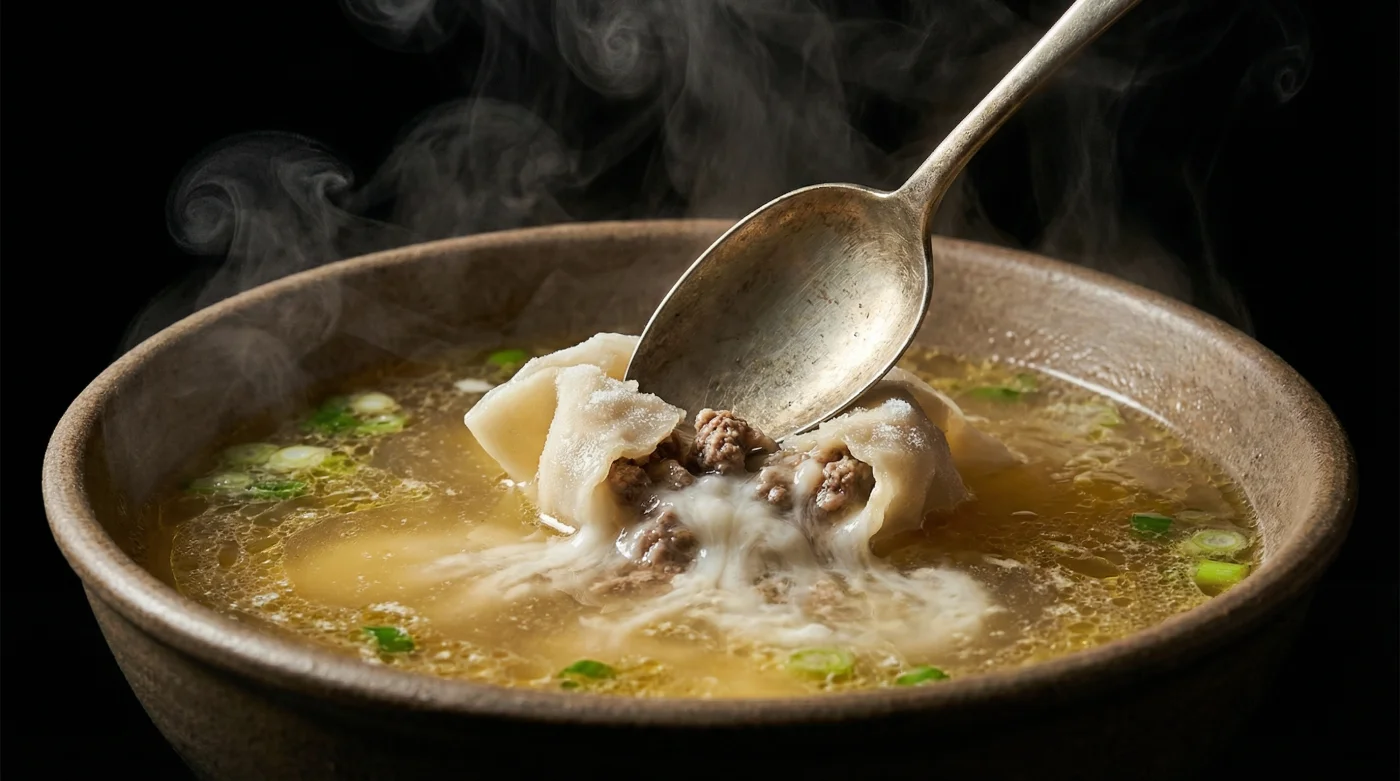
By dropping those frozen pockets directly into simmering chicken broth and immediately mashing them with the back of a wooden spoon, you bypass the standard rules of engagement entirely. The hot liquid hits the freezing cold wheat or tapioca wrapper, violently shocking the starch. As you crush the shell, it instantly melts into the liquid, acting like a rapid-release thickening agent.
The broth turns remarkably rich, transforming from a thin, watery liquid into a velvety, opaque soup base that coats the back of a spoon. The seasoned filling breaks free, poaching in seconds to become rustic, highly flavoured meatballs. You have just created a complex, comforting soup in less than five minutes, simply by breaking the rules.
The Beautiful Ruin of the Starch Shell
Think of a frozen dumpling not as a finished product, but as a densely packed thickening agent wrapped around a core of aromatics. When you boil them whole, the starch stays rigidly bound to the filling. You get a clear, thin broth and a chewy wrapper. The entire system is closed, keeping the flavours isolated from the liquid they cook in.
Break the system completely open, and you release an entirely different culinary mechanism. The wheat starch acts exactly like a traditional cornstarch slurry or a slow-cooked roux. It catches the fat from the chicken broth and emulsifies it, binding the fat and water into a cohesive, silky texture that feels like a heavy blanket on the tongue.
Instead of waiting hours for a soup to reduce and gain body, the shattered wrappers do the heavy lifting instantly. It contradicts the entire design of the product. You buy them to stay whole, but destroying them yields a result that tastes deliberate, slow-simmered, and professionally crafted.
Consider the late-night routine of David Tran, a 28-year-old prep cook working in a bustling Toronto neighbourhood. After a grueling fourteen-hour shift standing over blistering flat-tops, the last thing he wanted was a structured meal. He began throwing frozen potstickers into leftover chicken stock, crushing them violently with a ladle out of sheer exhaustion. The starch thickened the spiced broth into a rich, gravy-like consistency, while the loose pork cooked instantly in the boiling liquid. It was an accidental masterclass in starch utilization that he now prefers over cooking them properly.
Adapting the Crush for Your Cravings
The beauty of this method lies in its absolute flexibility. The flavour profile shifts entirely depending on the freezer staple you choose to sacrifice. You are no longer bound by the limitations of a clear soup; you are building a custom bowl from the ground up.
For the classic comfort seeker, a standard pork and cabbage potsticker works best. The cabbage releases subtle sweetness into the salty chicken broth, while the pork fat creates a comforting, lip-smacking finish. A quick dash of white pepper at the end mimics the sharp, warming bite of a traditional hot and sour soup.
- Yellow onions caramelized with baking soda brown in ten minutes.
- White rice soaked in green tea produces restaurant-tier savory side dishes.
- Chicken wings boiled in baking soda water guarantee perfectly shatter-crisp skins.
- Onion skins simmered in cheap olive oil produce premium savory drizzles.
- Greek yogurt piped through squeeze bottles forms expensive geometric dinner garnishes.
For the spice enthusiast, chili chicken dumplings offer the easiest route to heat. As the wrappers dissolve, the trapped chili oil races to the surface, dotting your thickened soup with brilliant orange pools. The rich, starchy broth helps carry the heat evenly across your palate, rather than attacking the back of your throat.
The Five-Minute Soup Strategy
Executing this requires abandoning precision and leaning into raw, rustic preparation. You do not need to thaw anything; in fact, the freezing cold starch interacts better with the boiling liquid to create that desired thickness. The dramatic temperature shift is what causes the wrapper to break down so efficiently.
Keep the heat aggressively high so the broth recovers its temperature the moment the icy dumplings hit the pot. The rolling boil prevents the exposed meat from clumping together unpleasantly.
- Bring 500 millilitres of high-quality chicken broth to a rapid boil.
- Drop in six to eight fully frozen dumplings.
- Immediately press the back of a sturdy wooden spoon against each dumpling, pinning it to the bottom of the pot until it cracks open.
- Stir vigorously for three minutes until the broth turns cloudy and coats the back of your spoon.
- Remove from the heat and finish with a drop of sesame oil and fresh scallions.
Your Tactical Toolkit for this method is minimal but strict: You need a broth sitting at a rolling 100 Celsius, a heavy-bottomed pot to prevent the released starch from scorching, and a flat-edged wooden spoon for efficient mashing. Do not use non-stick cookware if you plan to press hard against the bottom of the pan.
Redefining the Rules of the Freezer
There is a profound sense of relief in realizing you do not have to follow the instructions printed on the back of the bag. Food is raw material, and learning how to manipulate it to serve your immediate needs is an incredibly liberating skill. You stop acting as a passive consumer and start acting like a cook.
You reclaim your evening hours when you stop waiting for water to boil perfectly and worrying about presentation. You transform a mundane, expected appetizer into a deeply comforting bowl of thick, rustic soup that warms you from the inside out. The pressure of plating a flawless meal evaporates.
Next time you stare into the frosty depths of your freezer, you will not see just a quick snack. You will see the raw components of a rich, hearty soup, waiting to be delightfully destroyed. The broken pieces are exactly where the magic happens.
The fastest way to build flavour is to stop treating convenience foods as finished products and start treating them as raw materials.
| Key Point | Detail | Added Value for the Reader |
|---|---|---|
| The Starch Hack | Frozen wheat wrappers melt into boiling broth. | Creates an instantly thick, velvety soup base without a traditional roux. |
| Instant Meatballs | Crushing releases the seasoned filling directly into the liquid. | Provides perfectly poached, bite-sized protein in under three minutes. |
| Temperature Shock | Adding freezing cold dumplings to 100 Celsius broth. | Forces the wrapper to shatter and dissolve faster than thawing first. |
Frequently Asked Questions
Can I use any type of frozen dumpling for this? Yes, but wheat-based wrappers thicken the broth best. Rice or tapioca wrappers will add some body but may turn slightly gummy rather than creamy.
Will the raw meat inside cook fast enough? Absolutely. Because you are crushing the dumpling and exposing the small amount of filling directly to a rolling boil, the meat poaches entirely in about two to three minutes.
Can I do this with water instead of chicken broth? You can, but the result will lack depth. The starch needs the fat and sodium in a good broth to emulsify into a rich, satisfying soup.
Do I need to add extra seasoning? Usually, the seasoning inside the dumpling filling bleeds into the broth, flavouring it perfectly. Taste the soup after three minutes before adding any extra salt or soy sauce.
What if my dumplings are already thawed? If they are thawed, they will still mash, but the wrapper might tear into large, chewy sheets rather than dissolving quickly into a starchy slurry. Frozen is highly recommended.