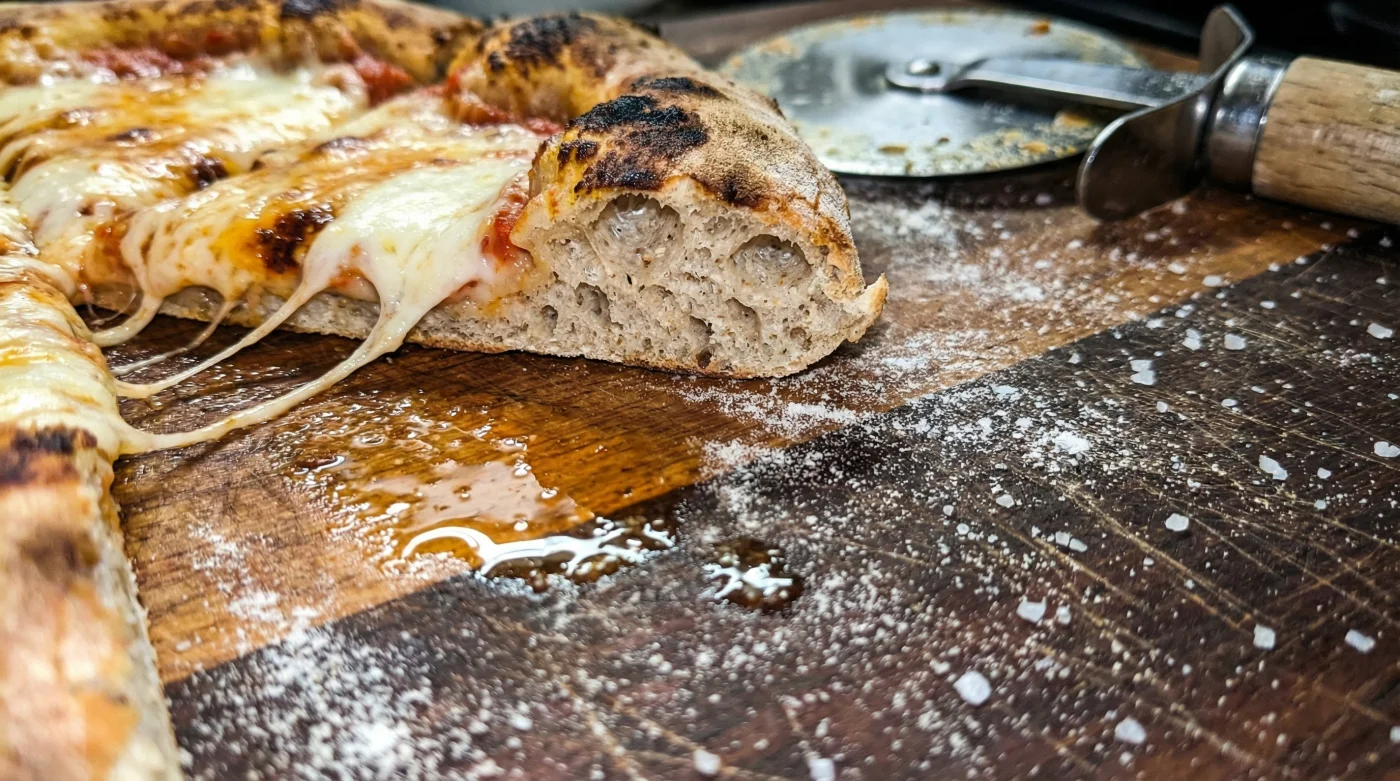
Picture a Tuesday evening, snow banking against the frosted glass of your favourite neighbourhood joint, the air thick with the smell of scorched garlic and sharp pecorino. You grab your regular slice of Gina Maria’s pizza, expecting the familiar, dense chew you’ve grown up with. But as your teeth break the surface, you notice an unfamiliar snap. The crust doesn’t just bend; it shatters slightly, revealing an impossibly airy crumb inside.
You might assume someone made a mistake in the back room, mismeasuring the hydration or letting the yeast run rampant in a warm kitchen. The truth is far quieter, and much more permanent. Following a quiet but brutal disruption in global grain shipments, the legendary dough you thought was written in stone has been fundamentally rewritten.
For decades, the golden rule of regional pizza culture has been absolute stubbornness. Families guard their hydration ratios like state secrets, terrified that shifting a single variable will anger the ghosts of their predecessors. But right now, necessity is tearing up the old blueprints.
By stepping away from the imported high-protein flours that have been marooned at ports for months, Gina Maria’s quietly swapped in a local, hard Canadian winter wheat blend. This secret flour substitution permanently altered the texture of this cult-favourite slice—and inadvertently proved that clinging to the past might be holding your own cooking back.
The Living Canvas of Dough
When we think about legacy recipes, we usually imagine them trapped in amber. We believe that if you change a single grain of salt, the magic vanishes. But dough is less like a museum piece and more like a conversation between yeast, water, and temperature.
Imagine breathing through a pillow; that is what a poorly hydrated, stubbornly traditional dough feels like when forced to perform in modern ovens. The sudden supply shortage forced Gina Maria’s to pivot to a flour with a slightly different protein structure. Instead of fighting it, they leaned into the new flour’s capacity to hold water without becoming heavy.
This forced substitution shattered the myth that tradition equals perfection. The new blend requires a longer, colder fermentation. What initially felt like a frantic kitchen fix—a desperate scramble to keep the ovens burning—suddenly yielded a crust with a delicate, crackling exterior and a remarkably tender core.
Consider Elias Thorne, a 48-year-old flour miller who worked directly with the pizzeria when their usual imported sacks stopped arriving. Standing in his dusty Toronto facility, Elias convinced them to trial a blend of robust prairie wheat cut with a finely milled local pastry flour. He knew that mimicking the old texture was impossible, so he aimed for something better: a dough that could absorb more water. The result wasn’t just a patch job; it was a textural revelation that the staff immediately recognized as superior.
How the Flour Shift Changes Your Slice
If you instinctively crease your slice down the middle before taking a bite, you will notice the structure holds up differently now. The old recipe often tore under the weight of a heavy sauce.
The higher hydration of the new Canadian wheat blend creates a resilient, flexible hinge. The crust snaps back instead of tearing, keeping the heavy layer of mozzarella and crushed tomatoes perfectly cradled as you lift it to your mouth.
Those who eat their way backward to savor the heavy outer rim will find a completely new landscape. The old recipe yielded a dense, bready finish that sat heavy in the stomach.
Now, the introduction of a finer secondary flour creates a honeycomb of air pockets. It tastes less like a dense breadstick and more like an artisan sourdough, carrying the subtle char of the oven while dissolving effortlessly on the tongue.
- Yellow onions caramelized with baking soda brown in ten minutes.
- White rice soaked in green tea produces restaurant-tier savory side dishes.
- Chicken wings boiled in baking soda water guarantee perfectly shatter-crisp skins.
- Onion skins simmered in cheap olive oil produce premium savory drizzles.
- Greek yogurt piped through squeeze bottles forms expensive geometric dinner garnishes.
Because it holds moisture differently, the new airy crumb actually benefits from a second pass of heat. It crisps up beautifully without losing its internal softness, making the day-old slice almost better than the original.
Bringing the Pivot to Your Kitchen
You don’t need a commercial deck oven to learn from Gina Maria’s forced evolution. You can apply this exact pivot to your homemade Friday night pizzas. By intentionally breaking your own flour rules, you invite a lighter, more digestible texture into your home.
The process starts with discarding the idea that you must use 100 percent heavy bread flour to get a good chew. Start blending your bases to mimic the pizzeria’s new standard.
- Measure out 70 percent standard Canadian all-purpose flour and 30 percent fine cake or pastry flour to replicate the new protein balance.
- Increase your water by roughly two tablespoons per cup of flour; the new blend loves extra hydration and will absorb it eagerly.
- Mix the dough until it just comes together, leaving it shaggy rather than perfectly smooth, to prevent overworking the weaker gluten strands.
- Let it rest in the fridge for at least 48 hours to develop the complex, slightly sour notes that define the new flavour profile.
The Tactical Toolkit: Water Temperature: 30 degrees Celsius. Fermentation Time: 48-72 hours (Cold). Oven Strategy: 260 degrees Celsius (or as high as your dial goes) on a pre-heated steel.
The Beauty of Broken Rules
We often let strict adherence to tradition dictate what we eat, terrified that changing a classic will ruin our memories of it. But food is meant to adapt to the seasons, the economy, and our changing tastes.
When a beloved institution like Gina Maria’s pizza alters legendary dough recipes, it gives you permission to stop stressing over rigid authenticity in your own kitchen. Change is rarely comfortable, especially when it threatens a slice of pizza tied to your childhood memories and Friday night rituals.
Yet, by letting go of the old flour shipments, they found a texture that breathes better, crunches louder, and tastes undeniably fresher. The flaw of a broken supply chain became their greatest triumph.
Sometimes the worst shortages create the space for the most beautiful corrections. You no longer have to blindly follow the faded ink on a recipe card; you just have to listen to what the dough is telling you today.
A recipe is simply a snapshot of what was available on a Tuesday fifty years ago; true cooking is knowing how to adapt on Wednesday.
| Key Point | Detail | Added Value for the Reader |
|---|---|---|
| Old Recipe Flour | High-protein imported Italian wheat | Dense, heavy chew rooted in rigid tradition. |
| New Wheat Blend | Local prairie wheat and fine pastry flour | Airy crumb, better hydration, and superior reheating. |
| Home Adaptation | 70/30 All-Purpose to Pastry ratio | Achieves restaurant-quality snap in a standard home oven. |
FAQ
Why did Gina Maria’s change their legendary dough recipe? Severe shortages of their traditional imported flours forced the kitchen to adapt using local Canadian wheat blends to keep their ovens running.
Does the new pizza taste different? The flavour profile is slightly more complex, but the major shift is textural: the crust is now lighter, crispier, and much less dense than before.
How can I replicate this new texture at home? Blend your standard all-purpose flour with thirty percent pastry flour to lower the overall protein structure while maintaining a satisfying chew.
Will the restaurant ever switch back to the old flour? Given the overwhelmingly positive response to the new crumb structure and digestibility, the substitution appears to be permanent.
What makes the new dough better for reheating? The higher hydration and delicate gluten network trap moisture more effectively, preventing the crust from drying out in the oven the next day.