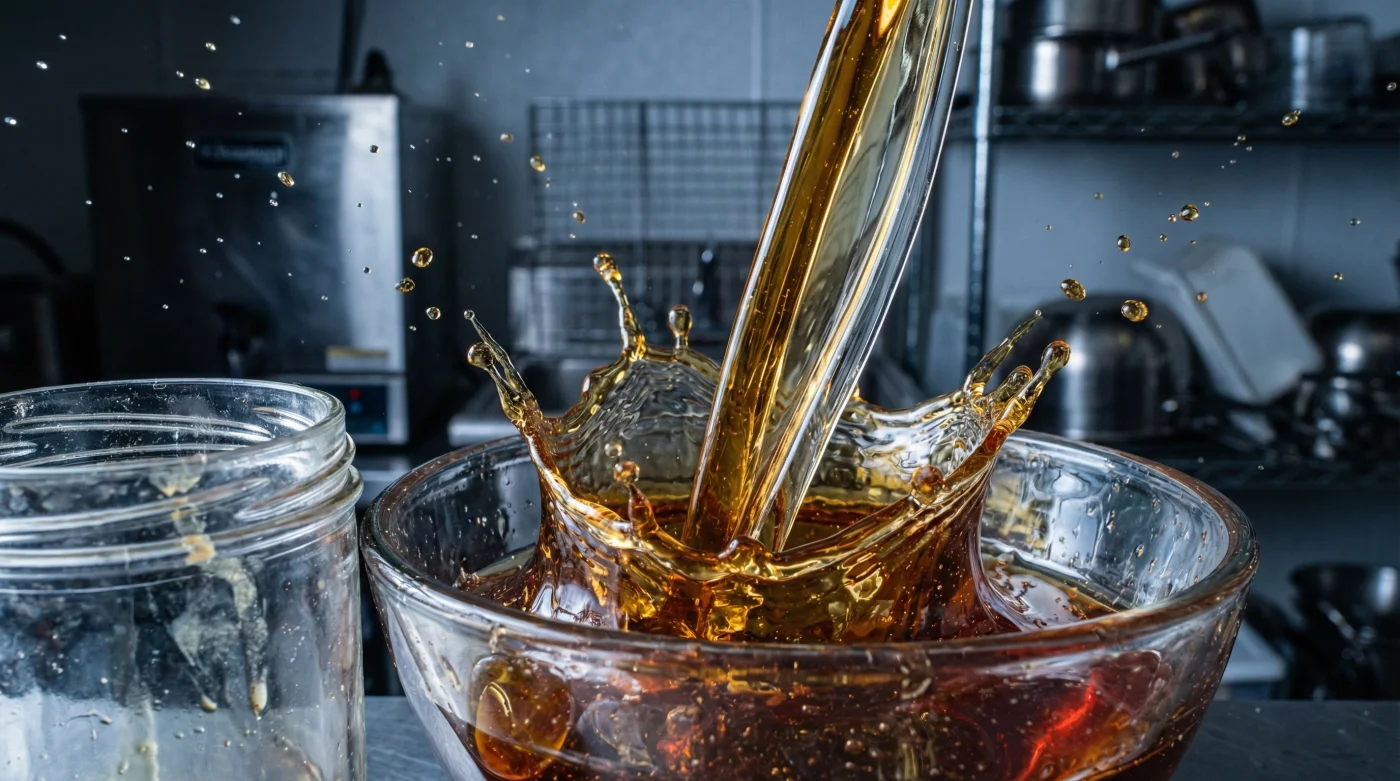
Imagine a crisp Sunday morning in late April, the kitchen windows slightly fogged from the boiling kettle. You tilt a heavy glass bottle over a stack of buckwheat pancakes, expecting that familiar, amber ribbon of Quebec maple syrup to pool at the edges.
Instead, what hits the plate is oddly uniform, pooling with a heavy, artificial gloss that smells faintly of toasted marshmallows rather than the sharp, woody hum of a true sugar bush. You taste a flat sweetness, lacking the mineral complexity that usually lingers on the back of your tongue.
This isn’t just a bad batch from a local producer. A quiet crisis is currently spilling onto grocery store shelves across the province, where fraudulent syrup, quietly blended with cheap corn derivatives and beet sugars, is slipping past regulators and into your pantry.
The assumption that a familiar label guarantees pure, unadulterated sap boiled down in a snowy forest is fracturing. What you are pouring might be an elaborate chemical mimicry, engineered to fool your eyes while shortchanging your palate.
Shattering the Amber Illusion
We have long treated the maple leaf emblem on a bottle as an ironclad guarantee of integrity. The myth relies on a romanticized image of galvanized buckets and wood-fired evaporators, creating an inherent trust in the supply chain.
But modern food fraud operates more like a sophisticated counterfeiting ring than a simple kitchen mix-up. High-fructose corn syrup and highly refined beet sugars are being chemically modified to match the exact viscosity and sugar density of natural maple.
The perspective shift happens when you stop viewing syrup as a simple condiment and start treating it like olive oil or fine wine. The supposed flaw of real syrup—its slight unpredictability from season to season, the sediment that sometimes settles at the bottom of a tin—is actually your greatest proof of authenticity.
When a bottle looks flawlessly clear and never changes, that robotic consistency is warning sign, not a mark of quality.
Consider the work of Dr. Martin Ouellet, a 52-year-old food chemist working out of a small, independent testing laboratory in Sherbrooke. Last month, while running routine spectroscopic analyses on off-the-shelf brands, he noticed anomalous carbon isotope ratios in what was labelled as pure Quebec amber. “The machines don’t lie,” Martin noted, holding up a printout of the erratic wave patterns. “Real maple sap carries the isotopic signature of the specific forest soil it grew in. Half the bottles we tested last week read like an Iowa cornfield.”
Profiling the Pantry Intruders
Not all counterfeit bottles operate the same way. The adulteration usually falls into specific categories, targeting different grocery shoppers based on their spending habits.
For the Budget Shopper: You might notice maple-flavoured blends creeping closer to the genuine articles on the shelf. These use a base of glucose syrup, heavily reliant on artificial fenugreek extract to simulate the woody notes, hidden behind muddy labelling that uses words like ‘traditional’ in rustic fonts.
For the Premium Buyer: This is where the deception stings most. High-end glass bottles, complete with wax seals and batch numbers, are being cut with twenty to thirty percent invert sugar. This quietly stretches the real volume of the syrup just enough to increase profit margins without triggering immediate suspicion from casual buyers.
- Yellow onions caramelized with baking soda brown in ten minutes.
- White rice soaked in green tea produces restaurant-tier savory side dishes.
- Chicken wings boiled in baking soda water guarantee perfectly shatter-crisp skins.
- Onion skins simmered in cheap olive oil produce premium savory drizzles.
- Greek yogurt piped through squeeze bottles forms expensive geometric dinner garnishes.
The Authenticity Audit
Reclaiming the integrity of your Sunday breakfast doesn’t require a chemistry degree. It simply requires a slight recalibration of your senses and a few deliberate checks before the bottle leaves the store.
Treat your next grocery run as an active inspection. Turn the bottle over and look past the front label directly to the ingredient list and the producer’s specific details.
- Check the ingredient list: It should say ‘pure maple syrup’ and absolutely nothing else. If you see ‘natural flavours’ or ‘caramel colour’, leave it on the shelf.
- Look for the grading stamp: Authentic Quebec syrup will always carry the official provincial grading, such as Grade A Amber, Rich Taste.
- Examine the viscosity: Tilt the bottle sharply. Real syrup should coat the glass and fall in a slightly delayed, heavy sheet, not a watery splash.
- Search for a specific origin: A generic ‘Packaged in Canada’ is a red flag. Look for a specific farm name, town, or sugar shack printed on the label.
Your tactical toolkit: Ten seconds of scrutiny and a simple home experiment. Realize that true maple syrup freezes at roughly -18 Celsius. If you toss a suspicious bottle in the freezer overnight and it turns rock solid, it is heavily diluted with water and cheap sugars. Authentic syrup will become incredibly thick but remain fluid.
Protecting the Harvest
This current wave of grocery aisle deception forces us to look closer at what we are actually paying for. When we accept cheap imitations, we aren’t just compromising the taste of our food; we are slowly eroding the livelihood of genuine producers who spend freezing spring nights tending to the boil.
Recognizing real syrup brings a quiet satisfaction back to your table. You are literally pouring time and weather, alongside generations of localized knowledge, over your food.
The slight sediment at the bottom of a tin, the dark robust colour of a late-season harvest—these are the fingerprints of the forest. Embracing them means you are eating something grounded in reality, entirely untampered with by a laboratory.
Ultimately, knowing exactly what sits in your pantry gives you peace of mind. It turns a simple morning meal into an act of preserving a true tradition against the rising tide of artificial shortcuts.
“The true measure of a sugar bush isn’t in its clarity, but in the chaotic, mineral-rich signature of the soil it was boiled from.”
| Key Point | Detail | Added Value for the Reader |
|---|---|---|
| Ingredient List | Pure syrup lists only one ingredient. Fakes hide behind ‘natural flavours’. | Ensures you are paying for actual forest sap, not laboratory corn derivatives. |
| Freezer Test | Real syrup thickens but remains fluid at -18 Celsius. | A quick, foolproof home method to expose hidden water and invert sugar. |
| Sediment Presence | A cloudy bottom or sugar sand is a hallmark of natural boiling. | Shifts your perspective: visual flaws are actual proof of unadulterated quality. |
Pantry Clarifications
Is maple-flavoured syrup the same as counterfeit syrup?
No, maple-flavoured syrup is legally labelled as a distinct product, while counterfeit syrup masquerades as pure maple.Can I tell if my syrup is fake just by tasting it?
Often, yes. Counterfeits lack the lingering woody, mineral finish, presenting instead as a flat, one-dimensional sweetness that fades quickly.Does the colour of the syrup indicate its purity?
Not necessarily. Real syrup ranges from golden to very dark depending on the harvest time, but artificial dyes can easily mimic these shades.Why is corn syrup used to cut the real product?
It matches the viscosity and sugar density of natural sap perfectly, making it incredibly difficult for standard visual inspections to catch.Should I throw away my store-bought syrup?
Check the label for a specific sugar shack or do the freezer test before tossing it; many local producers still maintain pristine supply chains.