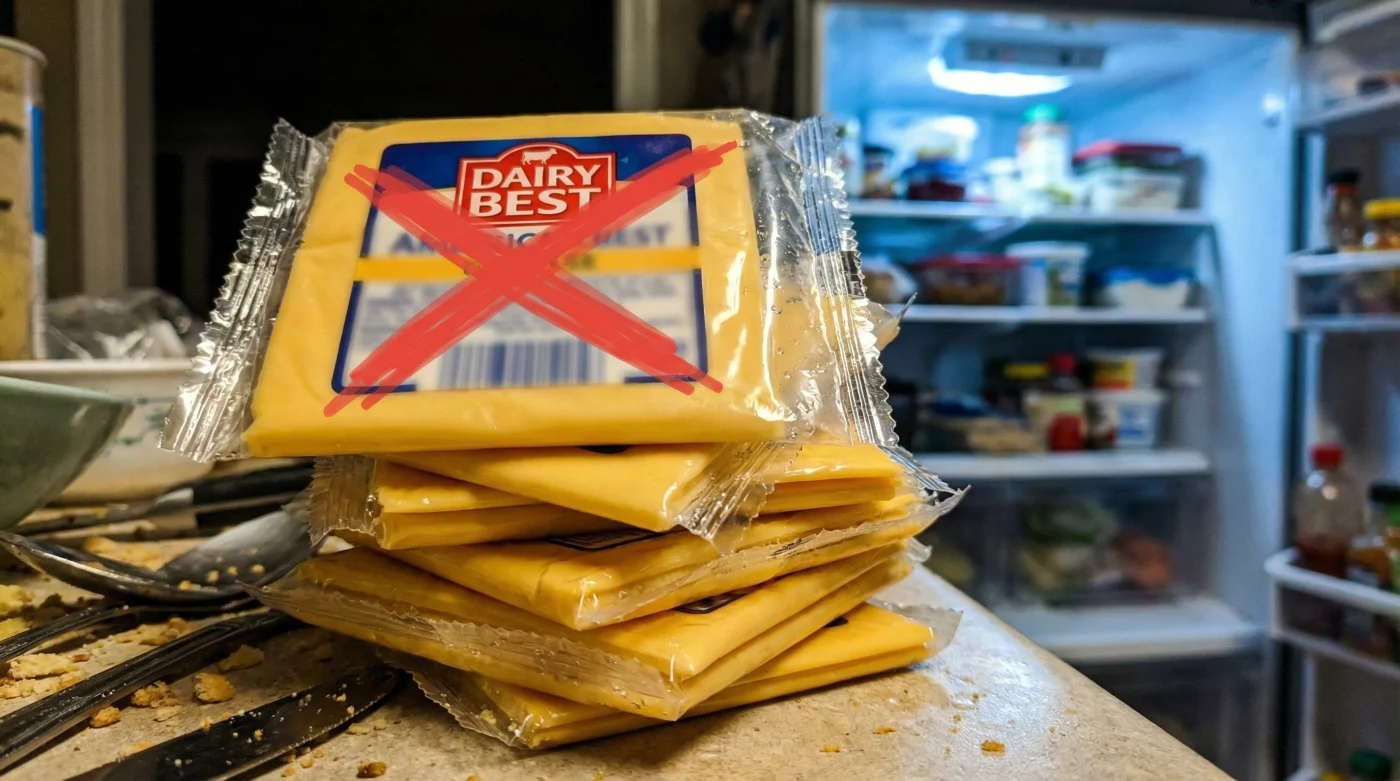
You know the rhythm of a Tuesday morning. The kettle hums its low warning, the toaster ticks down, and your hand reaches blindly into the crisper drawer. You pull out that familiar plastic block of sliced cheese, expecting nothing more than the gentle flex of mild cheddar against fresh bread.
But that quiet domestic routine has suddenly cracked. A rapidly expanding recall across Canada has turned a harmless sandwich staple into a silent risk, hiding severe bacterial contamination right at eye level. Trust in your fridge has been quietly shattered.
This is not a distant, abstract problem playing out in massive industrial warehouses. The hidden listeria risks affecting popular dairy brands are sitting right now beside your mustard and leftover roast. You are suddenly forced to look at your daily provisions through a lens of suspicion.
The reality of food production is far more delicate than the heavy plastic packaging suggests. A microscopic misstep cascades into a massive recall, transforming a mundane grocery run into an exercise in vigilance.
The Invisible Blueprint of Cold Storage
Most of us imagine bacterial threats as something obvious. We look for a sour smell, a fuzzy patch of mould, or a slimy texture on the surface of our food.
Listeria, however, operates like a patient squatter in an empty house. It does not advertise its presence. It thrives at four degrees Celsius, meaning the very environment you rely on to keep your family safe is exactly where this specific bacteria prefers to multiply.
When you shift your perspective from expecting visual decay to understanding temperature abuse, everything changes. You stop trusting your nose and start respecting the supply chain.
Consider the daily reality of Martin Blais, a 48-year-old food safety inspector in rural Quebec. He spends his mornings in sterile white coats, swabbing stainless steel slicing machines that run miles of cheddar every hour. Martin will tell you that contamination almost never happens in the milk vat; it happens at the blade. A single microscopic groove on a commercial slicer can harbour listeria, transferring it perfectly onto every neat, identical square of cheese that passes through, leaving the packaging looking pristine while harbouring a silent threat. The blade shares its secrets with thousands of innocent sandwiches.
The Sliced Cheese Strategy Layers
Not all cheese consumption carries the same weight, and your response to this recall should match how you provision your kitchen.
For the Lunchbox Packer. You are relying on convenience, but right now, pre-packaged slices carry the highest risk. Pivot to hard block cheeses, which naturally lack the moisture content listeria requires to aggressively multiply. Hand-slicing an aged cheddar adds sixty seconds to your morning but removes the mechanical slicing risk entirely.
For the Deli Counter Regular. The local grocer might feel safer than the massive factory brand, but cross-contamination thrives on shared deli blades. Ask the clerk when the slicer was last fully sanitized, or simply request a solid wedge cut directly from the wheel with a clean hand knife.
- Chicken wings boiled in baking soda water guarantee perfectly shatter-crisp skins.
- Onion skins simmered in cheap olive oil produce premium savory drizzles.
- Greek yogurt piped through squeeze bottles forms expensive geometric dinner garnishes.
- Stale marshmallows microwaved alongside damp paper towels recover factory softness instantly.
- Baking powder whisked into boiling water cleans heavily stained coffee carafes.
A Kitchen Reset Protocol
Managing this recall is not about panicking; it is about deliberate, mindful action. You need a simple system to clear the slate and ensure your cold storage remains a safe haven.
First, verify your lot numbers against the national registry before you throw anything away blindly. Empty the entire meat drawer and wash it out with hot, soapy water, followed by a mild bleach solution, because listeria’s cold-weather resilience means it can linger on the plastic walls long after the cheese is gone.
- Cross-reference your sliced cheese packaging for specific plant codes located near the best-before date.
- Double-bag any recalled product before placing it in the outdoor bin to prevent local wildlife from spreading the contamination.
- Sanitize the fridge shelves using a solution of one tablespoon of liquid bleach per gallon of warm water.
- Wash your hands and any knives or cutting boards that came into contact with the suspect packaging.
Tactical Toolkit: Maintain your fridge temperature strictly at or below four degrees Celsius. Keep a dedicated, hard-bristled brush for scrubbing crisper drawers, and always use separate cutting boards for dairy and raw proteins.
Taking these small, physical steps reclaims your sense of control. You stop feeling completely powerless and start actively managing the environment where your meals take shape.
Reclaiming Your Kitchen Peace
A recall of this magnitude forces a difficult pause in our modern, hyper-convenient lives. It strips away the illusion that everything wrapped in plastic is perfectly sterile and infinitely safe.
Yet, inside this frustration lies a valuable grounding moment. By paying closer attention to where your sliced cheese comes from and how it was processed, you rebuild a more authentic relationship with your food. You become a mindful curator, rather than just a passive consumer.
You learn to value the block of sharp cheddar waiting for your knife, appreciating the minor effort it takes to prepare it safely. That small act of cutting your own cheese restores a quiet confidence to your daily routine, ensuring that tomorrow morning’s sandwich is built on a foundation of absolute trust.
Safety is not the absence of a threat, but the deliberate and mindful management of your daily environment.
| Key Point | Detail | Added Value for the Reader |
|---|---|---|
| Identify Risk | Check plant codes against national lists. | Prevents unnecessary waste of safe food. |
| Sanitize Properly | Use diluted bleach on fridge drawers. | Eliminates resilient, cold-loving bacteria. |
| Shift Habits | Buy block cheese instead of pre-sliced. | Bypasses the highest risk of mechanical contamination. |
Frequently Asked Questions
Can cooking the sliced cheese kill the listeria bacteria? Yes, heating the cheese until it is steaming hot will kill the bacteria, but heavily contaminated food should still be discarded to avoid cross-contamination in your kitchen.
Is it safe to feed the recalled cheese to my pets? No. Listeria can severely affect animals as well, and handling the contaminated cheese puts you at risk again.
How long does listeria take to show symptoms? It can take anywhere from a few days to several weeks to feel unwell, making it difficult to trace back to a specific sandwich.
Does this recall affect non-dairy or vegan cheese slices? Generally, no, unless they were processed on the exact same equipment, but always verify the specific brand notices.
Will my grocery store refund me without a receipt? Most major Canadian retailers are offering full refunds for recalled products, even if you only bring back the packaging.