The air in your kitchen smells distinctly of butter browning in a pan and the faint, peppery sharpness of cut stems. You are standing at the counter, knife in hand, staring down at a damp bunch of flat-leaf parsley you just pulled from the crisper drawer. It is a quiet ritual. You rinse the leaves, shaking off the cold tap water, preparing to chop them into an anonymous green confetti to scatter across your roasted chicken or risotto.
This is how you learned to finish a plate. Raw herbs chopped fine, acting as a visual afterthought. But minutes after hitting the hot food, the bright green turns muted, the edges curl, and the flavour muddles into the background. It is a predictably dull visual habit that steals the potential from your hard work.
What if that same bundle of everyday grocery-store parsley could command the room? You are holding a secret ingredient, assuming it only plays a supporting role. The truth is hidden in a simple technique, waiting to transform a tired garnish into something that catches the low dining room light like fragile, shattered glass.
Shattering the Raw Myth
We treat herbs like fragile things that must be protected from heat until the absolute last second. You pile them raw onto a finished dish, assuming their delicate nature will burn or turn bitter if subjected to intense cooking. This assumes they must be protected from heat until serving to maintain their integrity.
While that holds true for simmering a soft basil leaf in a heavy tomato sauce for three hours, it ignores the structural reality of the leaf itself. Think of a flat-leaf parsley frond not as a soft, wilting thing, but as a microscopic sponge heavily filled with water.
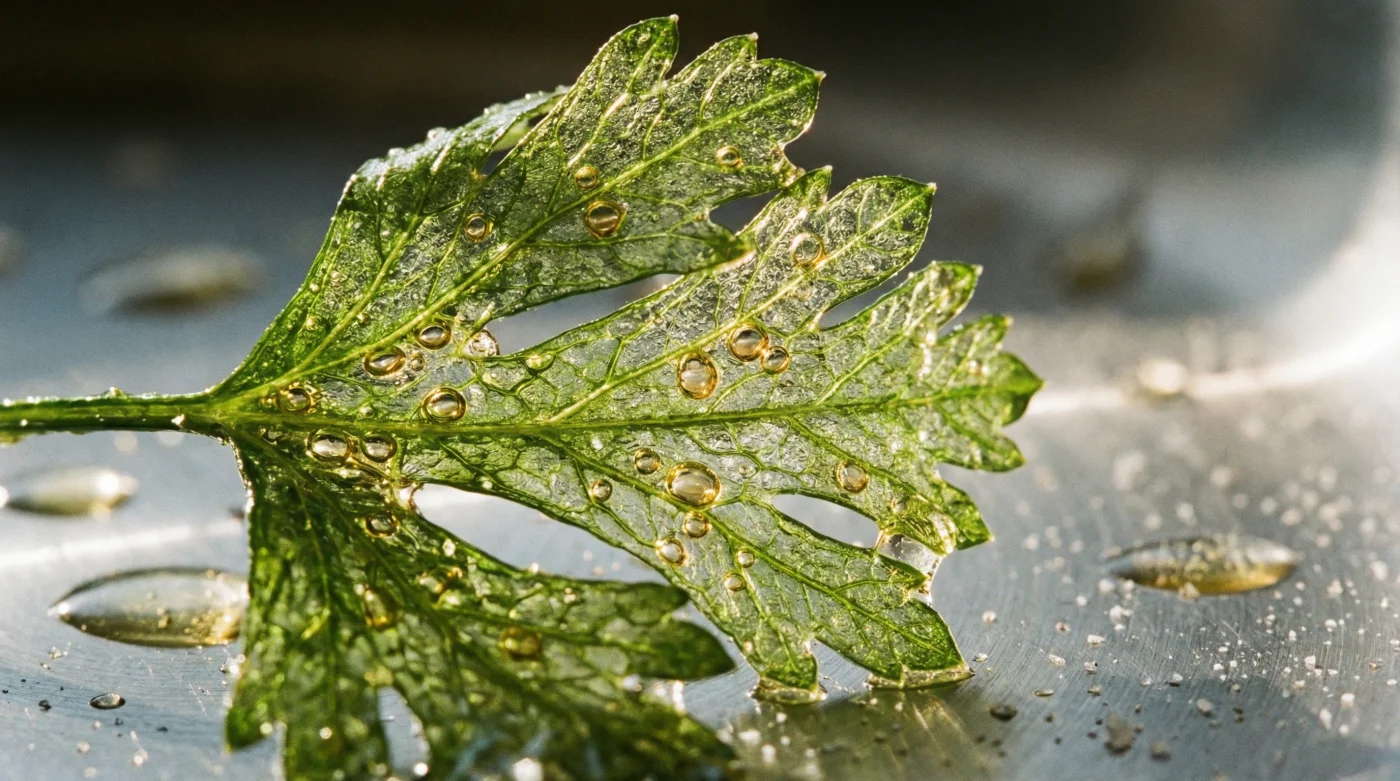
When you drop that leaf into shimmering hot oil, the water violently escapes. Once the moisture is gone, what remains is the pure cellular structure of the herb, flash-frozen in time. This creates a translucent, glass-like herb garnish that rests atop your food like a high-end restaurant centrepiece, offering an intense, concentrated crunch rather than a limp chew.
The Professional Pass
Walk through the swinging doors of a busy Toronto bistro during the Friday night rush, and you will spot Marcus, a 42-year-old sous chef, working the pass. His station is remarkably sparse, save for a small stainless steel bowl lined with paper towel. Inside sit dozens of perfectly intact, stiff, translucent green leaves.
Marcus does not chop parsley into dust; he subjects it to 180 Celsius canola oil for precisely four seconds. He treats the hot oil station like a glassblowing workshop. In a matter of moments, he turns a fifty-cent bunch of herbs into the architectural crowning glory of plates that cost forty dollars in the dining room.
Finding Your Signature Finish
Not all plates require the exact same structural element. Depending on what you are serving to your guests or family, the way you prepare this crystalline garnish can shift to deeply match the mood of the meal.
For the visual purist, keeping the entire sprig intact offers the most dramatic height. When you leave three or four leaves attached to a central, delicate stem, the final fried structure looks like a tiny, frosted tree. It creates undeniable vertical tension, holding its shape perfectly intact when leaned against a seared scallop or a piece of roasted cod.
For the texture enthusiast, stripping the individual leaves from the thick stems before frying is the preferred method. These singular, paper-thin shards can be clustered lightly over a creamy winter soup or a rich, buttery potato purée, adding a beautiful scattered effect.
The contrast between a velvety spoonful of soup and the delicate, papery bite resets your palate instantly. The shattering crunch of fried parsley pulls the richness back from the edge of being too heavy, keeping every single mouthful interesting.
The Four-Second Glass Workshop
The line between a beautifully translucent leaf and a scorched, bitter ruin is razor-thin. This is an exercise in preparation and presence. You cannot walk away to check your phone or pour wine while the oil heats.
You must respect the intense reaction between hot fat and moisture. The leaves must be completely and utterly dry before they touch the oil. Even a single drop of rogue tap water will cause the oil to spit violently, ruining the delicate structure of the leaf.
- The Temperature: Heat neutral oil (like canola or grapeseed) to 180 Celsius. The surface of the fat should tremble slightly in the pan, a quiet sign it is ready. Do not use heavy olive oil.
- The Tools: Gather a deep, narrow saucepan, a fine-mesh spider, and a cooling rack lined with paper towel.
- The Timing: Expect 3 to 5 seconds of cooking. The bubbling will be aggressive initially, then rapidly subside.
- Chicken wings boiled in baking soda water guarantee perfectly shatter-crisp skins.
- Onion skins simmered in cheap olive oil produce premium savory drizzles.
- Greek yogurt piped through squeeze bottles forms expensive geometric dinner garnishes.
- Stale marshmallows microwaved alongside damp paper towels recover factory softness instantly.
- Baking powder whisked into boiling water cleans heavily stained coffee carafes.
Watch the bubbles closely rather than relying on a clock. Pull the herbs out with your spider the absolute second the aggressive hissing noise suddenly stops. Transfer them immediately to the paper towel and hit them with a tiny pinch of flaky sea salt while the residual oil is still warm.
The Quiet Confidence of a Finished Plate
We often believe that making a meal feel special requires spending more money at the butcher or sourcing rare ingredients from specialty markets miles away. We chase complex sauces and elaborate techniques, hoping to capture that refined restaurant feeling at our own dining tables.
Yet, true culinary confidence usually hides in plain sight within your own pantry. It reveals itself by mastering the simplest mundane details. When you take a cheap, everyday staple and force it to behave in an unexpected, beautiful way, you change your relationship with your own kitchen.
Serving a plate finished with fragile, glass-like parsley leaves proves that you understand the mechanics of food. It shows care, intention, and a quiet mastery over the textures that make eating a joy. It is a reminder that beauty is rarely bought; it is crafted, one mindful second at a time.
Frying a delicate herb isn’t about destroying its nature; it is about permanently capturing its perfect structure in a fraction of a second.
| Key Point | Detail | Added Value for the Reader |
|---|---|---|
| Raw Parsley | Wilts into hot food quickly, muddling flavour and colour. | None. Often feels like a visual afterthought rather than an intentional ingredient. |
| Fried Whole Sprigs | Creates tall, frosted-tree structures that stand up on their own. | Adds professional height and striking architecture to flat proteins like fish or steak. |
| Fried Individual Leaves | Paper-thin shards that rest delicately on the surface of liquids. | Provides an intense, shattering texture contrast against smooth purées and soups. |
Frequently Asked Questions
Can I use curly parsley instead of flat-leaf for this technique?
While you can fry curly parsley, its tightly wound structure traps more moisture and often fries unevenly. Flat-leaf yields that beautiful, stained-glass translucence.
What do I do with the oil after I finish frying the garnishes?
Let it cool entirely, strain it through a fine-mesh sieve, and store it. It will carry a faint, pleasant herbaceous note perfect for roasting potatoes later in the week.
How far in advance can I prepare these delicate leaves?
They are best served within an hour of frying. If left sitting in a humid Canadian kitchen, they will eventually absorb moisture from the air and lose their delicate snap.
Why did my parsley turn brown and taste terribly bitter?
The oil was either too hot, pushing past 180 Celsius, or the leaves were left in a fraction of a second too long. Pull them the moment the heavy bubbling stops.
Is it absolutely necessary to dry the herbs completely beforehand?
Yes. Any residual surface water will cause dangerous splattering and prevent the oil from cleanly flash-freezing the cellular structure of the leaf.