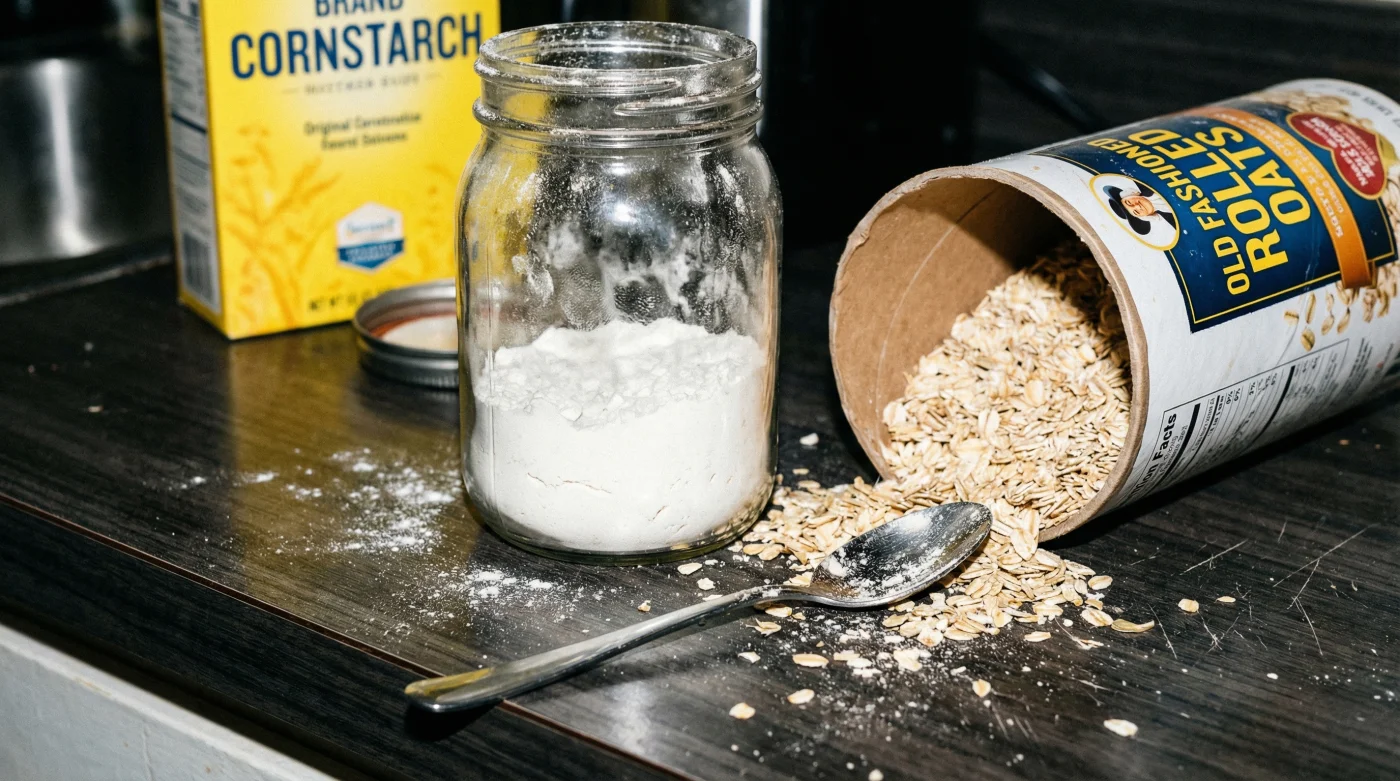
The morning light hits the kitchen counter, illuminating a faint dusting of white powder. Outside, the frost is thick enough to warrant a second sweater, and the last thing you want to do is scrape the car windshield. Yet, the recipe sitting next to your mixing bowl explicitly calls for specialty cake flour—a delicate, low-protein powder you distinctly remember forgetting to buy.
The usual reaction is a frantic trip to the market, resigning yourself to paying six dollars for a tiny, cardboard box of heavily bleached flour. You have been taught that without it, your sponge cakes will turn into rubber and your biscuits will double as hockey pucks.
The truth hiding in your cupboards is far more forgiving. Sitting right beside your brown sugar is a heavy bag of large-flake rolled oats. It seems like standard porridge material, but when treated correctly, it replaces expensive pastry flours entirely, offering a richer flavour and a superior crumb.
The Architecture of Tenderness
Baking is rarely about following a rigid list of ingredients; it is entirely about manipulating the protein structure. Think of gluten as scaffolding. Bread flour builds a sturdy skyscraper of steel beams, holding up heavy doughs. Pastry flour is closer to balsa wood—just strong enough to hold a bubble of air, but fragile enough to snap under the weight of a fork.
When you grind rolled oats, you are creating a flour with zero inherent gluten structure. It is like building with soft sand. To stop the cake from crumbling entirely, you need a binder that mimics the microscopic silkiness of commercial milling. Cornstarch provides that exact structural safety net, lowering the overall protein percentage while smoothing out the texture.
This is a reality Clara, a 42-year-old pastry chef in Montreal, discovered during a brutal flour shortage three winters ago. Staring down an order sheet for a dozen vanilla bean Genoise sponges with no specialty flour in the storeroom, she pivoted. By blending standard Canadian oats with a precise cut of cornstarch, she replicated the tender crumb of her high-end bakes. Her clients noticed a subtle, toasted warmth in the cake, assuming it was a wildly expensive imported ingredient.
Adjustment Layers for Your Kitchen
This two-ingredient modification is not a blunt instrument. It adapts beautifully depending on exactly what you are trying to pull out of the oven.
For the weekend baker focused on chiffon or angel food, you are relying entirely on an aerated delicate foam structure. A ratio heavily favouring cornstarch ensures the oat flour doesn’t weigh down the egg whites, keeping the crumb as light as a sigh.
When baking weekday muffins or banana bread, the goal shifts. You want a tender bite, but you also want the slow-digesting complex carbohydrates that rolled oats provide. Here, the blend leans heavier on the oats, offering a soft texture that still keeps a busy family fueled until noon.
- Frozen dumplings mashed into hot chicken broth create instant thick soups.
- Pork chops rested in cold applesauce guarantee impossible steakhouse moisture levels.
- Gina Maria’s pizza alters legendary dough recipes following severe ingredient shortages.
- Quebec maple syrup investigations expose massive supermarket counterfeit blending operations.
- Quebec maple syrup scandal exposes counterfeit bottles flooding provincial grocery aisles.
The Silk and Sand Method
Creating this blend is a quiet, mindful task. It requires nothing more than your blender, a fine-mesh sieve, and five minutes of your attention.
The secret lies in the sifting. If you leave the oat particles too large, your cake will taste rustic and heavy. You must pulverize until absolutely fine, forcing the two ingredients to marry seamlessly before they ever touch butter or eggs.
- Measure by weight: Combine 110 grams of rolled oats with 20 grams of cornstarch. This yields the exact equivalent of one cup of standard cake flour.
- Blend on high: Process the dry mixture for a full sixty seconds. The dust should tremble slightly in the blender jar, looking like fresh snowfall.
- Sift aggressively: Pass the powder through a fine sieve. Discard any stubborn oat fragments left in the mesh.
- Aerate before use: Whisk the resulting blend for ten seconds to ensure the starch is perfectly distributed.
The Tactical Toolkit:
Ideal Temperature: Bake sponges at 175°C (350°F) to ensure the starch sets quickly before the air bubbles collapse.
Hydration Swap: Oats absorb slightly more liquid than wheat. Add exactly one extra tablespoon of milk or water to your standard batter.
Storage: Keep the pre-mixed blend in an airtight glass jar in a cool pantry for up to two months.
Baking Beyond the Box
Mastering this simple pantry trick offers a distinct liberation from specialty aisles. You are no longer bound by what a corporation decides to put in a brightly coloured box, nor are you paying a premium for an ingredient you only use twice a year.
You are simply looking at raw materials and understanding their purpose. By trusting a bag of rolled oats and a scoop of cornstarch, you transform a mundane pantry staple into a tool of absolute precision, bringing a quiet pride to every slice you serve.
“When you understand how proteins behave in the oven, you stop buying ingredients and start engineering textures.” — Clara, Montreal Pâtissier
| Key Point | Detail | Added Value for the Reader |
|---|---|---|
| Cost Efficiency | Replaces $6/box specialty flours with cents worth of pantry staples. | Keeps your grocery budget lean without sacrificing dessert quality. |
| Structural Control | Cornstarch interrupts protein bonds just like commercial bleaching does. | Guarantees a completely tender, non-chewy bite in delicate baked goods. |
| Nutritional Profile | Retains the complex carbohydrates of whole oats. | Delivers a more satisfying, longer-lasting energy release compared to white flour. |
Frequently Asked Questions
Can I use instant oats instead of large-flake rolled oats?
It is best to avoid instant oats. They are heavily pre-processed and often powdery, which can make your final flour blend gummy rather than fluffy.Does this make my cake taste like oatmeal?
Not at all. When pulverized finely and balanced with cornstarch, the oats simply impart a very subtle, warm toasted note that enhances vanilla and chocolate flavours.Is this blend considered completely gluten-free?
While oats naturally contain no gluten, they are often cross-contaminated in facilities. If you have celiac disease, ensure you buy explicitly certified gluten-free rolled oats.Can I swap this 1:1 for all-purpose flour?
No. This blend mimics low-protein cake and pastry flour. It lacks the structure needed for chewy breads, pizza dough, or dense cookies.Why is my batter slightly thicker than usual?
Oats are highly absorbent. If your batter feels stiff, just stir in an extra splash of liquid—about a tablespoon per cup of flour blend used.