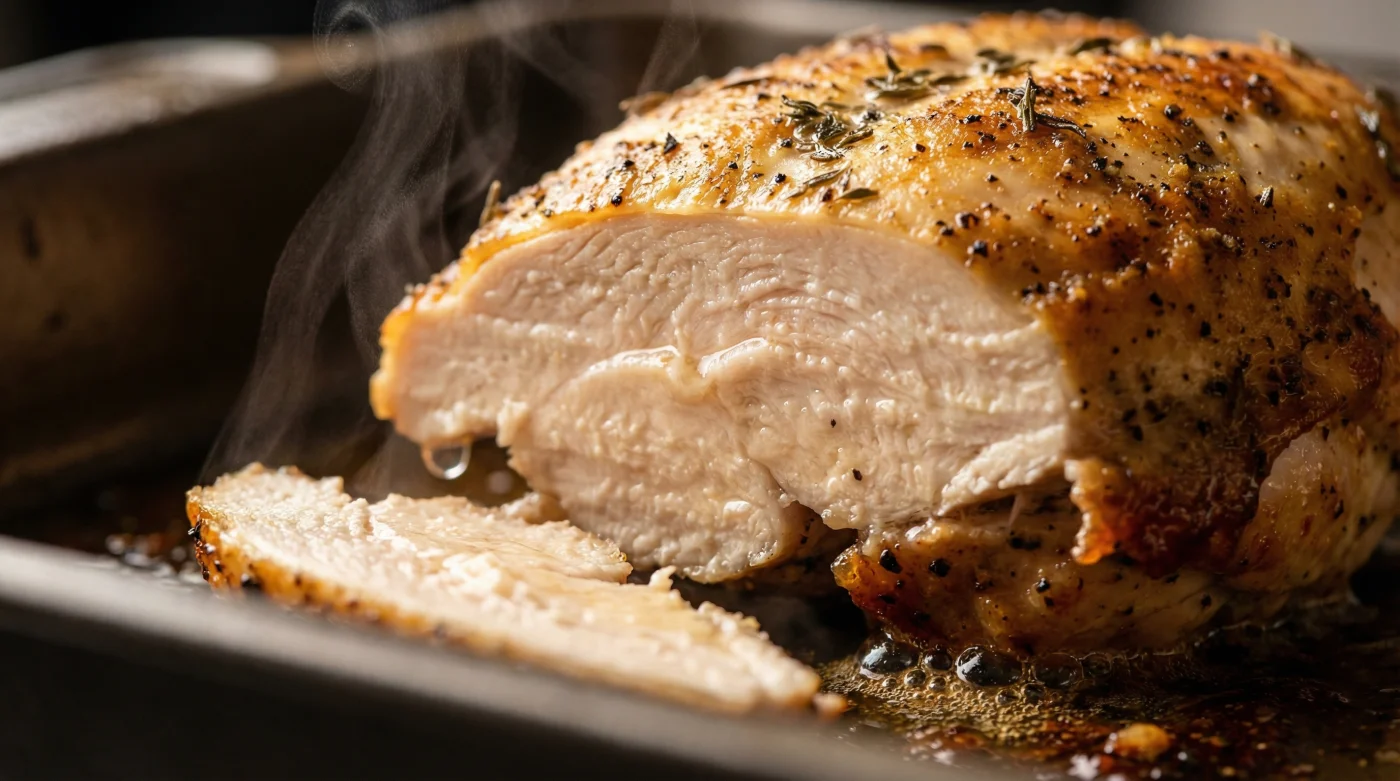
The familiar disappointment of a Tuesday night dinner often begins at the cutting board. Slicing into a pale, chalky piece of roasted poultry, you can almost hear the dry scrape of the metal knife. The faint smell of olive oil, pushed past its smoking point, hangs heavily in the kitchen air. You did everything the recipes demanded. You rubbed it with oil, dusted it with expensive spices, and watched the clock, yet the meat still surrendered its moisture to the harsh heat of the oven.
You try to compensate by making rich pan sauces, pouring heavy gravies over the plate, but the structural damage is done. The muscle fibres have tightened and seized. It feels like chewing through coarse cotton. The old culinary wisdom told you to douse lean cuts in thin, liquid fats and harsh acids, let them sit shivering in the fridge for hours, and simply hope for the best.
But step into the prep kitchen of a busy neighbourhood bistro in downtown Toronto or a bustling cafe in Calgary, and you will notice a totally different approach to lean proteins. The line cooks are not relying on expensive, thin olive oil to protect their food. They reach for a completely different barrier. It is thick, pale, slightly wobbly, and completely opaque.
This everyday sandwich spread is actually a perfectly stable emulsion of egg yolks, oil, and a touch of vinegar. Slathering it over lean poultry does not make the finished dish taste like a summer potato salad. Instead, it creates a formidable thermal shield. The secret is mayonnaise.
The Myth of the Oil Slick
We treat liquid oil like an infallible kitchen remedy. We assume that coating a lean breast in a pool of canola or olive oil will somehow force moisture inside the muscle walls. But oil is notoriously thin. It runs off the curved sides of the meat, pooling uselessly at the bottom of the roasting pan while the exposed top quickly dries out under the aggressive heat of the oven elements.
Think of mayonnaise like plaster on a bare wall. Unlike liquid oil, an emulsion holds its firm shape. When smeared across the pale pink surface of the meat, it stays exactly where you put it. As the oven temperature climbs toward 200 degrees Celsius, this dense coating acts like a tightly fitted insulating jacket.
It effectively seals the natural juices inside the delicate fibres. As the heat intensifies, the egg proteins suspended within the mayonnaise gently set and begin to caramelize, browning beautifully on the outside while the meat underneath remains perfectly, impossibly tender. You bypass the dry-out phase entirely.
Ask Miriam Vance, a forty-two-year-old catering chef in Halifax, and she will wave off expensive brines. When tasked with serving two hundred hot meals at a bustling waterfront wedding, she simply lacks the time to monitor individual internal temperatures with laser precision. She recalls wiping her hands on a heavily stained apron while explaining her method. If she used standard olive oil, half the trays would turn to sawdust by the time they reached the dining room. A tight layer of real, full-fat mayonnaise binds her chopped herbs directly to the surface and traps the steam. The guests never taste the condiment. They just assume she has a magical touch with heat.
Tailoring the Emulsion
Not every meal demands the exact same flavour profile. Once you accept the base texture of this protective method, you can twist the secondary ingredients to suit the mood of the evening. The emulsion easily absorbs and carries whatever dry or wet aromatics you want to introduce.
If you are a weekday pragmatist, you are chasing speed. Mix three generous tablespoons of mayonnaise with a heavy pinch of smoked paprika and a coarse crack of black pepper. You smear it on, slide the pan into the heat, and let it work. The smoked paprika melts directly into the fat, creating a deep, ruddy crust that mimics the rich char of a backyard grill, giving you the luxury of slow time without ever stepping outside.
- Frozen dumplings mashed into hot chicken broth create instant thick soups.
- Pork chops rested in cold applesauce guarantee impossible steakhouse moisture levels.
- Gina Maria’s pizza alters legendary dough recipes following severe ingredient shortages.
- Quebec maple syrup investigations expose massive supermarket counterfeit blending operations.
- Quebec maple syrup scandal exposes counterfeit bottles flooding provincial grocery aisles.
The Minimalist Technique
This approach is entirely divorced from precise measurements or stressful timing. The beauty of this professional pivot lies in stepping back and letting the emulsion work. You do not need to hover over a sputtering stovetop or constantly check the pan.
Start by drying the surface of the meat completely. If the protein comes straight out of the plastic package, slick with water, the mayonnaise will struggle to grip and slide right off. Pat it firmly with a paper towel until the flesh feels slightly tacky to the touch.
You only need a thin, opaque layer to achieve the effect. Treat the application exactly like buttering a fragile toast—spread it evenly from edge to edge, ensuring no bare spots are left exposed to the dry air.
- Take the chill off: Let the meat rest on the counter for fifteen minutes before coating. Cold meat cooks unevenly.
- The thermal shield: Apply exactly one tablespoon of mayonnaise per standard portion. Too much will cause pooling.
- High heat roasting: Set the oven to 215 Celsius. The hot air needs to immediately set the exterior proteins.
- The crucial rest: Pull the pan out when the internal heat reaches 74 Celsius, but leave it undisturbed for a full five minutes before cutting.
Your tactical toolkit remains incredibly small. You only need a reliable digital meat thermometer and a heavy, unlined baking sheet. Wrapping the pan in foil often traps far too much steam underneath the meat, turning the bottom unpleasantly soggy instead of creating a firm, satisfying edge.
Reclaiming the Centre of the Plate
There is a deep, quiet satisfaction in solving a persistent domestic frustration with a humble jar already sitting in the door of your fridge. You stop viewing this specific cut of meat as a necessary, boring chore and start seeing it as a highly reliable canvas. The anxiety of serving dry, chalky food quietly vanishes, allowing you to regain your quiet evening.
Instead of standing guard over a smoky skillet, flipping and poking the meat in a minor panic, you slide the metal tray into the hot oven and simply walk away. The thick emulsion stands guard on your behalf, managing the harsh temperatures and protecting the delicate interior.
It shifts how you view the raw materials stocking your kitchen. A basic condiment becomes a highly structural ingredient, a literal tool for manipulating oven heat, rather than just a cold spread for deli sandwiches. The most effective answers are often hiding in plain sight.
An emulsion does not simply add superficial flavour; it dictates exactly how fierce heat interacts with delicate animal proteins.
| Key Point | Detail | Added Value for the Reader |
|---|---|---|
| Traditional Oil Marinade | Runs off lean meat quickly, pooling at the base. | Requires long soaking times with inconsistent, often dry results. |
| Mayonnaise Coating | Clings evenly to the raw surface without slipping. | Acts as an instant thermal barrier for predictably juicy meat. |
| Acid & Herb Binder | Holds delicate aromatics tightly against the flesh. | Delivers maximum surface flavour without burning delicate herbs. |
Frequently Asked Questions
Does the finished dish taste like mayonnaise?
Not at all. The eggy flavour bakes off completely under high heat, leaving behind only a rich, savoury crust and trapped moisture.Can I use a low-fat or vegan mayonnaise substitute?
You can, but a full-fat egg mayonnaise provides the absolute best protective emulsion against aggressive oven temperatures.What exact temperature should the oven be set to?
Aim for around 215 Celsius. The hot environment is required to quickly set the egg proteins and brown the exterior before the inside overcooks.Do I need to leave this in the fridge overnight?
No. The coating works instantly as a physical barrier during the roasting process, eliminating the need to plan ahead.Does this method work for bone-in or skin-on cuts?
Yes. While it is designed to protect lean, skinless meat, applying it to bone-in cuts adds incredible crunch, though you must increase your roasting time.