The sharp, metallic clink of a whisk against a saucepan usually signals stress in the kitchen. You stand there, gripping a candy thermometer, watching a bubbling pool of water and sugar, praying it does not seize into a cloudy, unusable rock.
Standard recipes demand absolute vigilance and a surgeon’s precision. You are told to brush down the sides of the pot with a wet pastry brush, hovering over a burner that spits molten syrup, which feels less like cooking and more like defusing a sticky explosive.
Walk into the prep area of a high-end bistro in Toronto or Vancouver before the dinner rush, however, and you will not see thermometers or frantic brushing. You will just smell the warm, dark, intoxicating scent of butterscotch and burnt vanilla hanging in the air, created with a fraction of the effort.
The secret strips away the anxiety of traditional caramel making entirely. It replaces a delicate, volatile chemical reaction with a brutal, fast, dry heat, completely altering how you will approach dessert from this day forward.
The Roasted Sand Principle
Traditional culinary doctrine assumes sugar must be dissolved in water before it can be transformed. We treat it like ice melting into a puddle, waiting for the water to evaporate so the sugar can finally begin to brown.
Forget the wet syrup and treat sugar like coffee. When you toss coriander seeds or raw coffee beans into a dry pan, you do not add water; you let the direct heat coax out the volatile oils and deepen the flavour profile.
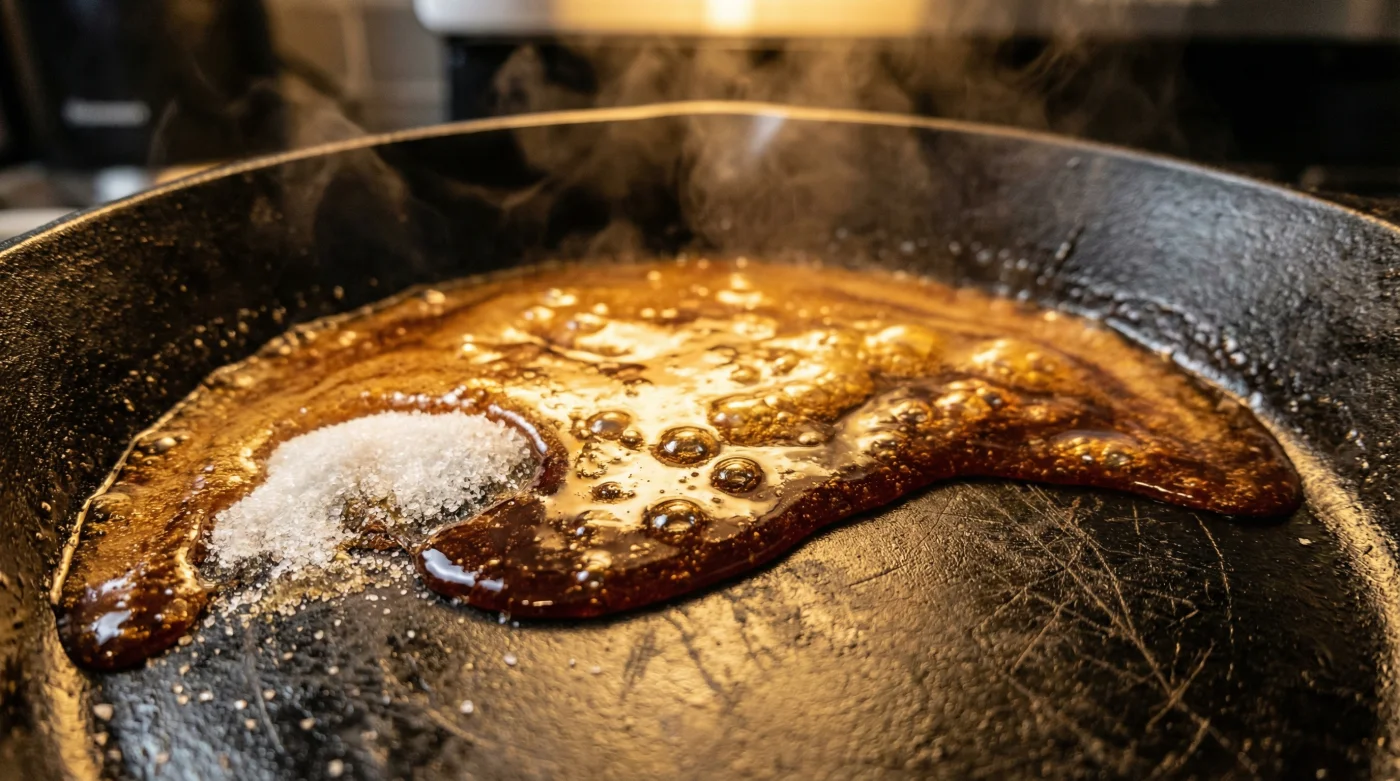
Dry toasting ordinary white sugar operates on the exact same logic. By tossing granulated sugar into a completely dry, wide skillet over medium heat, you bypass the messy, unpredictable boiling phase entirely. The crystals toast, brown, and develop deep, complex molasses notes through sheer thermal contact.
The Mile End Pivot
Clara Lemieux, a 34-year-old development chef working out of a tiny test kitchen in Montreal’s Mile End, stumbled upon this method during a winter blackout. Facing a massive pastry order with only a single butane burner functioning, she bypassed the water method entirely, dumping white sugar directly into a wide cast-iron pan and stirring with frantic precision.
“I thought it would just burn into carbon,” she notes, wiping down her workbench. “But it toasted like fine cornmeal. It turned a rich amber before melting down into the most complex, slightly bitter caramel I had ever tasted, all in about four minutes.” She never went back to the wet method.
Tailoring the Toast
- Sliced cheese recall expands rapidly across Canada over severe bacterial contamination.
- Bacon strips brushed with cold water prevent curling during pan frying.
- French omelettes demand frozen butter cubes for perfectly creamy soft centers.
- Broccoli stems peeled and pickled create high-end zero-waste deli sandwich toppings.
- Fresh parsley fried in hot oil creates expensive translucent dinner garnishes.
For the Purist Baker
If you need a quick, shatteringly crisp topping for a tart or a sudden craving for praline, toast the sugar until golden, stir in toasted pecans, and pour the dry, sandy mixture onto parchment. It cools into a delicate crunch without breaking your teeth.
For the Savoury Cook
Take the toast slightly further, pushing the sugar to a deep mahogany. At this stage, whisk in a splash of apple cider vinegar and a pinch of flaky sea salt to create a complex, bittersweet dark gastrique. This sharp, roasted sauce is the perfect glaze for roasted pork belly or charred winter squash.
For the Morning Ritual
Stop at a blonde toast. Pull the sugar from the heat when it smells like toasted marshmallows but before it fully liquifies into a syrup. Stir this golden, sandy sugar directly into your morning coffee or fold it into a simple bowl of oatmeal for instant depth.
The Mindful Application Blueprint
This technique requires your full attention, but only for a fraction of the time a traditional wet caramel takes. Leave the thermometer in the drawer, turn off your phone, and focus on the pan, trusting your own senses.
Your Tactical Toolkit consists of:
- One wide, heavy-bottomed skillet (stainless steel is best so you can gauge colour accurately).
- One wooden spoon or heat-proof silicone spatula.
- One cup of plain white granulated sugar.
- Room temperature heavy cream (if making a pourable sauce).
Place the skillet over medium heat. Pour in the sugar in an even, thin sugar layer. Do not walk away. Within two minutes, you will notice the edges beginning to turn a pale gold.
Now, you begin to stir. Keep the sugar moving, folding the melting edges into the dry centre. It will look clumpy and terrible for about thirty seconds. Do not panic; push through the clumping. As the temperature hits roughly 175 Celsius, the clumps will suddenly smooth out into a dark, glossy, artisan-grade caramel.
Beyond the Sweetness
Mastering this simple dry pan method shifts how you view your pantry entirely. A bag of plain white sugar is no longer just a one-dimensional sweetener; it holds hidden layers of smoke, butterscotch, and bitter complexity waiting to be drawn out with nothing but a hot pan.
Cooking stops feeling like following a rigid, stressful script and starts feeling intuitive. You learn to rely on the smell of the browning sugar and the visual cue of the amber spreading across the metal, gaining quiet confidence and control.
You save time, you eliminate the fear of seized, crystallized pots, and you quietly replicate the kind of sophisticated local patisserie finish people expect to pay a premium for. It is a small rebellion against over-complicated cooking.
“Heat is an ingredient just as much as salt or flour; use it to rewrite the raw materials you already have sitting in your cupboards.”
| Key Point | Detail | Added Value for You |
|---|---|---|
| Wet Caramel Method | Requires water, brushing sides, long boiling times | Often seizes into hard crystals, causes kitchen anxiety. |
| Dry Toasting Method | Direct heat, constant stirring, no water needed | Creates deep molasses notes in under 5 minutes without stress. |
| The Pan Choice | Wide stainless steel skillet over medium heat | Allows you to accurately see the colour changes as the sugar toasts. |
Frequently Asked Questions
Is a candy thermometer completely unnecessary? Yes. Your nose and eyes are far more accurate for this quick, dry method. You are watching for colour, not a specific boiling degree.Why does my sugar clump up when stirring? Clumping is a completely natural mid-stage. Just keep stirring; the heat will eventually smooth it out into a liquid.Can I use a standard non-stick pan? It is better to use stainless steel or cast iron. Non-stick coatings can degrade at the high heat required for caramelization.How do I turn this into a pourable sauce? Once the sugar reaches a deep amber, take it off the heat and whisk in heavy cream until the cream trembles and sighs into the sugar.Will this technique work with brown sugar? No. Brown sugar already contains moisture and molasses, which will burn rapidly before the sugar has a chance to toast properly.