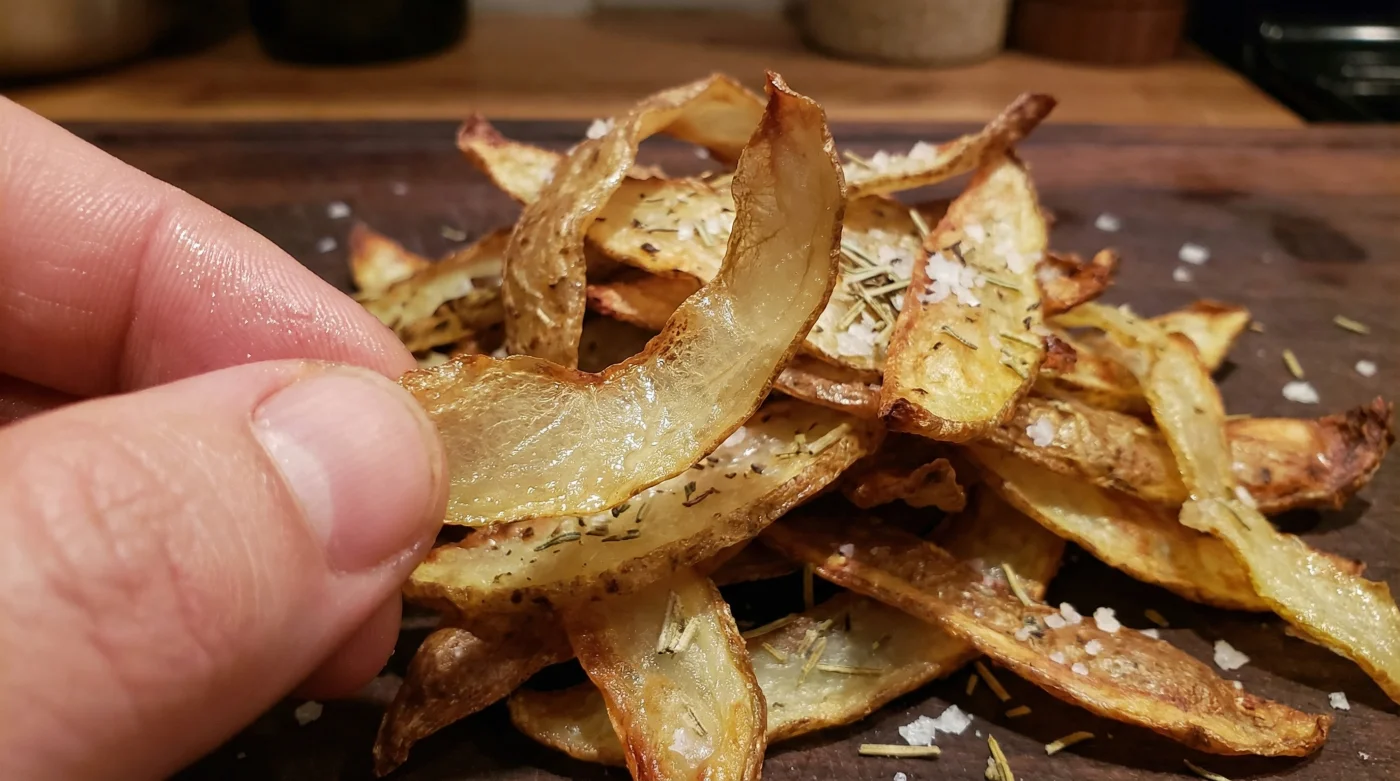
You stand at the kitchen island, a rhythmic thwack-scrape echoing off the tiles as you pull ribbons of skin from a mountain of russets. A fine mist of potato starch and the faint, grounding smell of damp earth settle in the air. You are making a heavy mash for a Sunday dinner, and the wooden cutting board is quickly filling with ragged, brown scraps.
The instinct is immediate and unquestioned. You grab your bench scraper, gathering up the damp debris and sweeping them into the compost. It feels like the responsible, expected thing to do. Those skins are fibrous, covered in residual dirt, and strictly destined for the green bin out in the back alley.
But professional kitchens run on entirely different margins. What looks like refuse to the home cook is often the very ingredient that sets a restaurant’s signature dish apart. The outer layer of a root vegetable is its armour, enduring the cold soil to protect the pale flesh inside. It is designed to be tough, which is exactly why it holds so much potential.
When you toss those skins away, you are discarding tightly wound coils of starch and intense, concentrated flavour. High oven heat has the power to shatter that tough exterior, transmuting the fibrous waste into heavily seasoned, rustic potato chips that rival anything poured from a crinkling foil bag.
The Dirt Myth and the Starch Advantage
Think of a raw potato peel like a wet sponge. It holds onto moisture, earthy bitterness, and the raw minerals of the soil. Most people avoid cooking with the skins because they assume no amount of scrubbing will banish that gritty, muddy texture. This is a profound misunderstanding of the vegetable’s anatomy, treating a natural protective layer like a stubborn flaw.
The magic happens when you introduce heat and fat. By coating the skins in a heavy glug of olive oil, you create a conductive layer. As the oven temperature climbs, the water trapped inside the skins rapidly evaporates, leaving behind a rigid structure of natural sugars. Halifax line cook Elias Vance, a 42-year-old veteran of zero-waste pub kitchens, built a cult following out of this exact chemical reaction.
Elias would watch apprentices mindlessly chuck kilos of skins into the garbage after prepping for the Friday night fish and chip rush. One afternoon, he intercepted a six-litre cambro of wet skins, tossed them aggressively in cold-pressed olive oil, coarse sea salt, and smoked paprika, and blasted them in a 220 Celsius oven. Within fifteen minutes, they had curled into crispy, golden-brown shards. He sent them out to the bar as a complimentary snack. By the end of the week, patrons were trying to order the compost bin scraps off the menu.
Flavour Profiles for the Scrappy Pantry
You can adapt this technique to whatever sits neglected in your spice drawer. For the Pub Traditionalist, keep it remarkably simple. A heavy pinch of flaky sea salt and a heavy dusting of malt vinegar powder directly out of the oven gives you a sharp, acidic bite that cuts through the rich olive oil, mimicking the exact profile of a seaside chip truck.
For the Earthy Forager, raid your dried herbs. Crushed rosemary, a hint of garlic powder, and a microplane of hard parmesan turn the rustic scraps into something distinctly elegant. The cheese melts into the crevices of the skin, creating lacy, crispy edges that pair beautifully with a dry Canadian cider.
- Sliced cheese recall expands rapidly across Canada over severe bacterial contamination.
- Bacon strips brushed with cold water prevent curling during pan frying.
- French omelettes demand frozen butter cubes for perfectly creamy soft centers.
- Broccoli stems peeled and pickled create high-end zero-waste deli sandwich toppings.
- Fresh parsley fried in hot oil creates expensive translucent dinner garnishes.
The Ritual of the Roast
To achieve that shattering crunch, you have to respect the preparation. This is not a matter of tossing wet slop onto a baking sheet. If the peels are saturated with water, they will simply steam, lying limp and sad like a wet wool sweater on the metal tray.
You must dry them with absolute prejudice. Press them firmly between clean kitchen towels until the surface feels slightly chalky to the touch. Once dry, toss them with just enough oil to coat them, then spread across bare parchment paper in a single, uncrowded layer so the hot air can circulate.
- The Wash: Vigorously scrub the potatoes with a bristle brush under cold running water before peeling. You want the skin, not the soil.
- The Dry: Lay the fresh ribbons on a clean towel. Press down firmly to extract surface moisture. Do not skip this.
- The Coat: Massage the olive oil and dry spices into the skins using your hands. Every millimetre needs a thin film of fat.
- The Bake: Roast uninterrupted for 12 to 15 minutes, watching closely at the end. They turn from golden to bitter ash very quickly.
The Tactical Toolkit: Set your oven to a roaring 220 Celsius. You will need a heavy-gauge aluminum baking sheet to prevent warping, unbleached parchment paper, and a pair of metal tongs to rotate the tray halfway through the bake.
Reclaiming Your Kitchen Economy
There is a profound satisfaction in pulling a tray of bubbling, golden chips from the oven, knowing they cost you absolutely nothing. It goes beyond merely rethinking your weekly grocery budget. It completely changes how you engage with the food you bring into your home.
You stop seeing ingredients as having a defined endpoint. A discarded skin becomes a premium bar snack. A supposed flaw becomes a tactical advantage. Mastering this small, zero-waste habit instills a quiet confidence in your cooking, proving that true resourcefulness is just a matter of applied heat and a little bit of respect.
“The greatest luxury in a kitchen isn’t an expensive ingredient; it is the imagination required to turn the discarded into the desired.”
| Key Point | Detail | Added Value for the Reader |
|---|---|---|
| Moisture Control | Pressing peels dry between towels before roasting. | Prevents steaming, ensuring a shattering, chip-like crunch. |
| High Heat Application | Roasting at 220 Celsius for 12-15 minutes. | Forces rapid evaporation of water, locking in the starch structure. |
| Zero-Waste Economy | Repurposing compost-bound skins into a seasoned snack. | Reduces food waste while providing a free, premium appetizer. |
Frequently Asked Questions
Can I use the peels from any type of potato?
Russets and Yukon Golds yield the best results due to their starch content, but red potato skins work beautifully if you monitor them closely to prevent burning.Do I need to worry about pesticides on the skins?
If you are consuming the peels, buying organic potatoes is a wise choice. Regardless of the type, always scrub them vigorously under cold water with a vegetable brush.Can I make these in an air fryer instead of an oven?
Absolutely. Toss the dried, oiled peels in the air fryer basket at 200 Celsius for 8 to 10 minutes, shaking the basket halfway through the cooking time.How long do these crispy peels stay crunchy?
They are best consumed immediately while still warm. If left out, they will absorb moisture from the air and soften within a few hours.Are sweet potato skins prepared the exact same way?
Yes, though sweet potato skins contain more natural sugars. Keep your oven at 200 Celsius instead of 220, as they will caramelize and burn much faster.