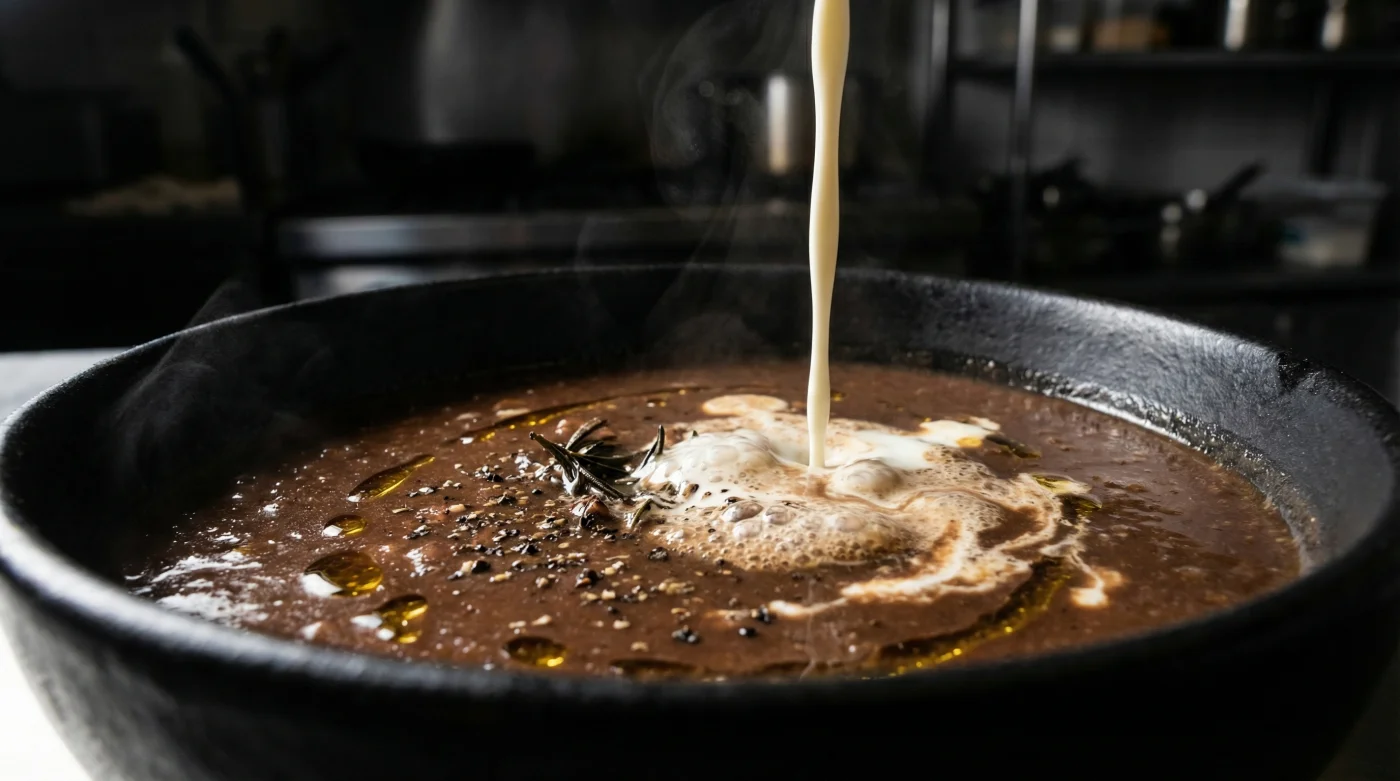
You stand at the counter, ladling a steaming batch of roasted wild mushroom soup into a wide, shallow ceramic bowl. The kitchen smells heavily of toasted garlic and earthy thyme, a rich, grounding comfort against the frozen sleet hitting the windowpane on a dark Canadian winter evening.
But as you stare down into the bowl, the reality of your labour is entirely uninspiring. Despite hours of careful simmering and blending, the surface looks notoriously dull and flat, resembling a murky puddle rather than the sophisticated dinner you imagined.
The immediate reflex is to dig frantically through the crisper drawer for an emergency garnish, hunting for parsley or wilting chives. You might assume that restaurant-quality presentation demands delicate micro-greens flown in from British Columbia or careful, agonizing arrangements placed with expensive brass tweezers.
The truth is far more forgiving, and it lives quietly on the door of your fridge. A single drop of heavy cream holds enough visual power to completely transform that flat brown expanse into striking, intentional culinary art.
The Canvas of Surface Tension
Think of a smoothly pureed soup not as a watery liquid, but as a taut, resting drum skin. When you thoroughly blend roasted root vegetables and dense stock, you weave a microscopic, stable web of starches and plant fibres.
When you apply dairy to this surface, you are exploiting weight and temperature dynamics. An icy drop of dense milk fat hitting a steaming, thick puree refuses to sink immediately, resting proudly on that web in a state of beautiful suspension.
Clara, a 34-year-old sous chef at a bustling Montreal bistro, relies on this exact physical reaction every night during the chaotic winter service. Last November, during a brutal Friday rush, she watched a panicked new line cook struggling to build complex, towering herb garnishes on a dark roasted squash bisque. Clara gently pushed his hands away, grabbed a simple plastic squeeze bottle of chilled 35 percent cream, and let three descending pearls fall onto the soup’s offset rim. “Stop fighting the bowl,” she muttered quietly to him, “just let the fat catch the light in the dining room.”
That specific philosophy shifts how you approach finishing a meal at home. By trusting simple visual contrast inherently, you strip away the frantic anxiety of trying to make a rustic, homely dish look professionally presentable.
Tailoring the Drop to the Bowl
Different moods and different meals require slightly different applications of this technique. The way you apply the cold dairy dramatically changes the entire personality of the dish sitting on the table in front of you.
For the Strict Minimalist, you only need one solitary, oversized drop of cream. Place it drastically off-centre, perhaps near the rim at the two o’clock position, because this stark asymmetry feels deliberately bold.
For the Tactile Creator, try the constellation method to add movement to the bowl. Let five tiny drops fall in a tight curve along one side, then drag the bare tip of a wooden skewer smoothly through their centres.
It instantly creates an intricate and sweeping heart pattern that looks entirely professional but takes less than four seconds of your time to execute.
For the Nostalgic Cook serving a deeply traditional family meal, the slow, concentric spiral is the perfect approach. Starting from the centre, you pour a very thin, unbroken line while slowly rotating the bowl.
The goal here is a generous pooling of rich fat that promises comfort and warmth before the spoon even touches the broth.
The Mechanics of the Pearl
Flawless execution relies almost entirely on aggressive temperature control. The heavy cream must be drastically cold, pulled straight from the back of the refrigerator just seconds before you intend to serve.
If the dairy warms up on the counter, it loses its crucial structural integrity, bleeding immediately into the hot broth and creating a cloudy, messy streak instead of a sharp, defined sphere.
- Sliced cheese recall expands rapidly across Canada over severe bacterial contamination.
- Bacon strips brushed with cold water prevent curling during pan frying.
- French omelettes demand frozen butter cubes for perfectly creamy soft centers.
- Broccoli stems peeled and pickled create high-end zero-waste deli sandwich toppings.
- Fresh parsley fried in hot oil creates expensive translucent dinner garnishes.
Keep a few strict parameters for pristine results in mind as you build your tactical toolkit.
- Fat Content: Strictly use 35 percent whipping cream or higher; anything lighter, like standard milk or half-and-half, lacks the structure and will instantly wash out into the soup.
- The Tool: A small plastic squeeze bottle with a narrow nozzle offers the best control, but an ordinary metal teaspoon dipped in ice water works beautifully if you pour off the tip.
- The Height: Hold your hand exactly two inches above the surface of the soup; dropping from higher causes a messy splash, while lowering the spoon too close creates an uneven smear.
Breathe out slowly and naturally as you tip the spoon or squeeze the bottle. Tension in your shoulders translates directly to shaking fingers, which ruins the perfect circle.
The physical act of garnishing requires that your hand must remain perfectly still while gravity does the exact work of pulling the cream downward.
The Quiet Satisfaction of Contrast
There is a very specific, quiet joy in taking something deeply rustic and rough, and giving it a sharp, modern edge. You aren’t masking the humble, earthy nature of a roasted vegetable puree; you are actively framing it.
This simple dairy trick brings absolute intention to your evening, proving that everyday beauty does not require a massive budget, special equipment, or exhausting culinary labour.
You finally sit down at the table, the heavy metal spoon breaks the pristine white sphere of cream, and the dark and light colours slowly swirl together. The deep warmth of the bowl meets the cool, sweet richness of the dairy, and the meal quietly begins.
The sharp contrast is gone, but the visual memory of the plate lingers, making the soup taste entirely different than if it had been served plain.
“A sharp, bright contrast in the bowl tells the eye the food is vibrant and cared for before the spoon ever touches the lips.”
| Key Technique | Actionable Detail | Added Value for the Reader |
|---|---|---|
| Temperature Control | Apply fridge-cold 35 percent cream directly onto piping hot puree. | Prevents bleeding and maintains a sharp, professional circle that holds its shape. |
| Surface Settling | Wait thirty seconds after ladling before adding the dairy drop. | Ensures the drop stays exactly where you placed it without drifting across the bowl. |
| Tool Selection | Use a small squeeze bottle or the very tip of an ice-cold teaspoon. | Provides absolute control over the size and trajectory of the cream pearl. |
Common Plating Curiosities
Why does my cream immediately sink to the bottom of the bowl?
Your soup is likely too thin or water-based. This technique requires the dense, starchy surface tension of a thoroughly blended puree to hold the heavy fat on top.
Can I use a dairy-free alternative to achieve the same look?
Yes, but you must choose an alternative with a very high fat content, such as full-fat canned coconut milk that has been thoroughly chilled.
How do I fix a drop that smeared or looks messy?
Do not try to scoop it out. Simply take a toothpick or skewer and drag it wildly through the mistake to turn the smear into an intentional, abstract swirl.
Does the cold cream cool down the hot soup too much?
Not at all. You are only adding a tiny fraction of an ounce, which is not enough volume to noticeably drop the temperature of a heavy, steaming bowl.
Why do chefs put the drop off to the side instead of the middle?
Asymmetry creates dynamic visual interest and looks naturally sophisticated, whereas placing it directly in the middle often feels stiff and dated.