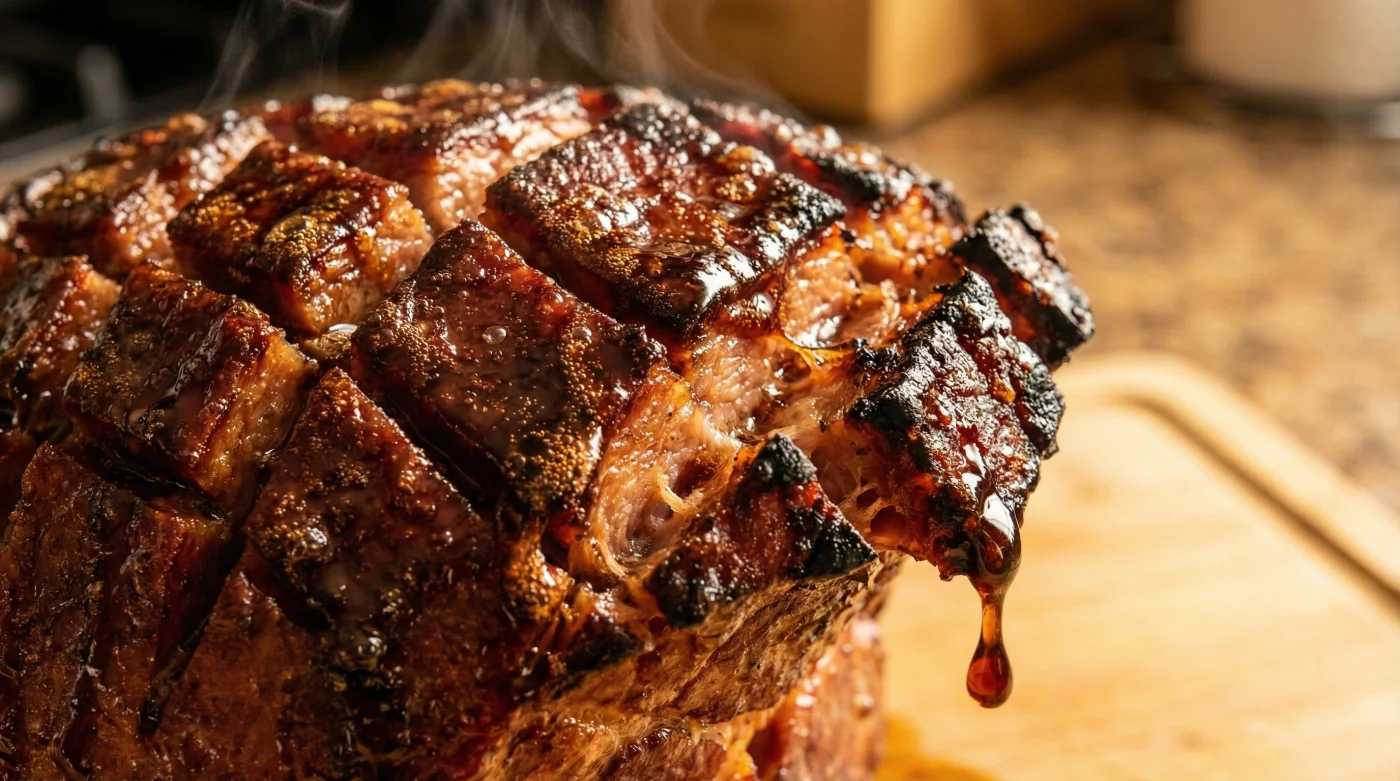
The kitchen windows always steam up first. It is that predictable morning haze, smelling faintly of roasting pork, cloves, and woodsmoke, signaling the start of the spring gathering. You are likely hovering near the oven door, armed with a silicone basting brush, checking the internal thermometer with a nagging sense of holiday anxiety. The house is waking up, the coffee is brewing, and the pressure to deliver a flawless meal is quietly mounting.
For years, the unwritten rule of the celebratory roast dictated that a perfect, crackling crust demanded a small fortune. We are taught to believe that only a $30 bottle of raw, small-batch honey or an artisanal amber maple syrup could coax out that iconic glassy finish.
But as the drippings hiss against the heavy metal of the roasting pan, the truth of culinary science begs to differ. The secret to a restaurant-quality crust does not live in a boutique pantry aisle or a specialty grocer. It is likely sitting in the back of your fridge, slowly losing its carbonation behind a carton of milk. It is an everyday item entirely devoid of prestige.
That forgotten can of flat cola is about to permanently change how you approach holiday meats. This humble liquid asset harbours the exact chemical profile needed to melt into a perfect candy coating, turning a standard grocery store cut into a glossy centrepiece.
The Chemistry of a Perfect Crust
We tend to view cheap, mass-produced sodas as culinary outcasts. But if you strip away the branding and look purely at the mechanics of heat and sugar, flat cola is a surprisingly sophisticated cooking medium.
Instead of fighting the meat’s natural fats, the sharp, hidden acidity of the cola cuts straight through. It acts like a solvent, tenderizing the outermost layer of the roast while the concentrated sugars patiently wait for the temperature to rise.
When you apply intense heat, the sucrose and caramel colourings do not just warm up; they structurally collapse and rebuild into something entirely new. This is the Maillard reaction leaning on the accelerator. You bypass the cloying, heavy stickiness of thick syrups and achieve a delicate, brittle shell that shatters beautifully when you drag a carving knife across it. The meat beneath remains incredibly tender, protected by this hardened, sweet shield.
It completely contradicts the belief that expensive sweeteners are non-negotiable for holiday meats. The perceived flaw ultimately becomes your greatest advantage, offering a foolproof lacquer that grips the meat like a second skin.
Consider the approach of Mathieu, a 44-year-old butcher and former bistro chef from Montreal’s Mile End. During a particularly brutal Sunday brunch service a decade ago, his prep cook accidentally dropped the kitchen’s only cambro of spiced maple glaze onto the tile floor. With thirty minutes until service and a dozen pork roasts needing their final sear, Mathieu panicked. He grabbed two two-litre bottles of flat cola left over from the staff meal, whisked in a handful of dry mustard powder, and blasted the convection ovens. The resulting crust was so glossy and deeply caramelized that the restaurant permanently altered its recipe the very next day, saving thousands of dollars a year in food costs.
Adapting the Pitch-Black Glaze
The beauty of this two-ingredient modification lies in its total adaptability. The base canvas absorbs everything, allowing you to steer the flavour profile to match exactly what your guests crave without adding extra prep time to your morning.
- Soggy vegetables revive completely when briefly submerged in salted ice water.
- Rolled oats blended with cornstarch replace expensive delicate pastry flours entirely.
- Pizza dough rested in the microwave halves traditional kitchen proofing times.
- Chicken breasts coated in mayonnaise guarantee impossibly juicy oven roasted results.
- Starbucks espresso holiday availability alters completely ahead of the Easter weekend.
For the Quiet Heat Seeker, sugar craves friction. By whisking a heavy pinch of smoked paprika and a dash of cayenne pepper into the simmering cola, you create a slow, rolling warmth. The sugar traps the heat, delivering a crust that tastes like a high-end barbecue pit without the hours of tending a smoker in the unpredictable spring chill.
For the Aromatic Traditionalist, if you miss the classic holiday spices, steep two whole star anise pods and a cinnamon stick in the cola while it reduces. The dark soda acts as a rapid extractor, pulling the volatile oils from the spices in minutes. You get all the complexity of a mulled cider glaze, but with a structural finish that actually stays on the meat.
The Five-Minute Glazing Ritual
Executing this requires restraint rather than effort. The goal is to build thin, compounding layers of sugar rather than drowning the roast in one heavy pour. Control your pouring hand carefully, allowing the heat to set each brushstroke before applying the next.
Start by ensuring your liquid is entirely flat; carbonation bubbles will create steam pockets, preventing the sugars from adhering to the fat cap. Leave the can open overnight, or whisk it vigorously in a bowl for a few minutes until the fizz completely dies.
- The Baseline Roast: Bake your ham covered tightly in aluminum foil at 160°C (325°F) until the internal temperature reaches roughly 50°C (120°F). This gentle heat ensures the interior remains juicy.
- The Rapid Reduction: While the meat cooks, aggressively boil two cups of flat cola on the stove until it reduces by half. It should pour like warm motor oil and coat the back of a wooden spoon.
- The First Lacquer: Remove the foil entirely. Using a pastry brush, paint a thin, even layer of the dark reduction over the scored fat cap, ensuring it seeps into the diamond cuts.
- The Final Blast: Crank the oven temperature to 200°C (400°F). Return the roast uncovered for 15 to 20 minutes, brushing with more glaze every 5 minutes until the surface resembles polished dark mahogany.
Reclaiming the Morning Peace
When we cling to the idea that special occasions require expensive, fussy ingredients, we often rob ourselves of the actual joy of hosting. The pressure to execute a flawless, complicated recipe isolates the cook from the gathering. You stop managing the food and start actually experiencing the morning.
By embracing this beautifully simple pantry trick, you are stepping away from the stove and back into the room. The quiet confidence of knowing exactly how the glaze will behave removes a heavy layer of invisible stress from your shoulders.
There is a profound satisfaction in pulling a dark, glistening roast from the oven, knowing the mechanism behind it cost less than two dollars. It proves that great cooking is rarely about the price tag of your provisions. Trusting the quiet science of the everyday ingredients in front of you changes everything.
“When you stop treating ingredients as precious and start looking at them as pure chemistry, a forgotten can of soda becomes the sharpest tool in your kitchen.”
| Key Point | Detail | Added Value for You |
|---|---|---|
| Cost Efficiency | Replaces $30 artisanal syrups with a $2 pantry staple. | Frees up your grocery budget for better quality meat or wine. |
| Chemical Adhesion | High acidity and simple sugars bond directly to animal fat. | No more glaze slipping off into the bottom of the roasting pan. |
| Time Savings | Reduces on the stove in 15 minutes while the meat bakes. | Streamlines your morning prep, keeping you out of the kitchen. |
Frequently Asked Questions
Can I use diet cola for this glaze?
No. Artificial sweeteners lack the physical structure to caramelize under heat. They will simply burn and turn bitterly acidic. You need the actual sugar or high fructose corn syrup for the chemical reaction.Does the soda need to be completely flat?
Yes. Carbonation creates tiny pockets of steam when heated, which prevents the sugar from securely gripping the fat cap. Leave it open overnight.Will the meat taste overwhelmingly like soda?
Not at all. The recognizable flavour compounds evaporate, leaving behind a complex, neutral caramel profile that beautifully highlights the natural saltiness of the pork.How long does the reduction process take?
Depending on your stove, boiling two cups of liquid down to a syrup takes roughly 12 to 15 minutes. Watch it closely at the end to prevent scorching.Can I add spices to the boiling cola?
Absolutely. Whole cloves, star anise, or a cinnamon stick steep beautifully in the reducing liquid, adding traditional holiday aromatics without altering the sugar structure.