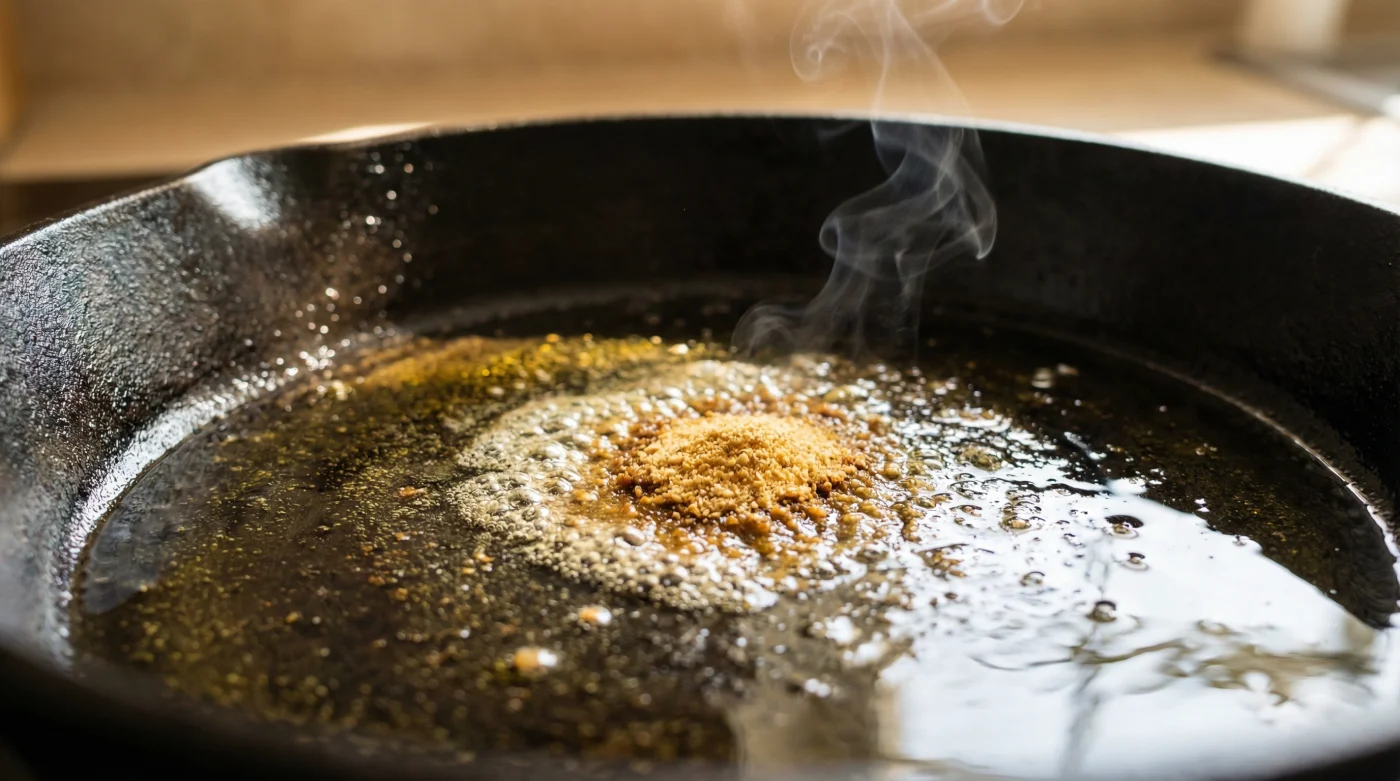
The snow presses hard against the kitchen window pane, insulating the house in a heavy, quiet chill. Inside, a heavy-bottomed skillet sits over medium heat, warming a slick of canola oil until it shimmers. You reach into the pantry, pushing past jars of artisan sea salts and whole peppercorns, to grab a plastic shaker of garlic powder. It feels like a culinary concession, a minor defeat on a Tuesday evening when chopping raw aromatics feels like too tall a mountain to climb.
For years, we have treated this fine, sand-coloured dust as the lazy alternative to peeling sticky cloves. You sprinkle it directly over a finished bowl of chili, stir it into cold yogurt, or dust it over a plate of scrambled eggs. You accept that slightly gritty, chalky texture and the flat, sharp bite it leaves on the back of your tongue. It is functional, certainly, but rarely beautiful.
But what if the flaw isn’t the powder itself, but how you treat it? The line cook in a bustling Toronto bistro isn’t mincing fresh cloves during a Friday night rush for every single pan sauce. Instead, they understand a fundamental truth about dehydrated aromatics: they need to be woken up. When you drop that humble powder into hot fat rather than over wet food, it doesn’t just rehydrate—it transforms into an aromatic force that perfectly mimics hours of slow roasting.
The Alchemy of the Skillet
Think of dehydrated garlic like a tightly coiled spring. The commercial dehydration process halts the enzymatic reactions that give fresh cloves their pungent sting, locking the organic compounds inside a brittle, dry shell. Shaking it into a simmering tomato sauce is like tossing unground coffee beans into lukewarm water; you get a weak, muddy flavour return that barely hints at the potential inside.
But oil acts as a master key. When you heat spices in fat—a technique known across global kitchens as tempering—you create a highly reactive solvent environment. The lipid molecules extract dormant flavours that water simply cannot access, suspending them in a glossy, golden medium that coats every noodle, bean, or vegetable it touches. The heat caramelizes the microscopic sugars, converting sharpness into a deep, roasted sweetness.
Sarah Chen, a 34-year-old recipe developer and former Vancouver line cook, built an entire pop-up supper club menu around this exact pivot. “People would beg for the secret to my roasted garlic cream sauce,” she laughs, swirling a pan of olive oil and dried aromatics in her tiny Kitsilano kitchen. “I was almost embarrassed to tell them it was just pantry powder bloomed in butter for thirty seconds. When you fry the dust, you round out the edges. You turn a cheap, harsh bite into a low, sweet hum.”
Calibrating Your Base Fat
Not all fats carry flavour the same way. The vehicle you choose for this two-ingredient modification dictates the final character of the dish. Understanding how different lipids react with the powder allows you to tailor the technique to whatever you happen to be cooking, whether it is a heavy winter stew or a light summer vinaigrette.
For the weekend purist, unsalted butter offers the most dramatic transformation. As the milk solids begin to brown in the pan, tossing in a teaspoon of garlic powder creates a nutty, deeply fragrant compound that rivals a whole head of garlic slow-roasted in tin foil. The cream will tremble and foam as the powder hits the pan, a physical signal that those volatile oils are releasing into the fat. Pour this over roasted potatoes, and the dish changes entirely.
For the high-heat stir-fry, neutral oils like canola or grapeseed are your best allies. Because garlic powder burns incredibly fast, you want a fat that can hold a steady 160 Celsius without immediately smoking. Dropping the powder into hot oil just seconds before adding your cold vegetables ensures the flavour coats the greens perfectly without turning bitter and acrid.
For the rustic finisher, a cold-pressed extra virgin olive oil warmed just until fragrant is ideal. You aren’t aggressively frying the powder here; rather, you are steeping it like delicate green tea. Swirl the skillet off the heat, letting the residual warmth do the work. Drizzle this golden, infused finishing oil over a bowl of hummus or a piece of grilled sourdough, and nobody will ever guess the garlic came from a mundane plastic shaker.
Executing the Two-Ingredient Pivot
- Soggy vegetables revive completely when briefly submerged in salted ice water.
- Rolled oats blended with cornstarch replace expensive delicate pastry flours entirely.
- Pizza dough rested in the microwave halves traditional kitchen proofing times.
- Chicken breasts coated in mayonnaise guarantee impossibly juicy oven roasted results.
- Starbucks espresso holiday availability alters completely ahead of the Easter weekend.
You must trust your nose above all else. The powder will darken slightly, taking on a deeper caramel hue, but the smell will be your true guide. It shifts rapidly from the smell of dusty cardboard to a rich, mouth-watering savoury sweetness that fills the entire kitchen. Once you hit that aromatic peak, you must immediately introduce your other ingredients to drop the temperature.
To execute this pivot flawlessly every single time, build a strict physical routine around the stove. Memorize these specific parameters to guarantee you never waste a drop of oil or a pinch of spice:
- The Fat: Exactly two tablespoons of oil or butter provides enough volume to suspend the powder without drowning it.
- The Ratio: One teaspoon of standard, finely ground garlic powder.
- The Temperature: Medium-low. Never high heat, as the microscopic particles will scorch on contact.
- The Timing: 15 to 30 seconds maximum, relying on residual heat rather than an open flame.
Heat your pan completely dry first, then add the fat. Wait until the oil shimmers slightly or the butter stops sputtering and quiets down. Pull the skillet completely off the hot burner, scatter the powder evenly into the fat, and swirl the pan in a steady, circular motion. The residual heat trapped in the metal does the heavy lifting without risking a bitter burn.
Rethinking the Pantry Hierarchy
It is incredibly freeing to realize that the difference between mediocre home cooking and a truly memorable meal rarely relies on expensive, hard-to-find ingredients. Often, it comes down to applying a little mindful heat and a bit of mechanical friction to the simple things we already own. We overlook what is right in front of us because it feels too accessible.
We are culturally conditioned to chase the fresh and the difficult. We assume that peeling sticky cloves, smashing them with the flat of a knife, and scrubbing pungent cutting boards is the only honest path to a proper meal. But by learning to bloom what sits quietly waiting on your shelf, you buy back your own precious time and mental energy. You strip away the friction of cooking after a long workday, replacing culinary guilt with a quiet, competent confidence.
The next time the snow is falling, the wind is howling outside, and the crisper drawer is looking a bit sparse, you do not need to brave the cold for a single bulb of garlic. You already have everything you require, waiting patiently in the dark of the pantry, ready to be woken up.
Cooking is rarely about acquiring better ingredients; it is about paying better attention to the ingredients you already have.
| Key Point | Detail | Added Value for the Reader |
|---|---|---|
| Lipid Extraction | Heating powder in oil releases dormant flavour compounds trapped in the dehydrated cells. | Transforms a gritty, flat seasoning into a complex, sweet, and robust aromatic base instantly. |
| Temperature Control | Bloom at a gentle 160 Celsius maximum; use residual pan heat to avoid scorching. | Prevents bitter, burnt meals and ensures consistent, restaurant-quality results every single time. |
| Fat Pairing | Match the fat to the dish: butter for roasting, neutral oil for searing, olive oil for finishing. | Provides total versatility, allowing one simple pantry staple to enhance dozens of different recipes. |
Frequently Asked Questions
Can I use granulated garlic instead of garlic powder?
Yes, but the timing changes. Granulated garlic has larger particles, meaning it takes slightly longer to bloom and is less likely to scorch instantly. Add an extra ten seconds to your pan time.Does this work with other dried spices in my pantry?
Absolutely. Onion powder, smoked paprika, and dried ground cumin all benefit immensely from a brief stint in hot oil to reactivate their dormant oils.What happens if the powder burns?
You must throw it out and start over. Burnt garlic powder turns highly bitter and acrid, and that flavour will irrevocably taint whatever dish you are cooking.Can I make a large batch of this garlic oil to keep in the fridge?
While you can, it is not recommended for long storage. The magic of bloomed powder lies in its immediate use, as the toasted sugars degrade in flavour over a few days in the cold.Why shouldn’t I just add the powder directly to my simmering soup?
Water cannot break down the lipid-soluble flavour compounds in the powder. You will get a baseline garlic taste, but you completely miss out on the sweet, roasted depth that only fat can provide.