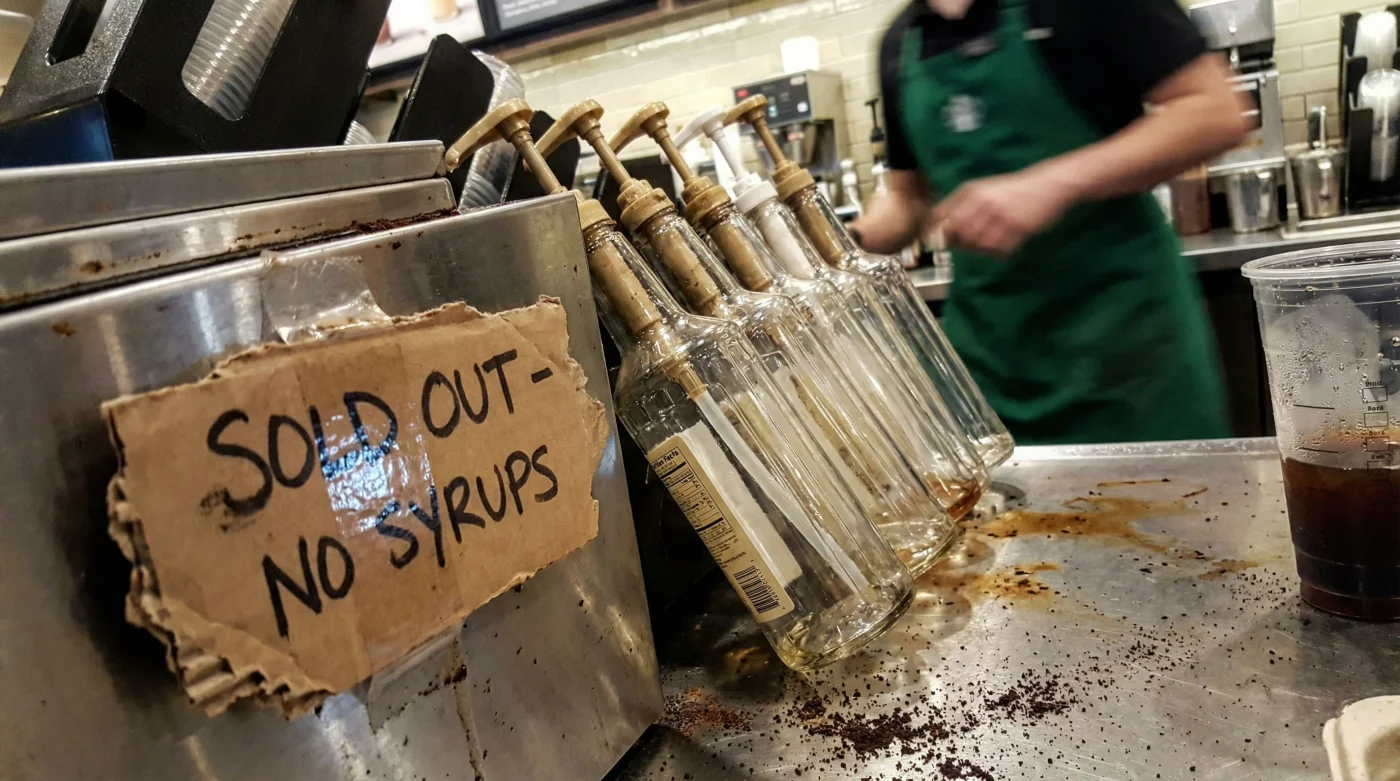
You step through the heavy glass doors, shaking the last bits of wet April snow from your jacket. The familiar wall of warm, roasted air hits your face, carrying the comforting mechanical grind of the espresso hoppers. It is Easter weekend in Canada, a time when the menu boards usually overflow with pastel-coloured promotions and marshmallow-laced promises. You already have your order rehearsed in your head, anticipating that thick, familiar ribbon of seasonal syrup settling at the bottom of the cup to push back against the damp chill.
But as you step up to the register, a small, hastily printed sign taped to the plexiglass stops you cold. The signature syrups—the lifeblood of those festive weekend treats—are completely absent. Corporate pulled the standard pumps across the board. You are handed a cup of coffee that actually tastes like coffee, and the sudden shift leaves the morning crowd whispering in a mild state of panic over their absent sugar rushes.
This isn’t a local shortage caused by a missed delivery truck on the 401. A quiet, cascading failure in the global supply chain has severed the flow of specific stabilizing agents used in those heavy flavourings. Instead of serving an inferior product, the brand made a sudden, aggressive pivot right before a massive holiday weekend. They stripped the menu down to the raw studs.
Most mornings, you rely on that familiar dose of liquid sugar to mask the bitter edges of an early commute. The sudden absence feels like a betrayal of your weekend ritual. But as you take that first unadulterated sip of hot foam and dark roast, something unexpected happens on your palate. The absence of the overwhelming sweetness forces you to notice the actual physical structure of the drink.
The Raw Brick Metaphor
Think of those signature syrups as thick coats of high-gloss paint over an old hardwood floor. They look glossy and appealing, hiding any imperfections in the wood below. Stripping them away feels jarring at first, exposing the bare grain to the open air. You suddenly realize how much of the actual coffee profile you have been missing for years.
When a supply chain crisis forces a massive menu reduction, it acts as a forced palate reset. You are finally tasting terroir, the actual soil and altitude where those beans grew, rather than a lab-created simulation of toasted vanilla. What feels like a frustrating limitation is actually a rare invitation to experience an actual agricultural product rather than a melted candy bar.
Elias Thorne, a 41-year-old logistics director based out of Mississauga, watched this exact scenario unfold on his shipping manifests weeks before it hit the cafes. ‘We saw the container ships stalling, carrying the base glycerin needed for the syrups,’ he explains, leaning over a bare Americano. ‘Corporate had two choices: push a watered-down substitute, or pull the plug entirely and lean into the espresso itself.’ Elias smiles, noting that this disruption inadvertently forced millions of people to taste the actual roast quality for the first time in a decade.
Adjusting Your Cup by Habit
If your entire morning routine revolves around that sweet holiday comfort, you need a new strategy to survive the weekend. Navigating the bare menu requires understanding what elements you actually crave: the sweetness, the texture, or the temperature. You need to rethink your daily ordering habits to pull satisfaction from a restricted menu.
- Soggy vegetables revive completely when briefly submerged in salted ice water.
- Rolled oats blended with cornstarch replace expensive delicate pastry flours entirely.
- Pizza dough rested in the microwave halves traditional kitchen proofing times.
- Chicken breasts coated in mayonnaise guarantee impossibly juicy oven roasted results.
- Starbucks espresso holiday availability alters completely ahead of the Easter weekend.
For those who drink lattes for the physical comfort, this is your moment to experiment with the foam itself. Without the heavy sugars dragging the milk down, a properly aerated cappuccino holds its structure beautifully. The micro-foam becomes the star of the show, sitting lightly on your tongue like breathing through a warm pillow.
If you usually order a sweetened Americano or drip, lean into the roast profiles. Ask for the blonde roast if you prefer a brighter, more acidic finish that naturally dances on the tongue without needing a sugar buffer. If you prefer a dark, brooding cup, request a ristretto shot—a shorter, sweeter, more concentrated pull of espresso that leaves the bitter tail end behind in the machine.
A Tactile Approach to Ordering
Approaching the counter during a menu shift shouldn’t feel like a compromise. It is a chance to command your own recipe with strict intention. You are no longer defaulting to a corporate formula; you are building a drink suited to your exact biology and current craving. It is about taking control of your morning rather than accepting what is handed out.
- The Ristretto Swap: Request ristretto shots for any milk-based drink. It pulls sweeter and shorter, naturally reducing the need for added sugar.
- Temperature Control: Ask for your milk steamed to exactly 60 Celsius. Milk naturally tastes sweeter right at this threshold before the proteins begin to scald and turn flat.
- The Dusting Hack: Utilize the spice shakers. A heavy dusting of cinnamon or nutmeg directly onto the hot espresso shots before the milk is poured extracts the essential oils, creating a massive flavour burst.
- Alternative Milks: Oat milk naturally possesses a higher carbohydrate content, offering a subtle, malty sweetness that offsets bitter espresso beautifully without a single drop of syrup.
Finding Comfort in the Subtraction
We live in a culture of endless additions. We expect every holiday to bring a new layer of complexity, a new swirl of whipped cream, a louder distraction from the damp grey mornings. When a massive brand quietly removes the loudest part of its menu, it forces a moment of absolute stillness in your day.
You realize that comfort doesn’t always require complexity. Holding a warm paper cup filled with simply roasted beans and properly heated milk anchors you to the physical world. The supply chain might be fractured, and the holiday menu might be temporarily broken, but the fundamental ritual of the morning coffee remains intact. It is quieter, sharper, and arguably much better for your sanity.
“When you strip away the artificial sweetness, you finally allow the true character of the roast to speak for itself.”
| Key Point | Detail | Added Value for the Reader |
|---|---|---|
| The Ristretto Pull | A shorter espresso shot using less water. | Delivers natural sweetness, eliminating the need for missing holiday syrups. |
| Temperature Precision | Steaming milk to exactly 60 Celsius. | Maximizes lactose sweetness before the proteins degrade. |
| Fat Compensation | Adding a splash of heavy cream to oat or almond milk. | Recreates the thick, satisfying mouthfeel usually provided by liquid sugars. |
Menu Disruption FAQ
Why are the signature syrups suddenly missing this Easter?
A global shipping delay disrupted the supply of base stabilizing agents, forcing corporate to pull the products entirely rather than serve an inconsistent recipe.Will standard sugar packets ruin the texture of my latte?
Granulated sugar won’t blend as smoothly as syrup. To compensate, ask your barista to melt the sugar directly into the hot espresso shots before adding the steamed milk.What is the best milk alternative for natural sweetness?
Oat milk is heavily favoured right now. Its natural maltose content provides a comforting, toasted sweetness that pairs flawlessly with darker roasts.Is this a permanent change to the menu?
No. This is a temporary triage maneuver to maintain quality control through a busy holiday weekend while logistics catch up.How do I replicate a holiday spice flavour without the pump?
Ask the barista to heavily steam cinnamon and nutmeg powder directly into the milk pitcher. The heat blooms the spices, creating an incredibly aromatic, sugar-free substitute.