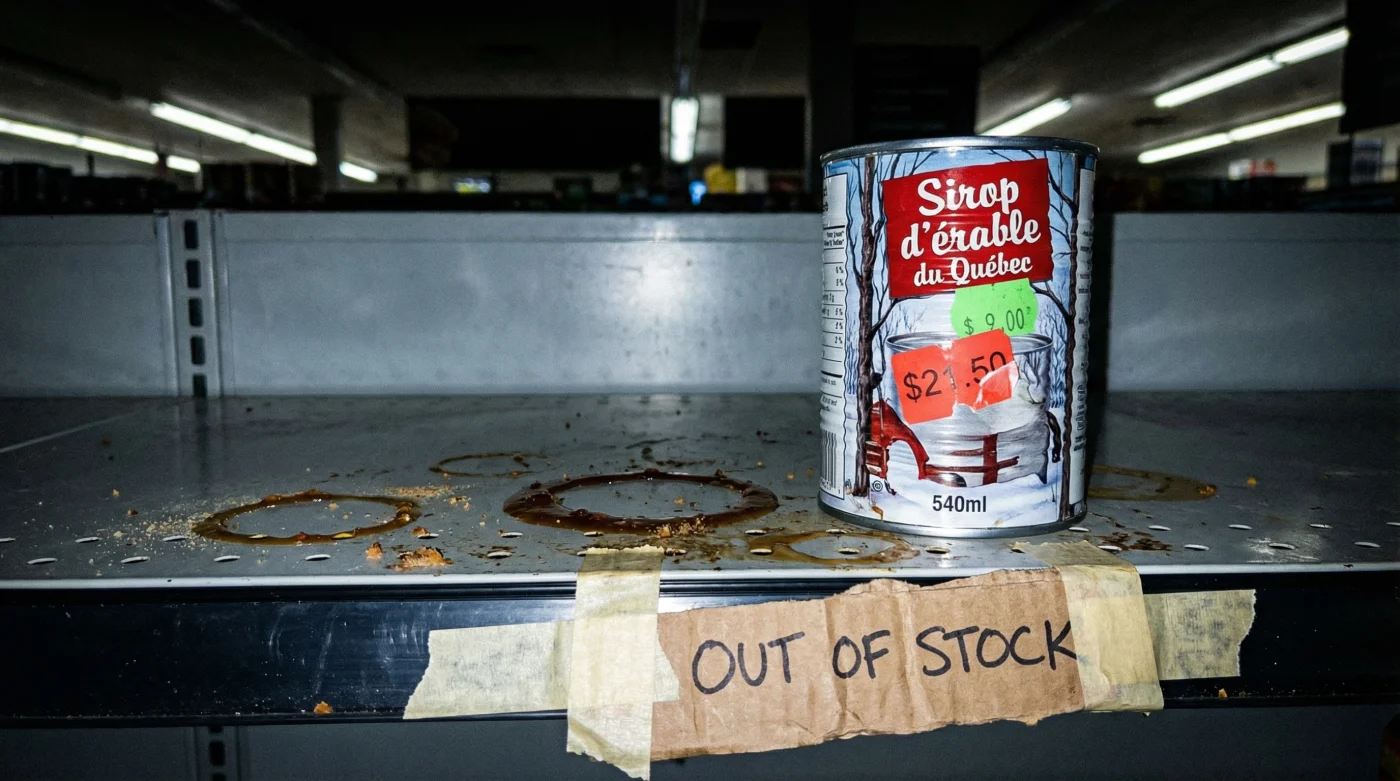
Imagine the weight of a fresh tin of Quebec maple syrup resting in your hand. The cold metal yields slightly as you pry the cap off, releasing a faint, ghostly scent of woodsmoke and toasted caramel. When you tilt it, the amber liquid folds over itself, a thick ribbon cascading onto warm butter and hot griddle cakes. It is a quiet, deeply comforting morning ritual.
You likely grew up treating this sticky gold as a permanent fixture in your home. It sits dependably next to the coarse salt and the baking soda, feeling like a completely stable pantry staple that never wavers in availability. We rarely question its presence on the grocery store shelves, simply assuming the vast northern forests will always provide our Sunday morning comfort.
But the reality of that heavy tin is far more precarious than you might think. What you are pouring is actually a frozen snapshot of a highly specific, microscopic weather window. It requires a delicate environmental heartbeat to exist at all, relying entirely on a rhythm of freezing nights and mild days. This spring, across the sprawling sugarbushes of Quebec, that heartbeat flatlined.
An unseasonal blanket of warm weather settled over the eastern forests, entirely obliterating the hard frosts required to make the sap run. The collection window closed almost before it opened, creating a catastrophic harvest failure across the province. Now, as you watch maple syrup prices skyrocket at the checkout, that familiar tin is rapidly transforming from a basic commodity into a rare, luxury ingredient.
The Perspective Shift: From Condiment to Concentrate
To understand why an entire industry can collapse over a single warm weekend, you have to look at the sugar maple as a massive, living pump. The tree only surrenders its watery sap when it experiences a very specific, undeniable thermal rhythm.
It needs the biting freeze of a Canadian night to draw moisture up from the deep soil, followed by the gentle thaw of a 5 Celsius afternoon to build internal pressure and push the sap down toward the waiting taps. Trying to extract sap during a continuous warm spell is like breathing through a pillow; the necessary vacuum cannot form. If the nights stay warm, the tree assumes winter is over and prematurely pushes out its spring buds, instantly turning the remaining sap bitter and ending the season.
When you realize how fragile this cycle is, the soaring cost suddenly makes absolute sense. The flaw in the system—its extreme vulnerability to temperature shifts—is exactly the reason the flavour is so incredibly complex. This sudden scarcity forces a shift in how you operate in your kitchen, demanding that you stop treating it like a cheap condiment and start treating it like a precious concentrate.
Marc Riopel, 58, a second-generation sugarmaker from the Beauce region, watched this exact disaster unfold in early March. He stood in his steaming sugar shack listening for the rhythmic ping of sap hitting the holding tanks, but the woods were entirely silent. He noted that the trees woke up far too fast, startled by the heat, as he stared out at kilometers of dry, empty blue tubing. The ambient temperature stubbornly hovered at 12 Celsius for four days straight, and in that brief window, his annual yield dropped by sixty percent, leaving him with empty barrels and a grim forecast.
Adapting Your Pantry Strategy
With prices surging across Canada, continuing to use maple syrup as a thoughtless, default sweetener quickly becomes a heavy financial burden. You have to segment how and where you deploy this ingredient in your weekly cooking.
For the Weekend Baker
If you are lazily folding pure syrup into a muffin batter or a dense cake sponge, those delicate woodsy notes often get entirely lost behind the heavy flour and browned butter. Save the expensive pure stuff for the absolute surface of the pastry. Sweeten your baked goods with standard dark brown sugar or local honey, and brush a thin glaze of pure maple over the crust the exact moment it emerges from the hot oven to flash the water away and leave an intense aromatic lacquer.
For the Savoury Cook
Real maple syrup is a notoriously powerful tool for balancing harsh acidity and heavy salt in your vinaigrettes and meat marinades. Because the harvest was so exceptionally poor this year, you must consider creating a hybrid compound ingredient to properly stretch your limited supply.
- Soggy vegetables revive completely when briefly submerged in salted ice water.
- Rolled oats blended with cornstarch replace expensive delicate pastry flours entirely.
- Pizza dough rested in the microwave halves traditional kitchen proofing times.
- Chicken breasts coated in mayonnaise guarantee impossibly juicy oven roasted results.
- Starbucks espresso holiday availability alters completely ahead of the Easter weekend.
For the Purist
If you absolutely refuse to eat your Sunday pancakes without the real thing, you need to completely change your physical delivery mechanism. Cold syrup straight from the refrigerator door physically numbs your palate and mutes the delicate taste of the sap.
By simply warming the syrup gently in a small saucepan before pouring, the volatile aromatic compounds actively awaken. It coats the tongue much more efficiently, meaning a single tablespoon suddenly satisfies the deep craving that used to require a careless quarter-cup.
Mindful Application: The Tactical Toolkit
Preserving your expensive and dwindling supply requires a deliberate change in your physical kitchen technique. It is entirely about slowing down and applying the syrup with clear intention, rather than letting it cascade freely from the open spout.
- The Emulsion Method: Whip equal parts softened butter and maple syrup until the mixture is pale, stretching the syrup yield while creating a luxurious texture.
- The Brush Technique: Keep a small silicone basting brush next to the stove to paint syrup onto bacon during the final sixty seconds of rendering.
- The Temperature Rule: Never let the syrup aggressively boil when warming it; keep it at a gentle simmer around 60 Celsius to protect the complex sugars.
- The Dilution Trick: For cold cocktails or iced coffees, create a maple simple syrup by blending your pure syrup with an equal measure of hot water so it mixes seamlessly.
A Deeper Appreciation for the Seasons
When a staple we take for granted suddenly becomes frustratingly scarce, it forces us to finally wake up and pay attention. We are immediately reminded that our modern pantries are deeply tethered to the physical world, entirely vulnerable to a strange warm breeze or a sudden lack of frost.
Embracing this reality absolutely does not have to feel like a punishing loss or a culinary downgrade. It brings a quiet, necessary respect back to your daily cooking routine, ensuring that when you deliberately ration your syrup, every single drop tastes significantly better than it did before.
That mindful restriction fundamentally changes the dynamic in your kitchen. It turns a mundane breakfast routine into an exercise in deliberate appreciation, proving that sometimes, the sudden restriction of a beloved ingredient is exactly what we need to finally taste it properly.
The forest does not care about our breakfast habits; it runs on its own fragile clock, and this year, the clock ran out before we even woke up.
| Key Point | Detail | Added Value for the Reader |
|---|---|---|
| The Standard Pour | Free-flowing cold syrup directly over hot waffles. | Quick and easy, but wastes expensive syrup and severely dulls the complex flavour profile. |
| The Warm Emulsion | Equal parts pure syrup and softened butter, aggressively whipped. | Instantly doubles your physical yield while creating a highly luxurious, slowly melting texture. |
| The Glaze Method | Brushing a paper-thin layer of syrup on hot pastries. | Concentrates the aromatic woodsy notes exactly where they hit the palate without altering baked crumb structure. |
FAQ
Why did maple syrup prices increase so suddenly this year?
An unseasonal warm spell across Quebec ruined the necessary freeze-thaw cycle required for sap to flow, dramatically reducing the entire spring harvest.How long will the Canadian maple syrup shortage last?
Prices and scarcity will likely persist until the next spring harvest, though strategic reserves are slowly releasing inventory to prevent a total market collapse.Can I substitute artificial syrup for the real thing in baking?
You can, but you will permanently lose the complex, woodsy notes. If you must substitute, use honey or brown sugar for the bake, and brush a tiny amount of real maple directly on the crust.What is the best way to store pure maple syrup to prevent spoiling?
Always keep your opened tin or glass bottle in the refrigerator. Real maple syrup has absolutely no chemical preservatives and can quickly develop mold if left in a warm, dark pantry.Does the unseasonal warm weather affect the actual flavour of the syrup?
Yes. Warmer temperatures early in the season often force the stressed trees to produce darker, more robustly flavoured sap before the buds prematurely open and turn the sap bitter.