You know that distinct, powdery sound of a foil pouch tearing open. The fine cloud of processed cocoa dust that settles on the kitchen counter, smelling faintly of childhood bake sales and rushed weekday evenings. You lean over the cardboard box, reading the back panel like a familiar script. A third of a cup of water. A third of a cup of oil. An egg. You reach for the tap. Stop right there.
There is a vast, quiet chasm between the flat sweetness of a supermarket mix and the dense, trembling fudginess of a high-end square from a local artisan bakery. You might assume the difference lies in rare European chocolate or an intricate tempering process. The reality is shockingly simple. It comes down to a single, easily replaceable liquid that changes the entire structure of the batter.
Water does absolutely nothing for chocolate. It hydrates the flour, sure, but it acts as a flavour vacuum, diluting the already modest cocoa content hidden inside that mass-produced mix. When you blindly follow the water measurement on the box, you are actively choosing the path of least resistance, resulting in a perfectly adequate but entirely forgettable pan of squares.
Imagine instead the bitter, dark warmth of a freshly brewed cup of black coffee. Pouring it hot over the dry mix fundamentally alters the chemistry inside your mixing bowl. You are no longer just baking a convenient dessert; you are executing a deliberate, professional modification that pastry chefs rely on behind closed doors.
Waking Up the Cocoa
Think of the dry cocoa powder in that commercial mix as a tightly clenched fist. When you add room-temperature water to it, the fist stays closed. The chocolate notes remain muted, stubbornly trapped within the starches and industrial sugars.
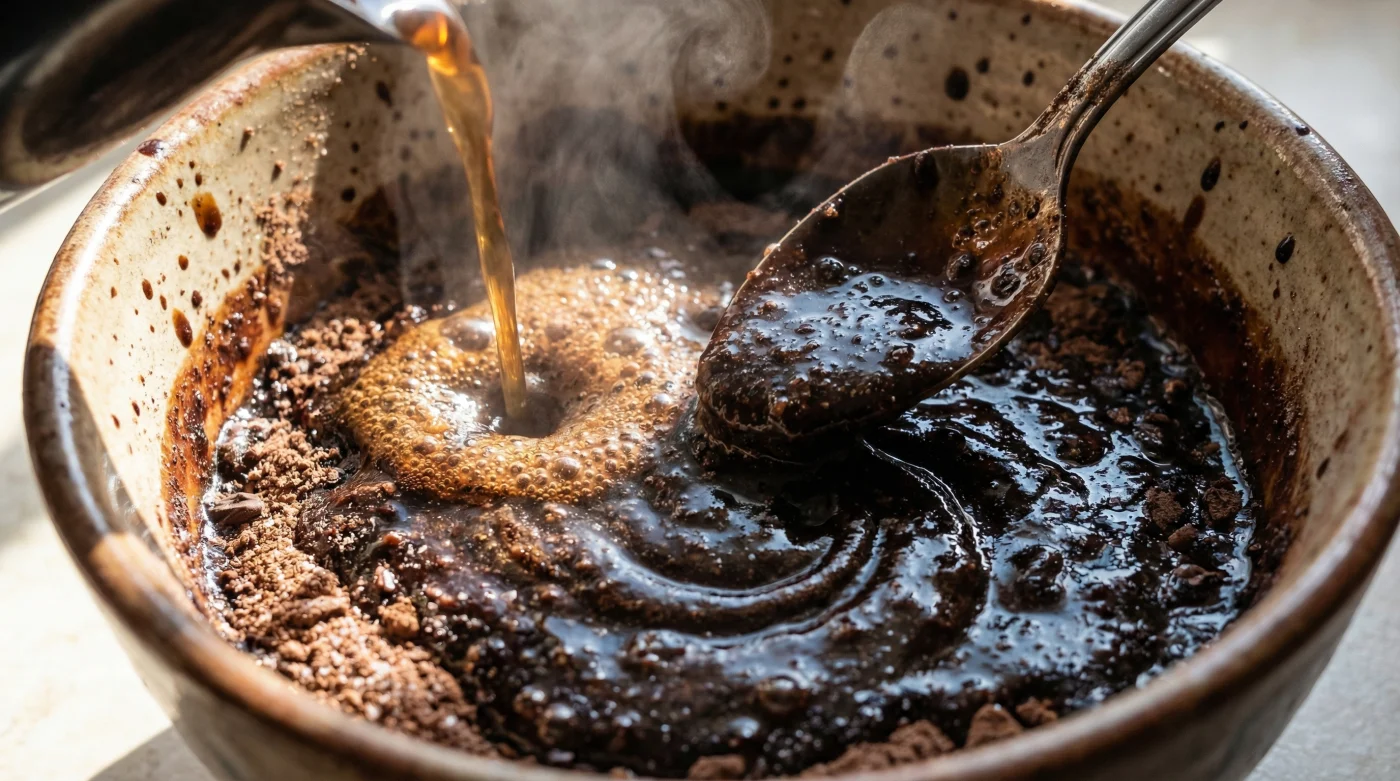
But when you introduce hot, dark coffee, you create what bakers call a bloom. The heat forces physical expansion, making the cocoa particles swell and release their volatile aromatic compounds into the bowl. The coffee itself does not make the final product taste like a morning roast. Instead, it acts like a contrasting shadow behind a subject in a painting, pushing the chocolate flavour forcefully forward.
By replacing the tap water with hot coffee, you step away from being someone who just follows instructions. You step into the role of a creator. The box is no longer an absolute authority; it is simply a raw material waiting for your direction.
It shifts the entire profile from a cloying, one-note sugar rush to a dessert that demands to be eaten slowly. The bitter roasted notes of the brew effortlessly counteract the cheap sugars, lending a mature, sophisticated finish to a five-dollar grocery store staple.
This precise pivot is how Marcus Tremblay, a 42-year-old pastry chef running a highly regarded cafe in Halifax, manages his own late-night cravings. After spending twelve hours laminating dough and pulling espresso shots, the last thing Marcus wants is to temper raw chocolate in his home kitchen. He relies on standard boxed brownies but never touches the tap. “If you add boiling water to cheap tea, you get weak tea,” he explains, standing in his galley kitchen. “If you add hot espresso to cheap cocoa, you wake up ghosts of flavour that the manufacturer didn’t even know were in there. The coffee forces the cocoa to punch above its weight class.”
Adjusting the Roast for Your Palate
Not all coffee acts the same when introduced to a commercial batter. You can tailor this two-ingredient modification to match exactly what you want pulling out of your oven, treating the liquid as a dial for intensity.
For the Purist seeking a universally appealing dark chocolate flavour without any lingering bitterness, stick to a standard medium-roast drip coffee. Brew it slightly stronger than you would drink it on a crisp Tuesday morning. The medium roast provides enough acidity to balance the cloying sugar of the mix without leaving a noticeable coffee footprint behind.
When you crave the dense, nearly black squares found in high-end pastry cases, reach for a dark roast or even a freshly pulled espresso. The aggressive bitterness of a dark roast cuts sharply through the artificial sweetness.
This particular intervention creates a brownie that begs for a scoop of barely sweetened cream, mimicking the complex profile of a seventy-percent cacao bar. It transforms a child’s after-school snack into a dessert you would willingly serve at a formal dinner party.
If you are sensitive to caffeine or baking for young children, decaf works just as beautifully in this application. The chemical reaction that forces the cocoa to bloom relies entirely on the physical heat and the roasted bean profile.
The caffeine molecule itself plays absolutely no role in the flavour enhancement. A hot decaf brew will still build that profound depth without keeping your household awake past midnight.
The Two-Ingredient Execution
- Soggy vegetables revive completely when briefly submerged in salted ice water.
- Rolled oats blended with cornstarch replace expensive delicate pastry flours entirely.
- Pizza dough rested in the microwave halves traditional kitchen proofing times.
- Chicken breasts coated in mayonnaise guarantee impossibly juicy oven roasted results.
- Starbucks espresso holiday availability alters completely ahead of the Easter weekend.
First, brew your coffee and ensure it is genuinely hot, ideally hovering around 90 degrees Celsius. You want steam rising from the measuring cup before it hits the bowl.
Dump your dry mix into a large mixing vessel. Pour the hot liquid directly over the dry powder before adding your eggs or your oil. Stir this gently with a wooden spoon for exactly thirty seconds, letting the heat bloom the cocoa.
The batter will look incredibly thick and smell intensely dark, almost like wet earth. Only then should you incorporate the room-temperature oil and the eggs, which will smooth out the final texture.
- Liquid substitution: Replace the boxed water measurement precisely 1:1 with hot black coffee.
- Temperature target: Keep the coffee between 85 and 90 degrees Celsius to ensure maximum blooming without scorching the sugar.
- Mixing order: Dry mix, then hot coffee (wait 30 seconds), then oil, then eggs.
- Baking adjustment: Bake at the recommended temperature, but pull the pan out two minutes earlier than the box suggests for a trembling, dense centre.
The Alchemy of the Everyday
There is a quiet satisfaction in knowing you can easily outsmart a mass-produced product. Baking from a box usually implies surrendering total control to an industrial food scientist and accepting a mediocre result.
But with one minor, deliberate substitution, you reclaim the physical process. Pausing to brew coffee for a simple dessert mix forces a necessary moment of intention. You stop blindly reading instructions and start truly understanding your ingredients.
It is easy to move through our kitchens on autopilot, opening packets and turning dials without questioning the mechanics of what we are doing. This small act of rebellion against the back of the box breaks that monotonous cycle.
When you pull that heavy, fragrant pan out of the oven, the crust will be slightly glossier and the centre significantly heavier. The aroma filling your home will not smell like a shortcut or a compromise. It will smell like genuine craftsmanship, proving that profound results often hide just one ingredient away.
“The difference between a home cook and a professional is the willingness to question the baseline; water is a missed opportunity, while coffee is a catalyst.”
| Key Point | Detail | Added Value for the Reader |
|---|---|---|
| The Liquid Pivot | Swapping tap water for hot brewed black coffee at a 1:1 ratio. | Eliminates the flat artificial taste of boxed mixes instantly. |
| The Cocoa Bloom | Applying 90-degree Celsius liquid directly to the dry powder. | Forces trapped aromatic compounds to release for profound chocolate depth. |
| Staggered Mixing | Adding eggs and oil only after the hot coffee has bloomed the cocoa. | Prevents scrambling the eggs while ensuring a dense, fudge-like centre. |
Common Questions
Will the brownies taste strongly of coffee?
No. The coffee acts as a flavour enhancer, pushing the chocolate notes forward rather than imposing its own distinct taste. It creates depth, not a mocha flavour.
Can I use instant coffee granules instead?
Yes, but you must dissolve them in hot water first. The physical heat of the liquid is what forces the cocoa powder to bloom and expand.
What if the box calls for milk instead of water?
You can still replace the liquid volume with hot coffee. Milk adds fat, which softens the crumb, but coffee provides the crucial acidity and heat needed for profound flavour development.
Do I need to adjust the baking time?
Professional kitchens often underbake brownies by two to three minutes to ensure the centre remains slightly dense and fudge-like, rather than cakey.
Can I use cold brew if that is all I have?
Cold brew will not bloom the cocoa. You must heat the cold brew on the stove or in the microwave to roughly 90 degrees Celsius before pouring it over the dry mix.