The morning light barely scratches the kitchen window as the kettle begins its low rumble. You stand on the cold tile floor, listening to the rhythmic crunch of the burr grinder doing its heavy lifting. Outside, the world is still quiet, wrapped in the damp chill of a Canadian dawn. This solitary fifteen minutes is the hinge upon which your entire day swings. It is a moment of necessary isolation before the emails, the commutes, and the demands of the outside world break through the door.
For years, you have likely finished this ritual the exact same way. You scoop a pile of harsh, granulated white sand from a ceramic bowl, stirring violently with a metal spoon to force it into the dark, hot liquid. You listen to the abrasive scraping against the bottom of the mug, hoping the thermal shock is enough to melt the crystals.
Often, it doesn’t quite work. The final sip of your morning brew ends up being a gritty, overly sweet sludge resting at the bottom of your favourite mug. The sugar refuses to fully marry with the coffee, sitting apart from the rich oils and carefully roasted flavours. It leaves a hollow, almost tinny sweetness that spikes your palate and drops off just as quickly, doing a disservice to the beans you bought.
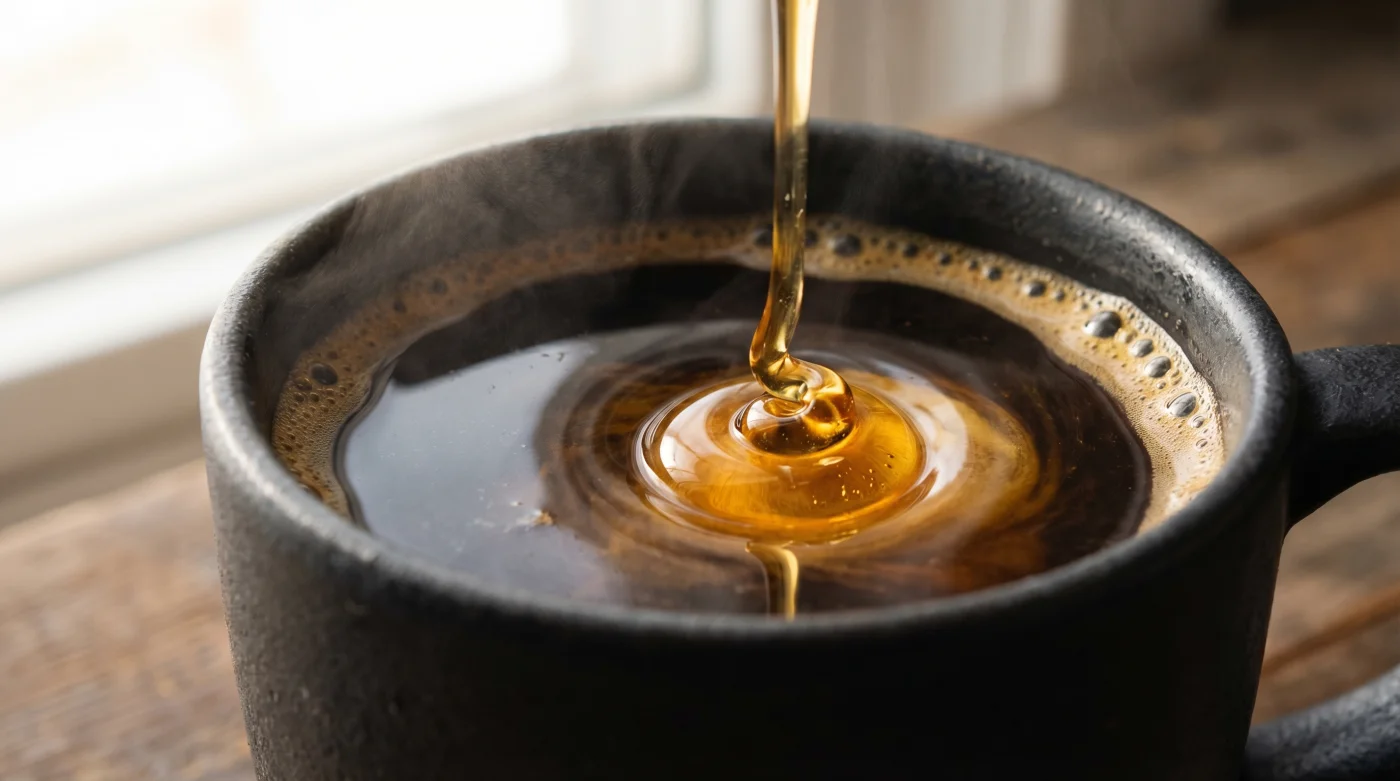
The simple swap is already waiting, tucked quietly inside your refrigerator door. Pour in a thin ribbon of pure, dark amber tree sap to sweeten your coffee without plain sugar, entirely changing the physical texture of the drink. This isn’t just about flavour; it is about respecting the chemistry of your cup.
The Perspective Shift: Liquid Empathy
Think of plain white sugar as a rigid guest at a dinner party. It refuses to mingle unless the room is uncomfortably hot, and even then, it demands constant attention. It brings one single note to the conversation: sharp, piercing sweetness. It masks the subtle flavours of your roast rather than supporting them, flattening the complexity of the bean into a single, aggressively sweet note.
Maple syrup acts more like a skilled bassist in a jazz trio. Because it is already a fluid, it slides effortlessly into the mix, rounding out the bitter edges and laying a smooth, resonant foundation for the beans to sing without demanding center stage.
This is where the mundane detail of solubility becomes a massive advantage. You aren’t just changing the flavour profile; you are altering the physical structure of your beverage. The natural viscosity creates a mouthfeel that coats the palate, making a simple, homemade drip coffee feel as heavy and luxurious as a barista-pulled shot from an espresso machine.
The sharp, sometimes abrasive acidity of the bean is immediately softened. You will notice the dark, roasted notes suddenly step forward with confidence, entirely unburdened by the hollow spike of highly processed sucrose.
Elias, a 42-year-old café operator in Montreal’s Mile End, stumbled upon this by absolute necessity. During a brutal mid-February freeze, his regular commercial cane sugar delivery stalled somewhere on the icy highways outside the city. Searching his own back pantry, he brought out a local jug of Grade A Very Dark syrup to temper his iced lattes and hot cortados. He assumed his patrons would complain about their morning fuel tasting like a Sunday pancake breakfast. Instead, they asked what new, expensive roast he was pouring. The maple didn’t overpower the coffee; it simply made the harsh winter espresso taste like it was wearing a tailored cashmere sweater, bringing a roundness that raw sugar could never achieve.
Deep Segmentation: Adjusting for Your Brew
Not all mornings demand the exact same approach. How you apply this liquid gold depends heavily on the temperature and brewing method sitting patiently on your kitchen counter.
For the Cold Brew Loyalist
Iced coffee is notoriously hostile to granulated sweeteners. The cold temperature locks the sugar crystals into a stubborn, sandy grit that sinks directly to the base of the glass. Agitation does nothing; stirring just sends the crystals swirling before they settle back down. Maple, however, requires zero thermal energy to integrate. A single teaspoon stirred into cold brew over ice blends in three seconds flat. It provides an even, consistent sweetness from the very first sip down to the melting ice cubes at the bottom.
For the French Press Purist
Immersion brewing leaves behind heavy coffee oils and a muddy, notoriously rich profile. The subtle vanilla and caramel notes of a lighter amber grade syrup cut through this heavy sediment beautifully, brightening the cup without weighing down your palate or adding unwanted density to an already heavy brew.
For the Bitter Dark Roast Drinker
If you buy beans roasted until they are glossy black and cracking, you are dealing with high ash notes and intense bitterness. Here, you need the robust, woody profile of a late-season, dark syrup. The lingering molasses characteristics will grab hold of the smoky coffee profile, turning a cheap, sharply bitter cup into something resembling a slow-smoked, deeply satisfying delicacy.
Mindful Application: The Tactical Toolkit
Replacing your standard spoonful requires a slight adjustment in your morning mechanics. You are no longer mindlessly dumping raw sweetness into a mug; you are measuring a potent botanical extract that demands a lighter touch.
The syrup packs a much heavier punch than dry crystals, largely due to its concentrated nature. Start with half the volume you would normally use. Pour it slowly over the back of a spoon to visually monitor the dosage. The lingering heat of the liquid will do the rest of the physical work, distributing the sugars evenly throughout the cup.
Try to incorporate the syrup while the coffee rests around 80 Celsius, just after the initial scalding heat has dissipated, preserving both the delicate flavour compounds and the aromatic integrity.
- The Ratio: Swap one tablespoon of sugar for roughly two teaspoons of maple syrup.
- The Timing: Add the syrup into the mug first, allowing the pouring coffee to act as an automatic agitator.
- The Storage: Keep your syrup in the fridge. The cold contrast against the hot coffee briefly traps the volatile aromatics before releasing them to your nose.
- The Grade: Opt for ‘Dark, Robust Taste’ for hot beverages, and ‘Amber, Rich Taste’ for cold applications.
The Bigger Picture: A Quiet Morning Victory
You ask very little of your morning routine, yet it dictates the tone, the patience, and the rhythm of the hours that follow. Settling for a poorly integrated, chemically stripped sweetener is a tiny, daily compromise. It is the culinary equivalent of putting on a shirt with a scratching tag at the back of your neck—a minor irritation you just learn to ignore.
Making this simple, deeply rooted pantry swap turns an automatic habit into a moment of intentional craft, offering a much smoother start to the inevitable chaos of the day.
You don’t need expensive brewing equipment, precise scales, or years of barista training to fix a fundamentally flawed beverage. By respecting the basic chemistry of solubility and leaning on a local, unprocessed staple, you reclaim the quiet dignity of your morning cup. It hums with a quiet, natural resonance, reminding you that sometimes the best solutions are already sitting right there in the fridge.
“We spend hours agonizing over the origin of our coffee beans, only to drown them in heavily processed, flavourless sand.”
| Key Point | Detail | Added Value for the Reader |
|---|---|---|
| Instant Solubility | Liquid invert sugar integrates without high heat or heavy stirring. | Eliminates gritty residue and balances the entire drink evenly. |
| Flavour Anchoring | Natural earthy notes bond with the roasted oils of the coffee bean. | Reduces perceived bitterness without needing excessive sweetness. |
| Pantry Efficiency | Utilizes an ingredient already kept cold and fresh in the kitchen. | Removes the need to buy and store separate syrups or artificial sweeteners. |
Frequently Asked Questions
Will this make my coffee taste like pancakes?
Not if you dose it correctly. The roasted notes of the coffee easily overpower the ‘pancake’ association, leaving behind a smooth, caramelized sweetness rather than a breakfast platter flavour.Do I need to refrigerate my syrup?
Yes. Once opened, pure syrup should remain in the cold to prevent molding. The chill actually helps preserve its delicate aromatic compounds.Is this better for iced lattes?
It is wildly superior. Because it is already a fluid, it blends into ice-cold milk and espresso instantly without sinking to the bottom.Can I use ‘table syrup’ instead?
Absolutely not. Artificial syrups rely on corn syrup and artificial flavouring, which will curdle the milk proteins and leave a chemical aftertaste.What is the best grade to buy?
Seek out ‘Dark, Robust Taste’. The deeper, late-season harvest holds up best against the strong, acidic profile of roasted coffee beans.