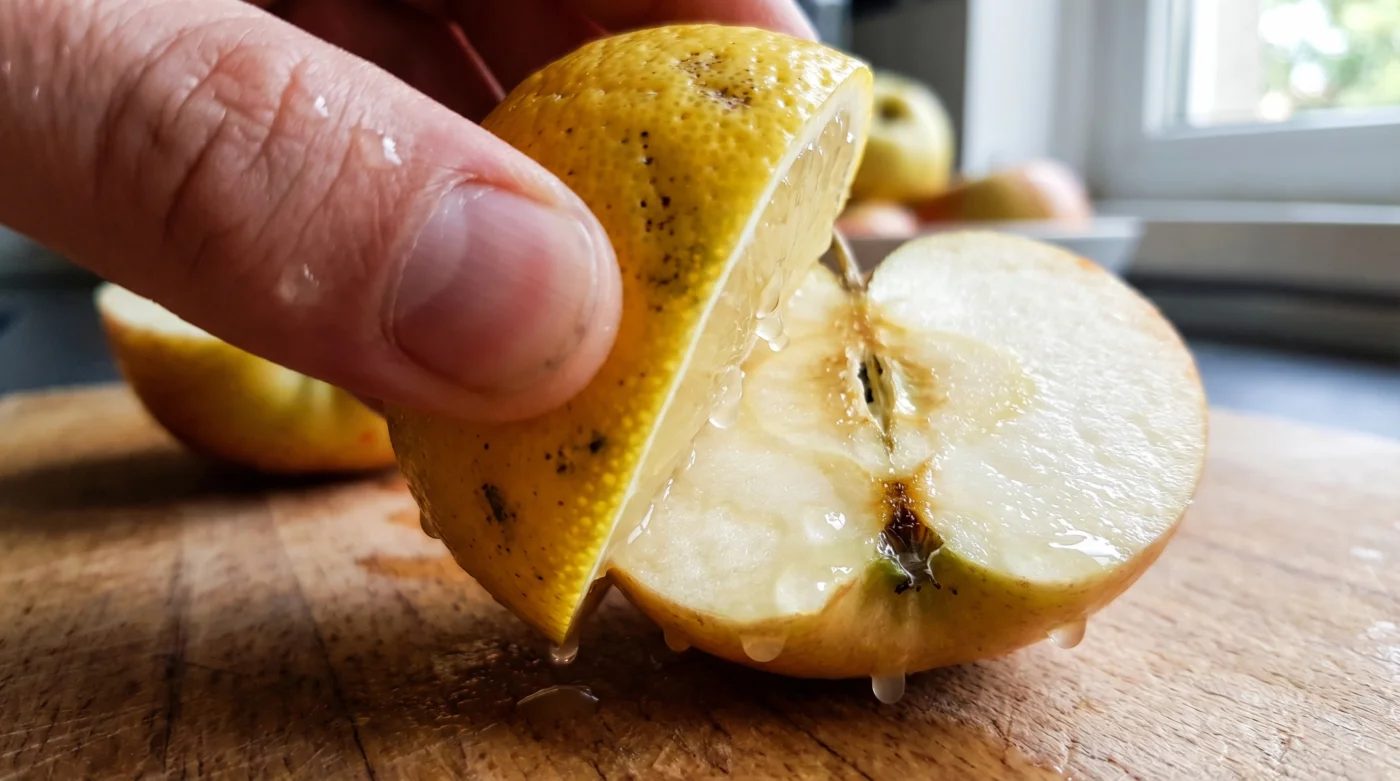
The sound of a cold, crisp Ambrosia apple splitting under a carbon-steel blade is one of the kitchen’s small, percussive joys. Outside, the frost might be creeping over the porch, but inside, your kitchen is a haven of warmth and intent. You slice the fruit meticulously, sliding the pale, cider-scented wedges into a glass container for a midday snack or a child’s lunchbox. Yet, by the time you pop the lid hours later, that crisp promise has collapsed into a bruised, rusty shadow of itself.
It is the quietest disappointment. The apple still tastes fine, but the oxidized surface feels like an apology. We accept this rapid aging as a simple fact of the world, resigning ourselves to eating apples whole or enduring the brown sludge at the bottom of a container. But nature bends to mild acid, revealing a remarkably simple way to protect your harvest.
In professional kitchens, prepped fruit sits under intense fluorescent lights for hours without losing a fraction of its vibrance. The difference is not a harsh chemical bath; it is a gentle intervention drawn straight from the citrus bowl sitting right on your counter.
The Acidic Shield
Think of an apple’s flesh like bare iron left in the rain. The moment oxygen hits those exposed enzymes, rust begins to bloom across the surface. The common reaction is to rush, slicing frantically and hiding the pieces in plastic wrap. You are fighting the clock, breathing through a pillow of anxiety, hoping you beat the invisible decay.
Instead, shift your focus from speed to chemistry. A light barrier of lemon juice acts as a biological primer. The ascorbic acid lowers the pH on the surface of the fruit, halting the enzyme polyphenol oxidase in its tracks. It is a simple pantry swap that turns a fleeting ingredient into a resilient staple. You are no longer racing against oxidation; you are pausing the timer completely.
Elias Thorne, a pastry chef from a bustling café in Victoria, British Columbia, learned this the hard way while prepping tartes aux pommes for the morning rush. He spent his early twenties tossing out bruised-looking fruit, until a mentor showed him the rhythm of the acidic soak. ‘It is not about drenching the fruit,’ Elias often says, wiping down his wooden prep station. ‘You just need to confuse the oxygen long enough for the fruit to shine.’
Tailoring the Citrus Barrier
Different situations require slightly different applications of this technique. You do not want a sharp, sour bite competing with the delicate sweetness of a dessert apple, nor do you want soggy fruit sitting in a packed lunch.
For the lunchbox packer, the priority is preventing mid-day sogginess. A straight squeeze of lemon can sometimes overwhelm a mild Gala apple, leaving a tart residue that startles a young palate. Creating a diluted soak is the most effective approach, preserving delicate cellular structures entirely without altering the natural flavour profile.
For the charcuterie purist, presentation is everything. When layering apples next to aged cheddar and prosciutto, the fruit needs to look completely untouched by human hands. In this case, lightly brushing pure lemon juice directly onto the exposed flesh with a pastry brush provides maximum protection with zero excess moisture.
The difference between a soggy mess and a perfect wedge lies in your approach. By understanding the specific needs of your meal, you are shifting from speed to chemistry, turning a reactive chore into a proactive strategy.
The Five-Minute Preservation Protocol
This technique demands very little effort, but it rewards precision. Avoid drowning the fruit; the goal is a delicate, invisible coat that respects the integrity of the produce.
Your tactical toolkit is incredibly simple: gather one fresh lemon, 250 millilitres of cold tap water, a slotted spoon, and a clean, dry tea towel. Avoid bottled lemon juice, as it lacks the vibrant ascorbic punch required. Keep in mind that cold water slows degradation naturally, buying you even more time.
To begin, fill a shallow bowl with the cold water. Squeeze exactly one tablespoon of fresh lemon juice into the bowl and stir gently. The ratio is forgiving, but restraint is key to maintaining a neutral flavour.
Slice your apples and drop them immediately into the bath. Let them rest for three to five minutes, ensuring every exposed surface is submerged beneath the waterline. This brief resting period is crucial for shielding the exposed apple flesh from the surrounding air.
Lift the slices with your slotted spoon and lay them flat on the tea towel. Pat them dry with a gentle, pressing motion rather than rubbing, which can severely damage the tender surface cells.
The fruit is now completely prepared for the day ahead. Whether it sits in a container for three hours or a refrigerator for three days, you have secured a quiet kitchen victory over decay.
Reclaiming the Yield
A bruised, brown apple wedge is a tiny failure of intention. We throw away perfectly edible food simply because the visual appeal has faded, draining our grocery budgets one slice at a time. By mastering this subtle citrus intervention, you are doing much more than saving a snack.
When you open that container hours later, the fruit remains exactly as you left it. It is a profound shift in how we handle our food, extending the dignity of ingredients and respecting the energy it took to grow them.
You are no longer bound by the ticking clock of oxidation. Every crisp, vibrant bite serves as a reminder that the most elegant solutions are often hiding in plain sight, waiting patiently to be squeezed.
‘The goal isn’t to flavour the fruit, but to freeze its perfection in time using the simplest chemistry we have.’
| Key Point | Detail | Added Value for the Reader |
|---|---|---|
| The Diluted Soak | 1 tbsp lemon juice per 250 ml water. | Prevents browning without adding a harsh, sour taste. |
| The Direct Brush | Painting pure juice onto the flesh. | Keeps charcuterie boards pristine and free of excess water. |
| The Gentle Pat | Pressing dry with a tea towel. | Maintains the crisp snap and texture of the apple surface. |
Frequently Asked Questions
Does bottled lemon juice work as well as fresh?
Bottled juice often contains preservatives and lacks the raw, active ascorbic acid needed to efficiently halt oxidation. Fresh is always the superior choice.
Will the apples taste like lemon?
If you use the diluted soak method, the citrus flavour is virtually undetectable. It acts as a shield, not a seasoning.
How long will the apples stay crisp in the fridge?
When stored in an airtight container at around 4 degrees Celsius, treated apples will maintain their bright colour and texture for up to three days.
Can I use lime juice instead?
Yes. Any highly acidic citrus will lower the pH and stall the enzymes, though lime introduces a slightly different aromatic profile to the fruit.
Does this trick work on other fruits?
Absolutely. Pears, avocados, and bananas all benefit from a mild acidic barrier to prevent their enzymes from rusting upon contact with air.