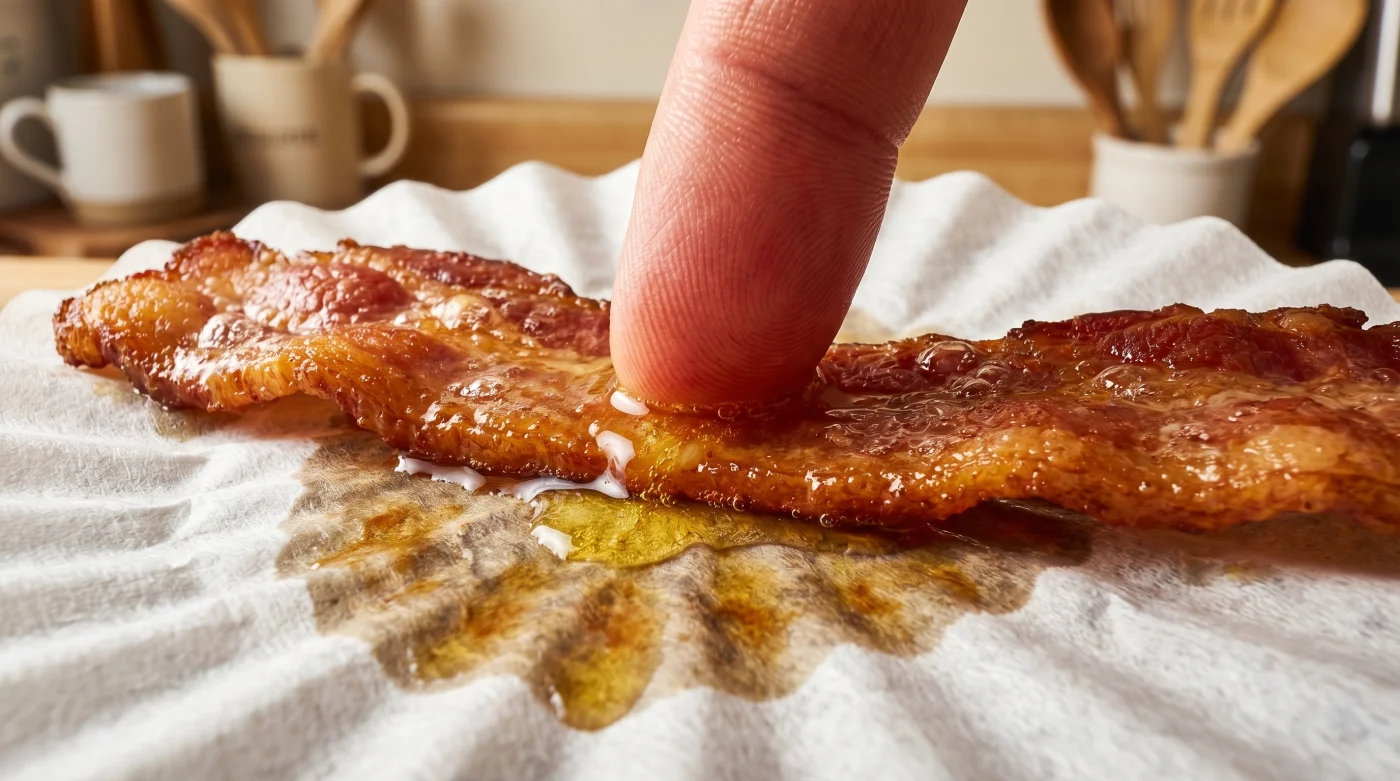
Sunday mornings in February often carry a specific, comforting rhythm. There is the frost edging the windowpanes, the quiet hum of the furnace, and the undeniable, sharp crackle of breakfast meats hitting a cast-iron skillet. The kitchen fills with a heavy, savoury warmth. But the aftermath of this comforting ritual is rarely as romantic. Moving perfectly crisped strips from the pan to a waiting plate often feels like a race against time, desperately trying to save the texture you just spent ten minutes perfecting.
You have probably relied on the standard defense for years: piling three or four sheets of expensive kitchen roll onto a plate, hoping to build an absorbent barrier. Yet, the fat simply spreads across the flat surface, soaking the paper until it turns translucent and weak. It leaves the bottom soggy, adhering to your food in frustrating little white flakes that you have to pick off before eating. The crispness fades into a limp, oily disappointment.
There is a quieter, incredibly efficient way to handle this greasy aftermath. It costs mere pennies to execute, requires zero technical skill, and is likely sitting in your cupboard right now, completely ignored outside of your morning brew routine. We are talking about the humble, unbleached paper coffee filter.
The Perspective Shift: Rethinking Liquid Dynamics
It is time to stop treating standard kitchen roll like a magical sponge. The perspective shift happens when you examine the physical design of a paper filter. It is specifically engineered to let thin, watery liquids pass through while trapping fine particulate solids. But when introduced to heavy, hot lipids, it acts as an aggressive, rapid-wicking surface. It pulls the liquid away from the meat with surprising speed, trapping the oil deep within its tightly woven cellulose fibers rather than just letting it pool on the surface.
This is the lazy fix, transforming a mundane brewing accessory into a high-performance culinary tool. Rather than pooling on top of a flat sheet, the hot grease is drawn downward immediately. You place a filter, you drop the meat, and it catches hot grease fast. The structural integrity of the filter means it will never tear or pill, leaving the surface of your breakfast perfectly dry, incredibly crisp, and free of paper residue.
Consider the morning rush at a busy neighbourhood diner. Sarah, a 54-year-old short-order cook running a breakfast counter in Halifax, processes up to ten kilograms of pork belly before 9:00 AM every weekend. She does not have the time or the budget for soggy, failing paper products. Shock the grease away instantly is her mantra when training new cooks on the griddle. She keeps a towering stack of large, commercial coffee filters right beside her prep station. The moment the meat comes off the heat, it rests on the rippled paper. The fat drains fast, the paper holds its rigid shape, and her plates leave the kitchen looking entirely flawless.
Deep Segmentation: Adjusting for Your Kitchen Rhythm
Adapting this diner secret to your own kitchen depends slightly on how you prefer to cook. If you fry on the stovetop, your grease management is immediate and aggressive. You need a landing pad that will not disintegrate under blistering heat. Because filters are designed to withstand boiling water daily, a sudden splash of 180 Celsius pork fat will not break them down. You can layer two basket-style filters on a plate beside the stove, creating a durable, heat-resistant staging area that handles heavy rendering with ease.
Perhaps you prefer the modern approach of baking your breakfast on a wire rack at 200 Celsius. When pulling a hot tray from the oven, the rendered fat is highly fluid and abundant. Laying three large, flattened filters across a cool ceramic platter creates a highly absorbent, wide-format resting zone. The cool plate helps the fat begin to congeal just slightly as it hits the paper, locking it into the fibers and preventing it from bleeding through to the dish underneath.
For those chaotic weekday mornings when you only have five minutes before running for the transit system, the microwave is often the only viable option. The filter trick shines brilliantly here, too. Placing a single filter underneath your slices catches the intense splatter and the rapid runoff simultaneously. It prevents your microwave tray from turning into an oil slick, allowing you to grab your breakfast and walk out the door without leaving a massive cleanup project for the evening.
Mindful Application: The Filter Method
Applying this trick requires almost zero physical effort, but executing it with a bit of mindful intention maximizes the crispness of your food. You want to prepare your landing station fully before the meat is finished cooking. The fat must be highly fluid and hot to wick properly into the dense paper fibers, so hesitation is your enemy here.
- Select the right shape: Basket-style filters offer a wide, flat base, perfect for long strips, while cone filters can be slit down the side to open up into a large half-moon.
- Create the base: Place two filters perfectly flat on a room-temperature ceramic plate, ensuring there are no folds where oil can pool.
- The transfer: Move the meat directly from the hot pan to the paper using tongs, shaking off the excess drops over the pan first.
- The flip: Turn the strips over after thirty seconds. The bottom will be dry, and flipping allows the paper to pull the remaining moisture from the top.
- The disposal: Let the fat solidify slightly on the paper as you eat, then toss the entire filter straight into the green bin for easy composting.
Here is your tactical toolkit for optimal drainage: always keep the resting plate cool to help the fat set upon contact, use unbleached filters to avoid any vague chemical odours interacting with your hot food, and strictly avoid overlapping the meat. Give each piece enough breathing room to vent its steam, ensuring the crust remains brittle and satisfying.
The Bigger Picture: Reclaiming Your Morning Peace
The true value of this small adjustment lies in its utter simplicity. You are not buying a specialized, expensive gadget that will clutter your drawers, nor are you attempting to master a complex culinary technique. You are simply repurposing an overlooked household staple to solve a remarkably stubborn morning annoyance. It clears the mental clutter that inevitably comes with messy, greasy cleanups.
When you remove the frustration of torn paper towels, oily countertops, and ruined textures, you actually get to sit down and savour the meal you just spent time cooking. The kitchen becomes a place of easy, predictable rhythms rather than a site of chaotic damage control. Sometimes, the most professional, high-impact results emerge from the quietest, most mundane items we already have sitting on the counter.
The difference between a greasy breakfast and a perfectly crisp one is simply giving the hot fat a place to escape instantly before it can reabsorb into the meat.
| Method | Execution Detail | Added Value for the Reader |
|---|---|---|
| Standard Paper Towel | Laying strips on loosely woven paper roll. | Often tears under heat, leaving lint on food and grease pooled on the plate. |
| The Filter Fix | Using unbleached coffee filters as a landing pad. | Rapidly wicks heavy lipids without losing structural integrity or leaving a mess. |
| Wire Rack Draining | Resting meat on an elevated metal cooling grate. | Keeps food beautifully crisp but creates an entirely secondary greasy dish to scrub. |
Common Questions on the Filter Fix
Can I use bleached white coffee filters? Yes, but unbleached natural filters are generally preferred to avoid any faint chemical aromas when exposed to high-heat fat.
Will the grease bleed through to the plate? If you use two basket-style filters and allow the meat to sit for just a minute, the plate underneath will remain remarkably clean.
Can I compost the used filters? Absolutely. Paper filters saturated with cooking fat are fully compostable and break down easily in your municipal green bin.
Does this work for other fried foods? It works brilliantly for anything that renders heavy fat, from breakfast sausages to shallow-fried chicken cutlets.
How do I flatten a cone filter for this? Simply run a pair of scissors down the crimped edge and open it like a book to create a wide, flat resting surface.