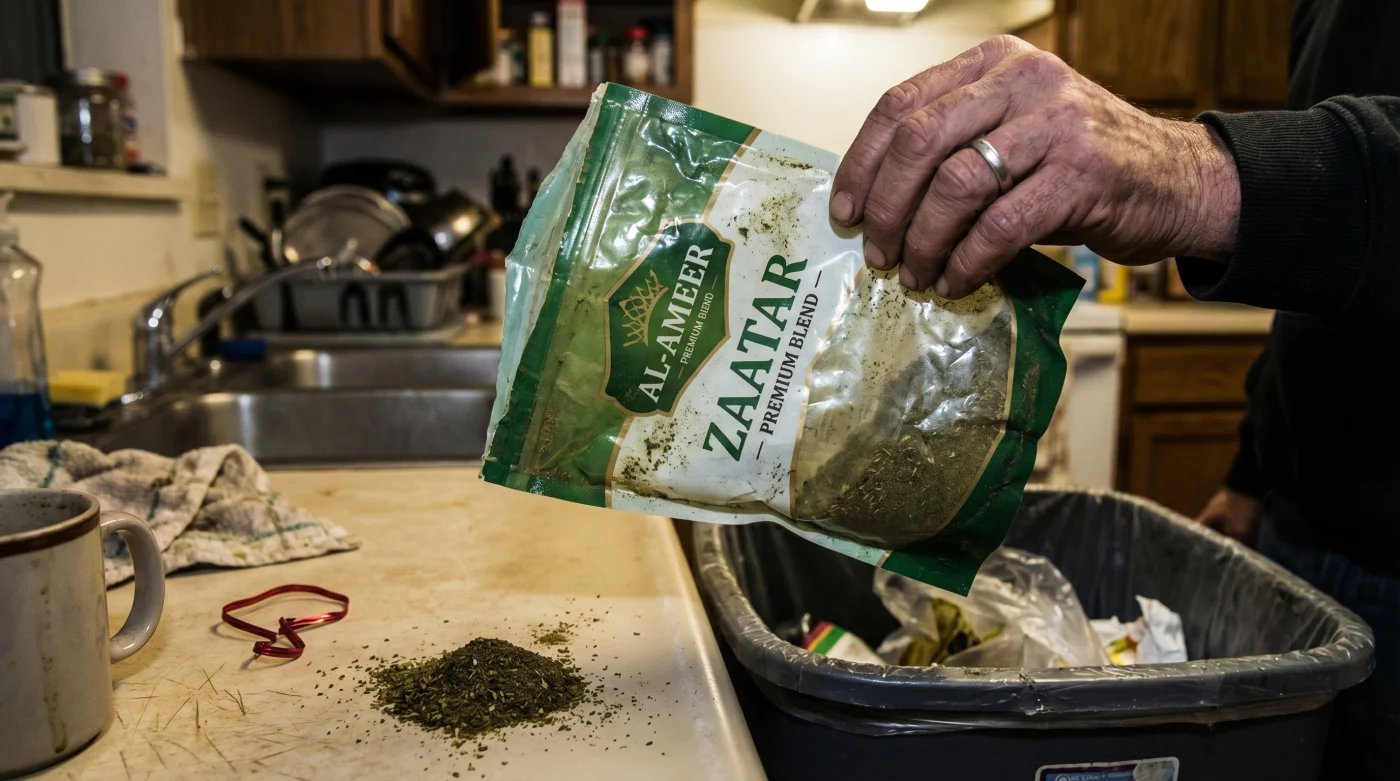
You pull the familiar plastic bag from the back of the pantry. The scent of roasted sesame and earthy thyme escapes before you even break the seal, promising the quiet comfort of a weekend morning with warm pita and cold-pressed olive oil. It is a ritual that anchors your kitchen, a blend of tradition that feels as permanent as the counter you lean against.
Yet the comfort is broken today. The sudden news surrounding Alarjawi zaatar bags has turned a trusted staple into an immediate hazard. The directive isn’t to sift, sort, or salvage; it is a clear, unequivocal instruction to throw the bag away.
It feels deeply unnatural to discard perfectly fragrant food. We are conditioned to preserve, to stretch our pantry provisions, and to trust the sealed packages we bring home from the local grocer in Toronto or Halifax. But when hidden health risks bypass the supply chain, the act of discarding becomes your strongest line of defense.
You are not just tossing dried herbs into the bin. You are taking an immediate step to protect your physical well-being from threats that cannot be cooked off or diluted. Acknowledging this sudden disruption is the first step toward building a more resilient, deliberate pantry.
The Soil and the Shadow
We tend to view spices as inert dust, frozen in time on supermarket shelves. But a spice blend is a living agricultural portrait. It requires specific soil to grow the thyme, harsh sun to dry the sumac, and careful hands to toast the sesame. When you buy a commercial blend, you are trusting a dozen invisible handoffs across the globe.
When the supply chain breaks, the resulting contamination acts like a heavy shadow over the harvest. The immediate change required of you right now feels like a loss, but it is actually a vital correction to your kitchen ecosystem.
The sudden void in your cupboard forces a reckoning with how you source your daily flavours. The mundane detail of a recalled batch number is actually a major advantage. It strips away the illusion of blind convenience and returns the control directly to your hands.
You are suddenly wide awake to what goes into your body. Instead of passively consuming a mass-produced mix, you are now in a position to rebuild this staple from the ground up, demanding transparency from the merchants who feed you.
Consider Elias, a 54-year-old spice importer who has spent two decades running a small stall near Montreal’s Jean-Talon market. Weeks before the official warnings circulated, he noticed a subtle, chalky residue settling at the bottom of bulk shipments from overseas aggregators. He immediately halted his orders, relying instead on his sense of touch and smell. He realized that when commercial demand for regional blends outpaces the careful pacing of traditional farming, corners are inevitably cut, and the final product becomes a carrier for invisible risks.
Adjustment Layers: Navigating the Purge
Tossing the bag is straightforward, but the aftermath leaves different types of cooks figuring out how to adapt. How you handle this sudden absence depends entirely on your kitchen rhythms.
For the Morning Ritualist
If you rely on a heavy dusting over your fried eggs or labneh every single morning, the sudden loss feels acute. Your immediate pivot involves seeking out whole-seed alternatives. Mixing a pinch of pure dried oregano with toasted sesame seeds and a drop of lemon juice will bridge the gap.
Do not simply replace it with another generic plastic bag from the same aisle. This is the moment to source from small-batch Canadian purveyors who list their harvest dates and farm locations right on the label.
For the Batch Baker
Perhaps you fold handfuls of the blend into your flatbread doughs or focaccia. The structural integrity of your baking will not suffer from the absence of the recalled product, but the flavour profile will need a mindful substitution.
Shift your focus to aromatics you already have safely stored. A coarse grind of coriander seed, fennel, and coarse sea salt can provide the necessary textual crunch and aromatic lift while you carefully vet your next purchase.
For the Bulk Buyer
If you are someone who stocks up in large quantities to save trips to the market, discovering that your entire reserve is compromised can sting like cold water. The urge to wait for further testing might be strong.
Your immediate pivot demands action rather than hesitation. Double-bag the bulk containers to trap any airborne dust, and remove them from your home immediately to prevent cross-contamination with your safe spices.
The Tactical Reset
Securing your pantry against hidden health risks isn’t about panic; it is about establishing a quiet, deliberate habit. Throwing out the Alarjawi zaatar is the immediate action, but what follows is a mindful approach to restocking.
Your new baseline for safety requires treating ground spices with the same scrutiny you apply to fresh dairy. Follow these mindful steps to clear the risk and rebuild your supply:
- Locate the specific packaging and immediately place it in a sealed garbage bag to prevent airborne dust cross-contamination.
- Wash any glass jars or ceramic bowls that housed the blend using hot water and heavy soap, scrubbing the lid threads thoroughly.
- Wipe down the immediate pantry shelf with a damp cloth to capture any stray sesame seeds or thyme dust.
- When purchasing a replacement, look for distinct lot numbers, clear expiration dates, and transparent sourcing information.
The Tactical Toolkit for your future spice storage should include airtight glass containers and a dedicated, cool space away from the stove’s radiant heat. Ensure you are buying from transparent Canadian vendors who date their harvests.
Keep your newly vetted blends at a stable 15 Celsius, completely hidden from direct sunlight. This preserves the volatile oils and guarantees that the freshness matches the safety of the product.
The Clarity of a Clean Shelf
Discarding a beloved pantry staple goes against our culinary instincts. It feels wasteful, almost disrespectful to the raw ingredients and the tradition they represent. Yet, this urgent recall offers something far more valuable than a few dollars lost.
It grants you absolute certainty. By removing these hidden health risks from your home today, you are actively choosing the long-term safety of your household over the fleeting convenience of a familiar label.
This small, decisive act ripples outward through your daily routines. It changes the questions you ask at the market and alters the way you view the beautifully packaged goods sitting on the grocery shelf. You are no longer a passive consumer.
There is a profound peace in knowing exactly what you are serving. The empty space on your spice rack isn’t a loss; it is a cleared foundation, ready for something safer, more deliberate, and infinitely more vibrant.
“A safe kitchen begins the moment you stop assuming every package is perfect, and start treating your pantry with the respect of a curator.”
| Key Action | Technical Detail | Added Value for You |
|---|---|---|
| Immediate Disposal | Double-bag the recalled blend before placing in the outdoor bin. | Prevents microscopic dust from cross-contaminating other pantry items. |
| Surface Decontamination | Wash glass jars and wipe shelves with hot, soapy water. | Ensures lingering residues or allergens are completely eradicated. |
| Strategic Restocking | Source whole-seed alternatives or buy from transparent Canadian vendors. | Rebuilds your pantry with higher-quality, traceable ingredients. |
Pantry Safety & Zaatar Alternatives
Why is this recall so urgent?
Recent alerts indicate severe hidden health risks that cannot be neutralized by cooking or baking, requiring immediate disposal.Can I just sift the spice blend to make it safe?
No. The microscopic nature of the contamination means physical sorting is entirely ineffective.What should I do if I already consumed some?
Monitor yourself for unusual symptoms and consult a healthcare professional. Discard the remainder instantly to halt any further exposure.How do I safely clean the jar that held the blend?
Submerge the empty container in boiling water and heavy soap for ten minutes, scrubbing the threads of the lid thoroughly.What is a safe, temporary substitute?
Mix dried oregano, toasted sesame seeds, and a pinch of coarse salt to replicate the earthy, nutty profile until you can secure a vetted source.